web analytics

Logistics

Well – here we go! Renovation – part II…

Having spent the past two weeks packing up all of our worldly possessions – again – and setting up a ‘cosy’ living space in our walkout basement, we are about to hand the entire top floor of the house over to our contractor.

Scary stuff indeed – not least because right now it is not clear that all will be done in time for Christmas. There are so many balls to juggle – so many different plates to be kept spinning – so many… well – you get the idea…

So – farewell 1970s kitchen:

Photo by Andy Dawson ReidGoodbye weirdly pink bathrooms:

Photo by Andy Dawson ReidPhoto by Andy Dawson ReidAdieu popcorn ceilings, variegated floor coverings and yet more pink walls:

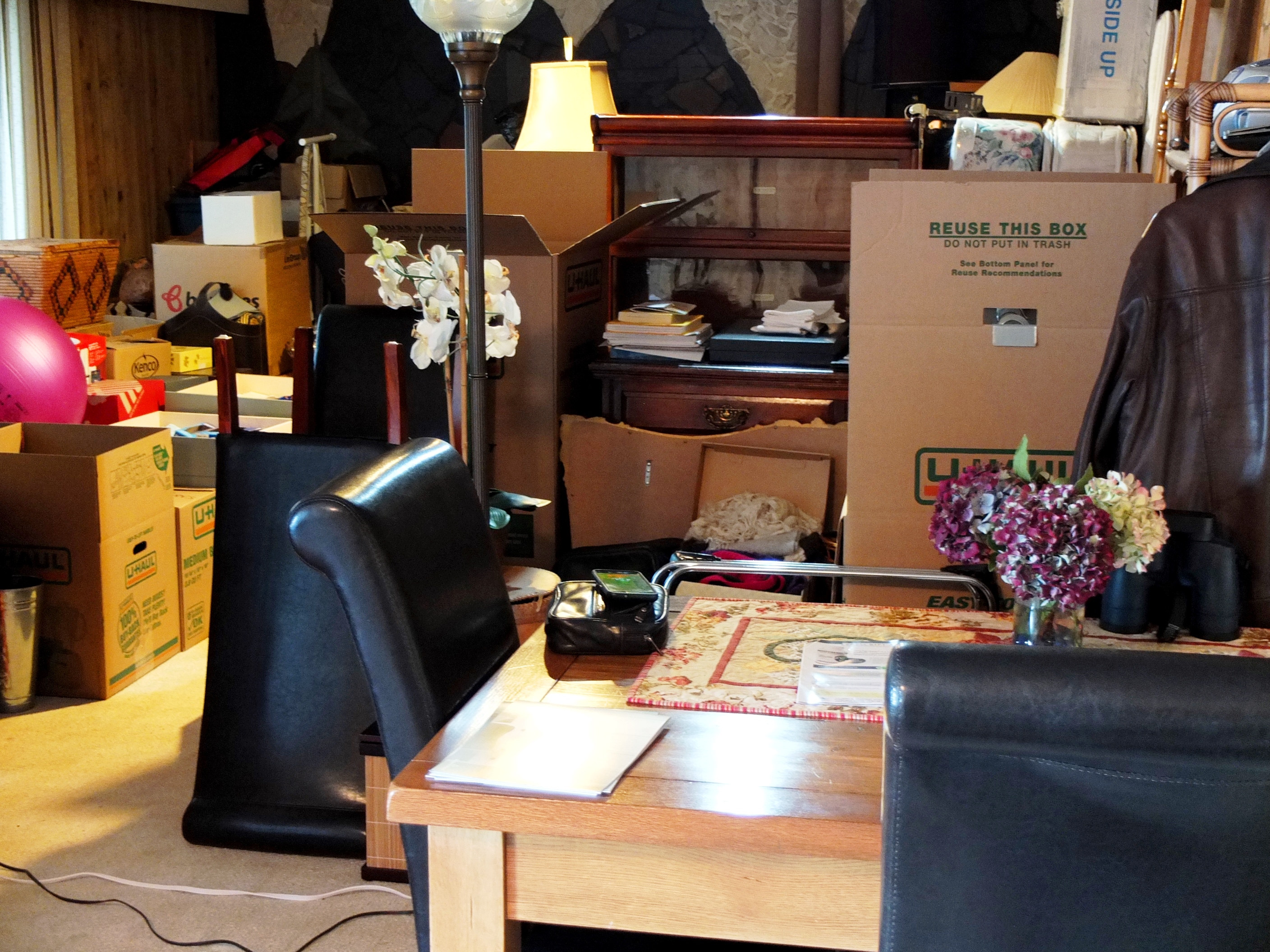
Photo by Andy Dawson ReidAnd in answer to the question – “Where did all your stuff go?“… here it is in our makeshift warehouse in the downstairs ‘family’ room:

Photo by Andy Dawson Reid


Feet of clay

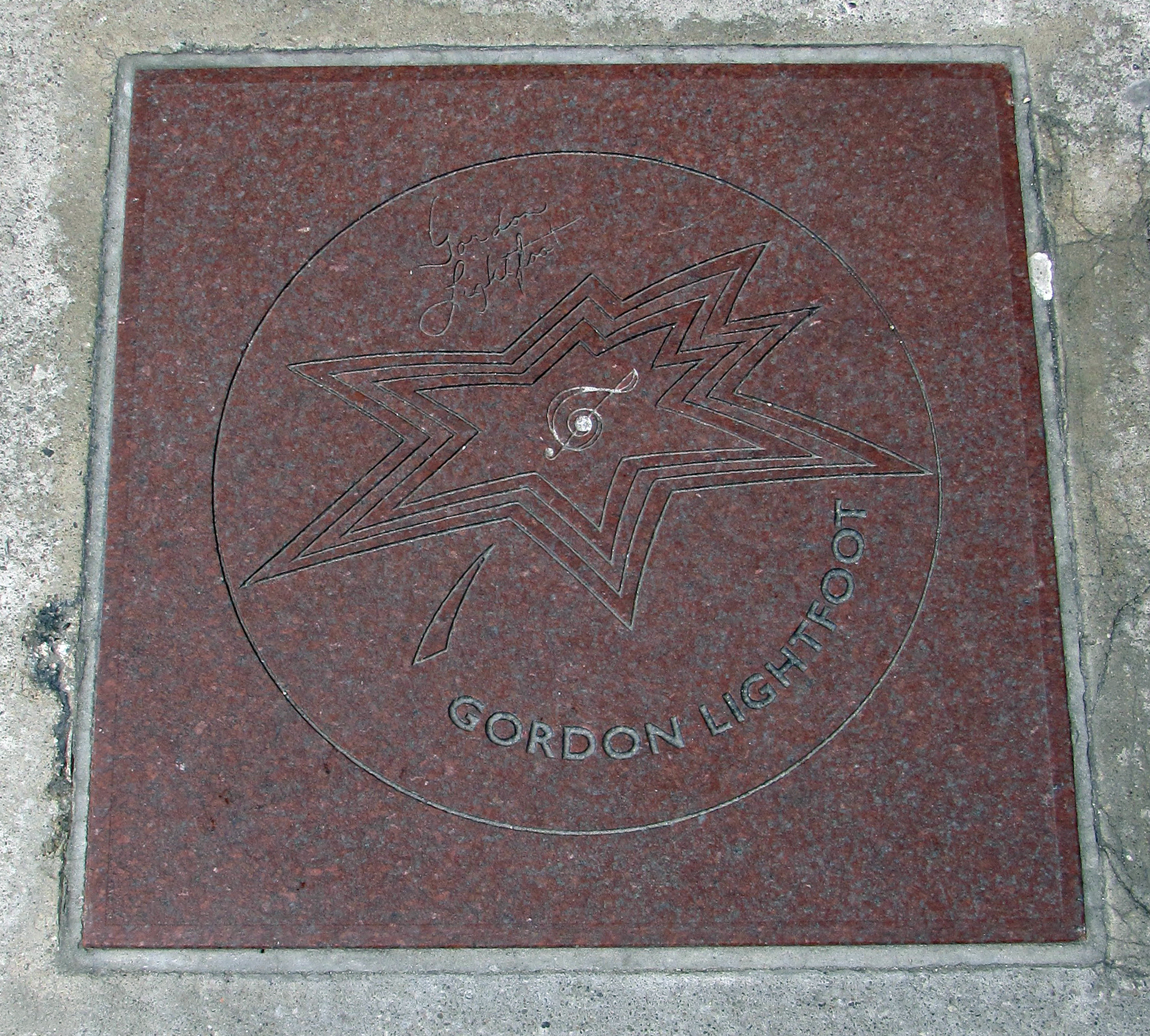
Image by Tabercil on Wikimedia CommonsA sad evening last night…

Way back in the mists of time (actually somewhat earlier this year!) it was announced that the ‘Legendary Gordon Lightfoot’ would be coming to Victoria this fall for a couple of concerts at the McPherson Playhouse.

Wikipedia says of the great man:

“Gordon Meredith Lightfoot Jr. (born November 17, 1938) is a Canadian singer-songwriter who achieved international success in folk, folk-rock, and country music, and has been credited for helping define the folk-pop sound of the 1960s and 1970s. He has been referred to as Canada’s greatest songwriter and internationally as a folk-rock legend.”

Now – it is probably fair to say that for many of us who hail from the UK (and elsewhere ‘abroad’) familiarity with both Mr Lightfoot himself and with his oeuvre are somewhat limited. The name I knew, of course, but I could not bring to mind any of his classic songs.

For the Kickass Canada Girl, however, it was a different matter. She grew up on Mr Lightfoot, and his compositions – as for so many Canadians – were woven into the tapestry of her upbringing. Not a second was wasted, therefore, in placing an order for two tickets for the aforementioned show, so that she might revisit old favourites and stir some memories in the process, whilst introducing me to something that I had previously missed.

So where – the gentle reader will doubtless be wondering – does the sadness come in? Well – the Girl and I did something that we virtually never do: we left at the interval!

Mr Lightfoot used to have a beautiful rich haunting baritone voice but sadly – on last night’s evidence at least – it is no more. In a form in which the words are pretty much everything, the strained croak with which we were greeted at the McPherson yesterday struggled to render many of the lyrics intelligible. In addition, Mr Lightfoot’s four-piece band were obviously under instruction not to provide too much competition and were dialed back almost to comatose. Given that none of them provided backing vocals either the man’s voice was left painfully exposed.

Checking his history on the InterWebNet I gather that over the years (Mr Lightfoot is 78!) illness has taken its toll and – though I would be one of the last people to suggest that he should not indulge his love of performing to the many appreciative fans who were clearly willing to overlook such frailties – I can’t help but think that he needs a little help. The Girl and I saw Burt Bacharach some years back at the jazz festival in Perugia. He was 80 at the time and – recognising that his own voice was shot – had surrounded himself with three gorgeous young vocalists (male and female) to handle such ‘chores’ whilst he amused himself (and us!) on the piano. It made for a stunning concert!

In the case of Mr Lightfoot the Girl was – understandably – really quite upset.  When the tenderly preserved memory of something that has played such a key part in one’s life is delivered such a rude awakening it can leave one somewhat shaken.

The calm…

Photo by Andy Dawson Reid…before the other thing!

If it is October then there must be renovation in the air…

Good contractors are much in demand. Excellent contractors are really difficult to find and,  should one be lucky enough so to do, one must needs accept that their schedule will take precedence over one’s own.

Long before our contractor finished our shiny new deck back at the start of June we had started carefully lining him up to commence work on the interior of the house. October was the earliest that he could manage and even that has since slipped a little to ‘the end of October’.

Well – we have enjoyed a blazing summer on our lovely deck but the Fall is now upon us and the end of said month is rapidly approaching. Ergo it must be time to surrender ourselves once again to the joys of living on a construction site.

We have a number of immediate projects in the pipeline. Our kitchen urgently needs replacement. We have two bathrooms that require dragging out of the 1970s. We have flooring to update in a variety of areas and – worst of all – the entire main floor of the house is ‘blessed’ with what are know as popcorn ceilings – having been sprayed with that lumpy stuff that was once used willy-nilly to cover any sort of sub-standard plaster-work (dry-walling).

Being the cautious, somewhat methodical chap that I am I would very much have liked to have been able to run these projects sequentially, with adequate time for each to be fully completed before the next one were embarked upon. Unfortunately the hideous mess that inevitably ensues from the scraping of popcorn ceilings requires that that be done entire before any construction be commenced and certainly before any of the new flooring goes down. As the flooring will also run throughout that must be done at the same time that the kitchen is stripped out and replaced.

I was reluctantly forced to accept – with considerable squirming on my part – that the best way to proceed was to hand the whole floor over to the contractor for as long as it takes. We are fortunate in that we have a full walk-out basement into which we can move in the meantime. Unfortunately this will require packing everything up and moving it downstairs before the works can commence.

It will – of course – all be perfectly lovely once it is done. I will let you know how it goes…

All we are saying…

A couple of weeks back The Girl and I went to a movie.

Long term followers of these scribblings will know that I am not entirely enamoured of the cinema (confusingly called the ‘theater’ in Canada) experience. In our new Victorian life, however, things have been improved no end by the fact that – being retired (or semi-retired) – we can attend early showings in virtually empty cinemas. The provision of huge reclining loungers which enable one (with a little effort) to imagine that one is in the comfort of one’s own home also helps to ease the pain!

But I digress!

Now – I have actually forgotten the title and indeed much of the detail of the movie that we went to see, but this matters not a jot as the subject of this post is another matter entirely.

Waiting for the film to start we sat through the usual face-punching trailers for other movies – the which seemed as ever to comprise all of the ‘good’ bits smashed into one brief package. As I cowered on my recliner I became aware that the music track for one such was unexpectedly familiar. It took a moment in the unaccustomed setting but I eventually recognised it as the end of the ‘Your Move‘ section of ‘I’ve Seen All Good People‘ by the 70s progressive rock band – Yes.

I say 70s, but Yes are actually still going (those who have survived) in two competing incarnations. Though I was a massive fan of Yes back in the day I have to say that I don’t care much for the complex saga of their recent doings.

For me the very apex of the band’s achievement – capturing the boldness and excitement of their stage performances – was the 1973 triple live album – ‘Yessongs‘. My brother had a copy (he had a record deck, which I did not!) and I would badger him to play it at every opportunity. What I liked particularly about Yes live was the sense that they were always straining for something that was just out of reach. Sometimes they would hit the mark and the hairs would stand up on the back of my neck. Sometimes they would fall just short – like a surfer wiping out or a downhill skier crashing in a cloud of snow and ice – but the result was usually spectacular none the less. They certainly had a huge influence on me as a musician and writer.

Naturally, on our return from the cinema I engaged the InterWebNet to revisit the ‘The Yes Album’ version of ‘I’ve Seen All Good People‘. I must have listened to this track dozens of times over the decades, but this time I noticed something of which I had not previously been aware. Toward the end of ‘Your Move‘ the backing vocalists (Chris Squire and Steve Howe) are faintly but unmistakably to be heard singing:

All we are saying – is give peace a chance

A tribute to John and Yoko mayhap?

So – although this little homage has always been on the track I only just now heard it!

How weird is that?

Sod’s law

Image by Jeff Dahl on Wikimedia.orgI wouldn’t mind betting that the anecdote that forms the basis of this post will ring a bell with many who read it – with similar circumstances being quickly brought to mind… because – after all – that’s just the way life is!

Way back in the early 1980s the BBC produced a six-part adaption of Rudyard Kipling’s ‘school’ novel – ‘Stalky & Co’. The piece translated well into six thirty-minute episodes because it had in fact originated as a set of individually published stories that Kipling had subsequently fleshed out into book form.

I enjoyed the stories enormously, being set in a boys’ boarding school (based on the United Services College in Devon which Kipling had himself attended) and featuring as they do a gang of juvenile protagonists who display a know-it-all, cynical attitude to patriotism and authority which was – naturally – right up my street. I subsequently bought the book and it is one of those that I still revisit on a regular basis.

At some point it occurred to me that it would be good to own a copy of the BBC series on DVD as well. Unfortunately, the usual investigations on the InterWebNet revealed  that the BBC had not thought fit to release the series, though I did find an online petition (the which I quickly signed) urging the corporation so to do.

I thought no more about it; the years passed and ‘life’ happened!

Then, at the end of July this year – whilst pursuing an online link on a related topic – I discovered that the petition must have had an effect, because the series had finally been released (in a very stripped down form – ie, just the media with no add-ons) and could be purchased from Amazon in the UK. I did so immediately and then sat back to await further news.

After a while I received an email telling me that the DVDs had been dispatched and should be delivered to me in Canada by 17th August. That date came and went with no sign of the goods. Being familiar by this point with the vagaries of Canada Post I thought I should leave things for a while, but finally – after another month had passed – I decided to contact Amazon. Those who have had reason to do such a thing will know that it takes considerable effort as the company goes out of its way to make it as difficult a possible, but I persevered and a few days ago awoke to find an email from Amazon UK acknowledging my query, apologising for my delivery clearly having gone astray and promising to send out a fresh copy.

As I probably hardly need add… when I visited our post box at the end of the street later that very same day – sure enough – there were the missing DVDs!

Hmmmmm!


Beachcombing

A final batch of photographic images from the recent sequence…

Having survived the rigours of our efforts at the Victoria Fringe Festival and enjoyed the company of our friends from the UK, the Girl and I took a well-deserved couple of days off and scooted westwards around the coast to a quiet resort on the other side of Sooke. The wild-fire smoke that had been so pervasive a little earlier in the summer made a brief return (much of it this time from Oregon) and as a result we felt disinclined to do much that was strenuous. Fortunately our suite featured a splendid rooftop hot tub in which we could be-sport ourselves and – apart from indulging ourselves with the tasting menu in the Copper Room at Sooke Harbour House – that was pretty much all we got up to.

I did take the Fuji x10 for a stroll along the beach…

Photo by Andy Dawson ReidPhoto by Andy Dawson ReidPhoto by Andy Dawson ReidPhoto by Andy Dawson ReidPhoto by Andy Dawson ReidPhoto by Andy Dawson ReidPhoto by Andy Dawson Reid


Daytripper (yeah!)

Given that the friends who visited recently from the UK (see previous post) had a mere four full days to spend in the provincial capital it was essential that we mapped out their agenda with particular care. Wishing to meet (and hopefully to exceed) their expectations we offered them a rich palette of options and put the choice in their hands.

For the Saturday they chose a day trip to Saltspring Island – and in particular to the Saturday market in Ganges. It would have been lovely to have cruised to Saltspring under our own power in ‘Dignity’, but a blazingly hot Saturday on the September long weekend is a bad time to fight with the queues both at the Sidney boat launch and at the public docks in Ganges, so we chickened out and took the ferry to Fulford instead.

A stall holder at the market – with whom, as is our nature, we engaged in conversation – swore that the crowd was scarcely half what it had been but a few weeks previously. Goodness knows what all of the other souls could possible have been doing – the place looked to be completely packed to us… and did I mention that it was blazingly hot?

It mattered not, of course, as we all had a splendid time, a very passable lunch and then returned home tired but contented.

The taking of photographs in the melee of the market, however, would definitely have been inadvisable, so I contented myself instead with assembling the odd assortment of images that you see represented below…

Photo by Andy Dawson ReidPhoto by Andy Dawson ReidPhoto by Andy Dawson ReidPhoto by Andy Dawson ReidPhoto by Andy Dawson ReidPhoto by Andy Dawson ReidPhoto by Andy Dawson Reid


The kindly feeling

What is there more kindly than the feeling between host and guest?

Aeschylus

As revealed in my last post to these pages my efforts at the Victoria Fringe Festival on behalf of Intrepid Theatre had to be brought to a premature conclusion with five days of the festival still to run. The reason for this unfortunate abrogation of my responsibilities was a previous engagement welcoming to British Columbia our second set of visitors from the UK this year.

Our most welcome guests were themselves only to be with us for five days; scarce time to see all that they desired on their first visit to Canada (let alone to Victoria) and only just enough time to catch up fully with dear friends that we have not seen for over two years. Nonetheless – we had a good stab at covering as much ground as possible and I kept the trusty Fuji x10 to hand to document our various excursions.

Our guests are great gardeners and horticulturalists and an extended visit to the Butchart Gardens was thus near the top of the list of things not to be missed. The recommended agenda of a daytime visit followed by a bit of a break and then a return to catch the gardens under illumination during the evening was adopted; the Kickass Canada Girl and I accompanying our guests for the latter…

Photo by Andy Dawson ReidPhoto by Andy Dawson ReidPhoto by Andy Dawson ReidPhoto by Andy Dawson ReidPhoto by Andy Dawson ReidPhoto by Andy Dawson ReidPhoto by Andy Dawson ReidPhoto by Andy Dawson Reid

Got busy

Get busy living, or get busy dying.

Stephen King

My apologies that posts have been somewhat erratic of late. Things have been busy!

I posted some images from the Victoria Classic Boat Festival two years ago. I make no apology for posting more this year because I think that the boats are gorgeous and the inner harbour extremely photogenic.

Next time round I will provide an explanation for all of this ‘busy-ness’ and a proper catch-up…

Photo by Andy Dawson ReidPhoto by Andy Dawson ReidPhoto by Andy Dawson ReidPhoto by Andy Dawson ReidPhoto by Andy Dawson ReidPhoto by Andy Dawson Reid

The old lie – 2

Image by Acuration on Wikimedia CommonsIn my last post I enthused about Peter Parker’s 1986 book – “The Old Lie” – the subject of which is the generation of young men who left England’s public schools to fight – and in many cases to die – in what became known in its immediate aftermath as ‘The Great War‘.

Parker’s thesis is that in great part the nation’s apparent excess of enthusiasm to go to war in Europe in the early part of the twentieth century arose from illusions whose roots lay the attitudes emanating from England’s great public schools. To understand why this should be the case he chooses (as might we also) to look back into the nineteenth century to determine how it was that these schools came to embody the ethos and ideals whence such notions arose.

Of the drivers for the widespread reform of the public schools that was effected during the nineteenth century two in particular are pertinent:

The first such was the influence on these schools of Thomas Arnold – head master of Rugby School from 1824 to 1841. Arnold’s avowed aim – of producing a “school of Christian gentlemen” – was to be achieved by the inculcation of his values of piety, discipline and high-mindedness into an elite coterie of upper school boys (Arnold has frequently been credited with the invention of the prefectorial system) who would then act as his instrument in shaping the younger boys, for whom Arnold personally had little time. So successful was this approach that as the ex-members of his Rugby elites spread out into the world (along with acolytes amongst the Rugby masters who subsequently applied for posts elsewhere) other schools rapidly adopted Arnold’s aims and methods.

The second driver was the Victorian policy of expansionism. As the Empire grew so did the need for the ‘right sort of chap‘ to enter the nation’s service in the administration of its far-flung territories. This (along with a slowly increasing militarism in the public schools which eventually found an echo in the extension of the Officers’ Training Corp (OTC) thereto) led to the espousal of values that promoted both a local and national patriotism – for house, school and country (in that order!).

It is perhaps in the nature of such establishments that these new values (new at least to the public schools!) were quickly subsumed in the mystique and self-mythologising which has long been their stock in trade – much of it based on Classical virtues and ideals (remembering of course that for the longest time such schools taught little other than the classics!). For the young adults in the sixth forms of these schools the notions of ‘good form’,’ playing the game’, ‘keeping a stiff upper lip’ and so forth became the mark of the man. By the time the continent slid inexorably into the cataclysm that was the First World War a generation of such young Christian gentlemen were eager to put their new-found values – and themselves – to the test… in the service of their (house, school and) country (still in that order!).

To understand how it was that influence of these developments within elite institutions spilled over into the outside world – touching those for whom an education at such an establishment was never an option – it must be remembered that the social structure of nineteenth century Britain was utterly hierarchical. Those in positions of influence and power still came largely from the upper classes that the public schools had been created to serve. Young boys of middle and working classes were encouraged to follow the example of their ‘betters; with the public school ideal being promoted as the quintessence. ‘The ‘school novel’ became a successful and popular genre and glowing articles in periodicals aimed at young men espoused the values and virtues of public school heroes much as did later ‘comics’ with sportsmen, explorers and astronauts.

The social hierarchy naturally extended into the armed forces. Officers came from privileged backgrounds – enlisted men did not. Though there might be a germ of truth in the widely held critique of the British infantry as being “Lions led by donkeys” (sent to their deaths by incompetent and indifferent leaders) and it is certainly true that some of those in positions of command did remain safely many miles behind the front lines, this was certainly not the case for the junior officers who led men on the ground.

Parker makes the chilling point that whereas the mortality rate for all Britons involved in the conflict was a little under 12%, for public school educated officers it was more than 17%. The eager young subalterns (armed only with a service revolver and wearing a distinctive uniform) leading their troops over the top presented all to easy a target for the German snipers, who were well aware that without the leadership of their officers the British infantry was literally headless.

At this remove we can but study the histories; or perhaps more appropriately to read the poetry, written by the young men themselves once disillusionment set in as the conflict progressed and the extent of the lie became apparent.

Many of these young men, however, went to their tragic deaths with no opportunity to gain such enlightenment.