web analytics

Drama

You are currently browsing articles tagged Drama.

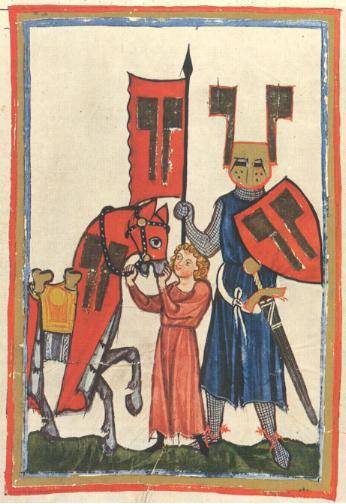
parzivalI pontificated at some length – in this previous post – on the subject of the audition process for the Junior Play which I am directing at the School this term. The first full meeting of the cast – and the commencement of the rehearsal process – takes place later today, and I thought that this might be an appropriate time to provide – for the illumination of the gentle reader – some further details as to the nature of the production.

The piece is an adaptation of the Parzival story, taking as its source the major 13th century lyrical poem by Wolfram von Eschenbach – itself based on the earlier version by Chrétien de Troyes. I wrote the adaptation when at my previous school and it was performed there as the equivalent play for juniors in the summer of 2005 – the year that I left the school.

My ‘advert’ for this production – intended to arouse interest amongst the junior boys – read thus:

This ambitious project showcases a new adaptation for the stage of Wolfram’s epic lyric poem of knighthood, courtly love, honour and the search for the Grail. Battles, jousts, magical castles, magnificent feasts, gallant knights and beautiful maidens are all to be found within its compass. As befits such an epic production the play will be performed as a promenade in a number of locations around the School.

As an incentive this was clearly a success, since some forty nine boys auditioned for the twenty four roles. The piece was specifically written for boys of this age and aims to be a blend of comic book action, suitably dry humour and mythology – but with a subtle but healthy dose of more serious meaning lurking in the background.

The reader will have gleaned from the above that the piece is performed as a promenade. For those unfamiliar with the form of theatre this involves the audience being moved around to follow the action. This can range from a straightforward variety of different configurations in a studio theatre all the way up to the use of physically disparate locations – indoors and out – as we are doing here.

One of the drivers for doing the play in this manner at my previous school was that it possessed a splendid range of historic buildings, some dating back to the 15th century. We were thus able to make use of some wonderful medieval settings. My current school – though itself very old – is housed in modern buildings. This – naturally – presents more of a challenge. I will write further on how we overcome these difficulties as things progress.

If your mind is already boggled at the potential complexity of the production then – as certain famous Canadians are won’t to say – ‘You ain’t seen nothing yet!’  Wolfram’s Parzival is actually two overlapping stories wrapped up as one. There are two protagonists, Parzival and Gawan, and – though their paths cross at various points – the two strands are separate – wound around each other like the double helix. When I set about adapting the poem it occurred to me that the only way really to do it was to follow Wolfram’s model and to create two separate strands which would play simultaneously.

The play thus takes this form:

  • The first two scenes take place in front of the whole audience and set up all that follows.
  • At the end of the second scene the strands separate – as does the audience – half following each tale.
  • The subsequent scenes for each tale are played out contemporaneously in different locations.
  • The two strands re-combine for the final scene in which the protagonists are re-united and their quests resolved.

Well – these are bright boys and it seemed appropriate to set them a decent challenge.

I will – inevitably – write more regarding the production once things are under way.

Tags: , ,

I didn’t have a problem with rejection, because when you go into an audition, you’re rejected already. There are hundreds of other actors. You’re behind the eight ball when you go in there.

Robert de Niro

Term has ended.

Phew!

It is in the nature of such things that the last few days of the school term have a tendency to accelerate to an uncomfortable canter, as each and every one tries to get done all that which cannot be left undone before the community as a whole – with the pitiable exception of those hardy souls who manage without school holidays – departs the hallowed halls for the green fields and sunlit uplands of their respective holiday haunts.

Notwithstanding that, at this time last year, I was myself flying off to British Columbia to pay my first visit to the Kickass Canada Girl subsequent to her departure thence – there are no prizes for guessing where I will be during this particular break.

The first part of this last week was occupied by the auditions to which I have previously made reference. I will elaborate on the exact nature of this school production in future posts – all that need be said at this point is that the piece requires a cast of twenty four of which four play the leads. In form the piece is manifoldly picaresque and of no little complexity. Its cast will need to work closely together and must therefore be most carefully selected.

Over the first two days I saw forty nine 13 and 14 year olds. The standard is pretty decent but – as might be expected – it becomes ever more difficult to make valid comparisions the more one sees.  On the third day I called back eighteen of the more gifted potential thespists, in an attempt to nail down the choice of the four leads. I could easily have recalled twice that number.

To facilitate the choice I also took time – at this point – to consult others. Those who teach these particular boys Drama or English – those who are their tutors – those professionals on our theatre staff who encounter these boys in other productions… all have useful insights into the nature and abilities of those who have submitted themselves for approval.

Then came the hard graft. Two of the leads were reasonably easy to cast – though again I had two or three candidates who might equally have been selected for each. The other two parts are – for reasons that will become clearer when I explain the nature of the piece – considerably more difficult to fill. After considerable head-scratching – however – I thought I might just have cracked it.

At this point – as dictated by School etiquette – I took my cast list to the Head of Drama for his approval. He pointed out that one of my choices for a lead role might not have been entirely wise. Forewarned is fore-armed – and on reflection I was most happy to have been spared making this discovery further down the road.

The cast list was posted on the last morning of term. Some very happy faces – some potential grudges that may come back to bite me in future drama classes. All part of the rich tapestry…

Now for the fun part!

Tags: ,

Photo by 37 °C on FlickrIt is difficult now to imagine that – had our plans of the past year come to fruition – I would have been packing up and moving permanently to Canada in a little over four months from now. Much of this imaginative difficulty stems from the ‘sheer weight of traffic’ on my calendar since the turn of the year. We have not yet achieved the vernal equinox and already six months’ worth of activity seems to have been  packed into a few brief weeks. How would I ever have found the time to organise my emigration? Right now – sadly – retirement feels a long way off!

This calendrical congestion has not been ameliorated by the precosity this year of Easter, which movable feast – as you doubtless know – falls on the Sunday following the first full Moon on or after the equinox. Since that date can be as early as March 22nd, this year’s festival (on the 31st) might be thought a breeze. By contrast to the latest possible date (April 25th) it does – however – still represent a significant squeeze to the schedule. School term finishes on Maundy Thursday (the 28th) so there is no time to ‘wind down’ before the holiday weekend commences.

Furthermore – the end of this particular term affords little opportunity to catch my breath…

The School’s Easter holiday will be a busy time – for those of us in IT at least. The remaining two departments must be moved into the new Science building and the occupants of our single boarding house must be moved out into their new accommodation so that demolition can start on the current building – to make way for the next phase of the redevelopment – the School’s new Drama Centre.

For my part there is an additional burden over the coming months – though ‘burden’ gives a somewhat misleading impression. I have agreed to direct the next School production – the Junior Play. Parts in this traditional end of year entertainment are open only to the 4th and 5th forms (ages 13 – 15) for the simple reason that everyone else spends much of their summer term buried in the examination hall – or in preparation therefore.

To add to other immediate stresses – therefore – it is also necessary to audition for – and to cast – the production before this term ends. Practically that means auditioning, recalling, whittling down and selecting twenty four from more than fifty budding thespists during the lunch hours of the only three full days next week that the boys are actually in school.

No pressure then!

Tags: , , ,

Photo by Andy Dawson ReidThough this year marks the 40th anniversary of my first involvement with young people’s theatre (a fact that had not occurred to me until I sat down to compose this post) and though I have throughout the last decade and a half been involved in a variety of capacities (writer, director) with school productions, I have only been teaching drama in secondary education (Canadian: high school) for the past four years. The School’s last inspection was more than five years ago and I have thus not yet had to endure the scrutiny of formal lesson observation.

Until now…!

I led two drama classes yesterday, either of which could have been observed – although since I only teach a couple of 4th form (1st year – don’t ask!) sets there was a fair chance that the inspectors would not bother with me at all. My morning group are pretty hard work – still lacking a degree of self discipline and featuring a couple of characters seemingly determined to argue every point. The afternoon set are considerably better behaved – though to this point they have not been particularly adventurous.

I found myself offering up a silent prayer to a whole panoply of deities prior to my first class – hoping that no inspector would appear. Once we were five minutes into the period I was able to relax a little, secure in the knowledge that my struggles to keep the group on track would go unrecorded.

Having successfully taken this hurdle at the canter I thought I could relax a tad (tad = smidgeon!). I arrived – quietly confident – a few minutes early for my afternoon class. First through the door at the class change bell… was one of the inspectors! Deep breath! Hold the nerve…!

Well – I don’t know how I did, but my set were total stars. For the first time since I had met them – a few weeks ago – they started to show real imagination and a fair bit of potential. Frankly – they were brilliant! The icing on the cake was that – at the precise second that I wound up the session with my final exhortation – the bell rang. Nice timing!

What I did not anticipate was quite how wiped out I would feel afterwards. There must have been a fair bit of tension and adrenalin involved, though I was not particularly aware of it at the time. Lying down in a darkened room seemed the best restorative…

…that and a large drink!


Stop press: Though the report on the inspection will not be published for another month – and the contents are strictly embargoed until then – the High Master indicated that they will cause general contentment all round when released.

Tags: , ,

Go west

The November edition of GQ magazine (British edition – which I purchased because it contains a number of Bond related features) details the winners of the GQ 2012 ‘Men of the Year’ awards. The Bond link is a tie-in with the (very) imminent release of the new Bond opus – ‘Skyfall’- which marks the 50th anniversary of the franchise. You can all rest safe in the knowledge that I will be returning to the subject of Bond (if not of Daniel Craig!) in the not too distant future. For now, though, I want to focus on one particular man of the year…

It is 23 years since ‘A Few Good Men’ premiered on Broadway and kick-started Aaron Sorkin’s writing career. Sorkin – who sold the film rights to the script before it had even opened – was  subsequently engaged to write the screenplay for the 1992 movie version, which earned him a Golden Globe nomination later the same year.

Sorkin’s career highlights have been rehearsed often enough that there is no need for me to repeat them here. It is a testament to his talent and longevity that adding the 2012 GQ ‘Men of the Year’ award for best writer to his trophy cabinet comes as no surprise, and indeed as something of a relief to those who hanker after the sort of high quality writing that – Stoppard and a few others excepted – seems sadly in short supply in this day and age.

For those unfamiliar with Sorkin’s oeuvre, however, I feel compelled to give just one example – from the first series of the multi-award winning ‘The West Wing’ – by way of an illustration and encouragement to all budding playwrights and screen writers.

As is the norm for ‘The West Wing’, in this episode – ‘The State Dinner’ – a number of plot threads evolve simultaneously. The main strands are as follows:

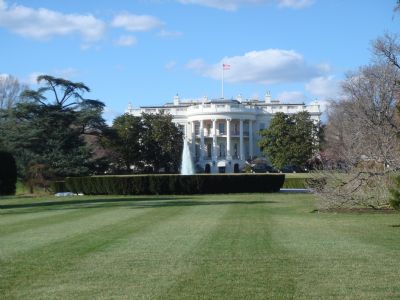
  • In the evening to come the White House is hosting a state dinner for the President of Indonesia – a regime with which the incumbent Democrat administration has a difficult relationship as a result of differences over human rights issues. This is further complicated by a personal mission on the part the administration’s Communications Director who is hoping to persuade one of the Indonesian President’s aides to help to arrange the release of a friend held as a dissident in that country.
  • There is a hostage stand-off in Idaho between the FBI and a group of white separatists over gun charges. There are women and children amongst those held captive.
  • A meeting has been arranged at the White House between the truckers’ union and the haulage bosses, in an attempt to settle an imminent and potentially damaging labour dispute.
  • A hurricane is bearing down on Georgia and is due to arrive before the day’s end with potentially devastating results.

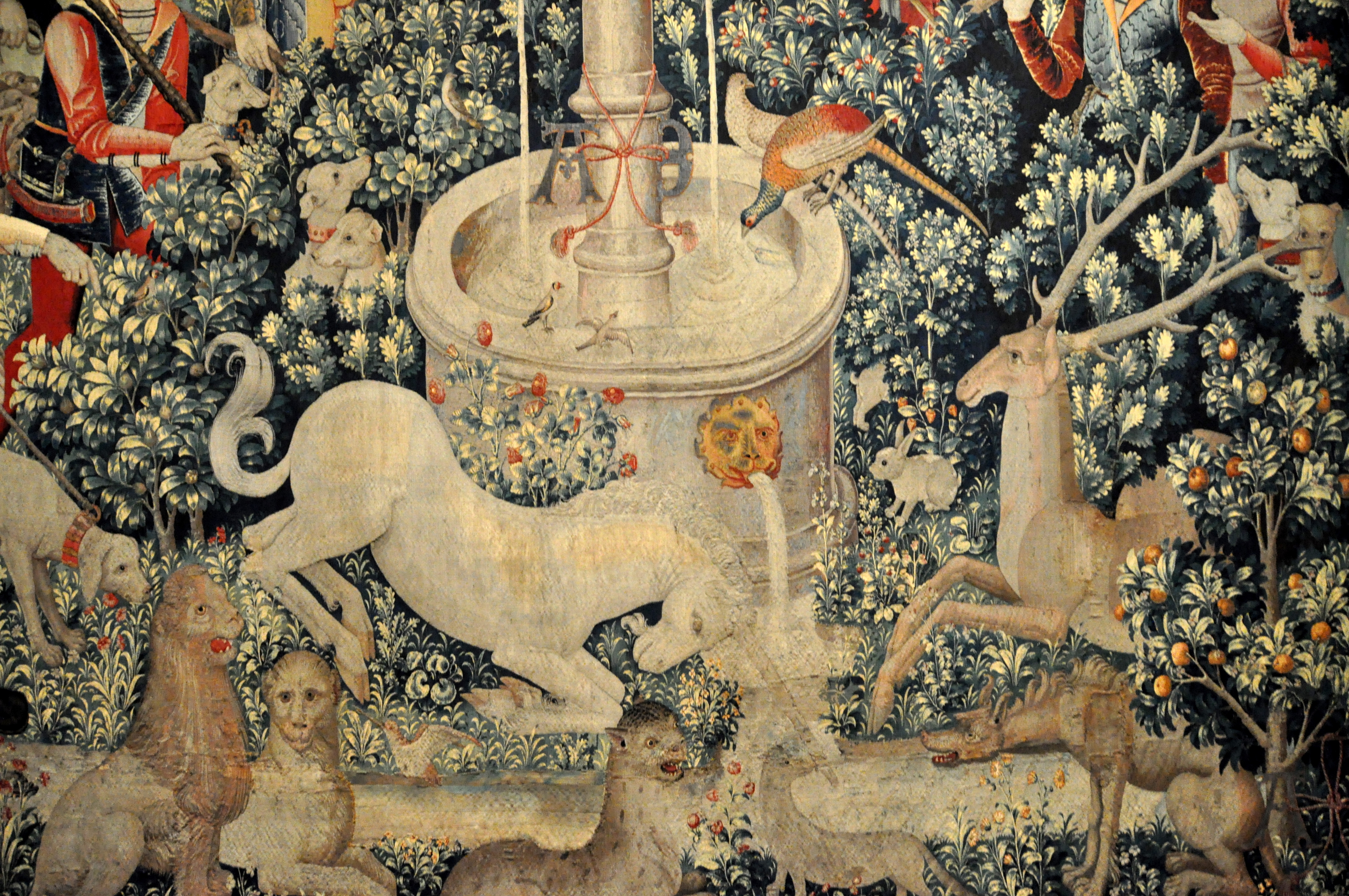
As ever in Sorkin’s scripts the narrative development of these major issues of the day is seamlessly blended with a multitude of personal involvements, by which means the richness of each character is revealed and developed. The whole creates a multi-layered tapestry woven through with many detailed threads… much like life itself!

The underlying theme of the episode is that of the powerlessness of those in high office in the face of events. Martin Sheen’s President Bartlett eventually mounts a feisty intervention in the truckers’ dispute precisely because – as the Stockard Channing’s First Lady explains to one of the other dinner guests – he is powerless to influence the Idaho hostage negotiations and he cannot stop the hurricane!

It is in the nature of such drama series that – to achieve maximum emotional or philosophical effect – each episode will most likely culminate with one of the featured storylines proving to be the ‘doozy’. Part of Sorkin’s genius lies in his adding to the impact by keeping us guessing as to which it will be. In ‘The State Dinner’ each of the themes builds inexorably to a series of climaxes, each out-doing the one before.

Finally – having been sold a dummy on hearing that the hurricane has changed course and will no longer make landfall – it is revealed instead that the naval carrier group that has previously been diverted to avoid the storm – is now directly in its path and cannot escape. Surrounded by a silent tableau of horrified aides the President tries to make radio contact with the commanders of the group – the scene rendered all the more powerful because we only see the White House end of the connection.

The radios on the carriers have been knocked out by the storm. The only contact that can be made is with a small auxiliary supply vessel, which has already been badly damaged by the huge waves. The captain has been summoned to the radio room but does not appear – leaving the President on the line to the terrified youth who is the radio operator. Knowing the inevitable fate of those concerned the President promises to stay on the line as long as it is open…

Pure class!

Tags: ,

“The mind is like a richly woven tapestry in which the colors are distilled from the experiences of the senses, and the design drawn from the convolutions of the intellect.”

Carson McCullers

One of joys – amidst the many drawbacks – of accomplishing maturity (growing old!) is that afforded by the slow accretion of knowledge which – one must surely most devoutly wish – will lead eventually to the attainment of wisdom. Sometimes it seems to me that this process – as the years advance – consists in the main of going back over old ground, slowly joining up the dots and nurturing the seeds that were sown a long time ago. Perhaps one day the final thread in this immeasurable tapestry will be woven, all the connections will be made and learning will come to a full stop.

Somehow I doubt it!

What prompts this particular reverie, I hear you enquire – tentatively?

Growing up – as I did – in the 1960s there was a fair chance that I would be a fan of the Beatles. You will be unsurprised to hear that this is indeed the case, and that I count myself amongst the more partisan of enthusiasts. I have read exhaustively, viewed widely and – of course – listened relentlessly to each and every note.

There has been until recently, however, one glaring omission to my ardent pursuit – and that can be explained by the fact that even in late 1967 – as I was on the verge of recording my fourteenth birthday – my parents were still, and determinedly, resisting demands that we should acquire a television set. We were thus unable – that Boxing Day – to join the bemused multitudes who sat in stunned silence through the premiere of the Beatles Magical Mystery Tour.

Such was the subsequent critical storm that the one hour film has since had very few public airings and somehow – though it has been made available on VHS and DVD – I have never really felt moved to track it down. Most likely I recoiled from the notion that my idols had after all proven to be encumbered with feet of clay.

Since then, of course, much has changed. Critical opinion now recognises the film to be a valid – if somewhat naive – adjunct to the burgeoning avant-garde that emerged from the 60s counter-culture. McCartney himself has been understandably and justifiably keen to promote the significance of his role in that movement. Further – the film itself is now seen as a precursor to the entire genre that is ‘pop video’, from which the whole MTV phenomenon and generation has since sprung. In this – as in so many things – it seems that the Beatles were after all truly ahead of the curve.

Last weekend the BBC finally broadcast a restored and digitally re-mastered version of the film – along with an accompanying documentary on its genesis – to mark the 50th anniversary of the release of the first Beatles single, Love Me Do. It was good finally to catch up with that which I had missed back in the winter of 1967.

Viewing the film also resulted in another connection being made – another strand finally woven. I have over the last year or so been somewhat fascinated by an American alternative rock band called ‘Death Cab for Cutie’. Actually, it is really the name that fascinates; somewhat bizarre but quite imaginative. I had not, though, investigated further.

Lo and behold, as I watched Magical Mystery Tour at the weekend, what should I see – making a guest appearance – but that well-known 60s surrealist comedy ensemble, the Bonzo Dog Doo-Dah Band, singing a song clearly titled – wait for it – “Death Cab for Cutie”! A little further investigation shows that Neil Innes and Vivian Stanshall of the Bonzos wrote the song for the film, taking its title from an invented pulp fiction crime magazine which had been devised by British academic Richard Hoggart as part of his 1957 study of working class culture, The Uses of Literacy. Small world!

Neil Innes, of course, went on to write and record the songs for Monty Python’s Flying Circus. Vivian Stanshall – amongst many other achievements –  made an ‘appearance’ as the narrating voice on the last segment of Mike Oldfield’s Tubular Bells.

Back in the 80s I vaguely knew Vivian Stanshall’s then wife. She and a friend of mine were the main drivers behind a project to convert an old German coaster into a floating theatre/restaurant in Bristol docks. The ship – the Thekla – is still there, though it is now a nightclub/music venue. The ladies fell out with each other and moved on many years ago.

I recall attending the opening night party for the floating theatre – which was filmed by the BBC for a documentary on the project – back in 1982. Vivian Stanshall was present – though perhaps the less said about his presence that particular night the better!

Nice to finally tie up these loose ends. In the phrase that E. M. Forster adopted as the epigraph to Howard’s End – “Only connect”…

Tags: ,

Look – I’m sorry to bang on about this – and I really don’t want to bore the gentle reader more than is absolutely unavoidable – but I really must just put in one final word for Tom Stoppard and the BBC’s adaptation of Ford Maddox Ford’s ‘Parade’s End’, which finished on BBC2 on Friday evening.

Achingly beautifully written, acted, directed and shot this (hopefully!) award-winning drama represents all that has ever been best in what really has become a very sorry creative sphere – that of modern television production. Those who know me even marginally will be only too aware of how little I find to admire these days in the televisual and filmic arts. Kickass Canada Girl claims – with some justification – that I have spoiled the cinema going experience for her. It is no fun at all to sit through a film at my side as I sigh, grunt and squirm irritably when faced with clunky dialogue, unbelievable characters and unnecessary yardage of exposition. The trouble is that she herself has now become much more critical and less able to sit through such mediocre offerings. Sorry about that!

The greatest failure to my mind on the part of TV and film producers – and one which is almost certainly a result of there being too many ‘executives’ now involved in the process who mistakenly think they know how to make drama – is that of not trusting the intelligence of the viewing audience. Let’s put that another way – of patronising the viewing audience. There is nothing more eloquent in drama than that fragmentary understated occurrence or reaction that generates in the viewer a small shock of recognition and understanding. This – surely – is how art can have such a great and direct impact on those eager to learn from it. These days in film and on TV it seems that there is a belief that only if signposted in huge letters on enormous billboards will the viewing audience actually get the point. My worry is that this in itself is breeding a new generation who indeed will not be able to ‘read’ creative works without such assistance.

By way of illustration of what can be achieved let me give just the tiniest example from ‘Parade’s End’ – and that not from any of the main plot threads but of just a single small incidental detail – beautifully handled.

In the trenches of the first world war Ford Maddox Ford’s passe protagonist, Tietjens (played exquisitely by Benedict Cumberbatch), finds himself unexpectedly and unwantedly in charge of his battalion. One of the more unexpected duties he is called on to perform is to give permission for a private – whom we have heard unknowingly for some minutes in the background practicing his bugling – to play the following night before the top brass at an event behind the lines.

A while later – during a German artillery barrage – Tietjens is given the news that a shell has burst in the entrance to a slit trench, and that there has been a single fatality. Tietjens hurries to inspect the scene and sees – half buried in the mud thrown up by the blast – the bugle case that we have seen previously. There is no dialogue – no lingering shot – merely the briefest reaction in Cumberbatch’s eyes.

Then – after some further narrative development – both we and Tietjens hear again the distant refrain of the bugler at practice. Again – no dialogue – no labouring the point – simply the realisation as revealed on Cumberbatch’s face.

This sort of thing requires (under)writing and acting of the highest order, but stirs in the viewers breast an empathy and understanding that no amount of dialogue or elaborate visual symbolism could have effected.

Enough! You have missed ‘Parade’s End’ in its first run (congrats to those who did not!) but it will doubtless be repeated.

…and there is always the boxed set – which would doubtless make a wonderful Christmas present!

Tags: , ,

The feeling is that of the lost soul who – when dying of thirst on the remorseless sunbaked sands of an unforgiving desert and on spotting on the heat-hazed horizon a life-saving oasis – discovers that – contrary to his initial fears – it is not after all a mirage, but is indeed the fountain of life…

You may think this somewhat too effusive given that the object of my preroration is a mere television programme, but I can assure you that it accurately reflects the emotions experienced by this viewer on discovering – in the wasteland of the UK’s 21st century televisual output – an intelligent, complex, splendidly crafted, subtly directed TV drama – acted with exactitude and beautifully shot.

I refer – of course – to the first episode of ‘Parade’s End’ which was shown last Friday on the BBC. Adapted from Ford Maddox Ford’s quartet of post-Great War novels by the estimable Tom Stoppard this splendid offering starred – amongst other luminaries – the excellent Benedict Cumberbatch. Stoppard is a personal hero and I have been lucky enough to have met him twice – at first night parties for ‘Indian Ink’ and ‘The Invention of Love’. This was not only a lot more prosaic than it sounds but was also proof of the dictum that one should never meet one’s heroes. At each meeting I was reduced to babbling incoherence, telling him only on one occasion – as I recall – that his play was “quite brilliant”. He gave me a pitying look…

I could wax lyrical for a further 1500 words on the subject of ‘Parade’s End’, but the critics have already done so far more eloquently than I ever could. Here is Euan Ferguson in the Observer. All I will do is to urge those of you living in the UK who missed it on Friday to seek out the remaining four episodes – and for those of you in Canada and elsewhere to lobby your local TV stations to purchase said work and to screen it forthwith.

Following Friday’s episode there was a ‘making of’ documentary which featured a number of astute commentaries on the piece, including that of Cumberbatch himself. Without being too rude I think it safe to say that not all actors are as erudite on the subject of works in which they have appeared. Cumberbatch came over sufficiently well that I will forgo my usual somewhat childish remarks about his Alma Mater.

Well – they are rivals!


Tags: , ,

You may have noticed that I have a fondness for language – for its depth and richness and for the infinite variety of its textures and meanings. I love how flexible and elastic it can be and the endless tapestries that can be woven from it. I have no issue with language evolving to meet the demands of new ages, but I do despair if it becomes impoverished by reduction – particularly if such occurs simply through laziness or some form of inverse snobbery.

Clearly ‘imperceptible’ is amongst my favourite words and always makes me think of that great – if apocryphal – theatrical anecdote concerning Samuel Beckett. To cover the somewhat unlikely eventuality that there are those who have not yet heard this story I thought I would include it herein.

Beckett was famously exacting when it came to productions of his work, demanding not only that the text be delivered unadulterated but also that stage directions be followed to the letter.

In 1975 Beckett’s TV play – ‘Ghost Trio’ – was filmed for BBC television. According to the anecdote Beckett himself sat in on the filming, sitting unobtrusively in the shadows at the back of the studio.

One of the early shots in the play includes this stage direction:

Cut to close-up of whole door. Smooth grey rectangle 0.1 x 2 m. Imperceptibly ajar.’

When it came to shooting this scene the director and set designer spent some time on set, nervously discussing the exact positioning of the door and experimenting with various degrees of ‘openness’ – all the while casting anxious glances towards the back of the studio trying to guage Beckett’s reaction. Receiving no guidance from that direction they tried ever finer degrees until finally – unable to stand it any longer – the great man leapt from his seat, stormed onto the set and slammed the door shut.

The director gasped. “But it says ‘ajar’…”, he protested.

“It also”, snapped Beckett, “says ‘imperceptibly’!”.

Tags: ,


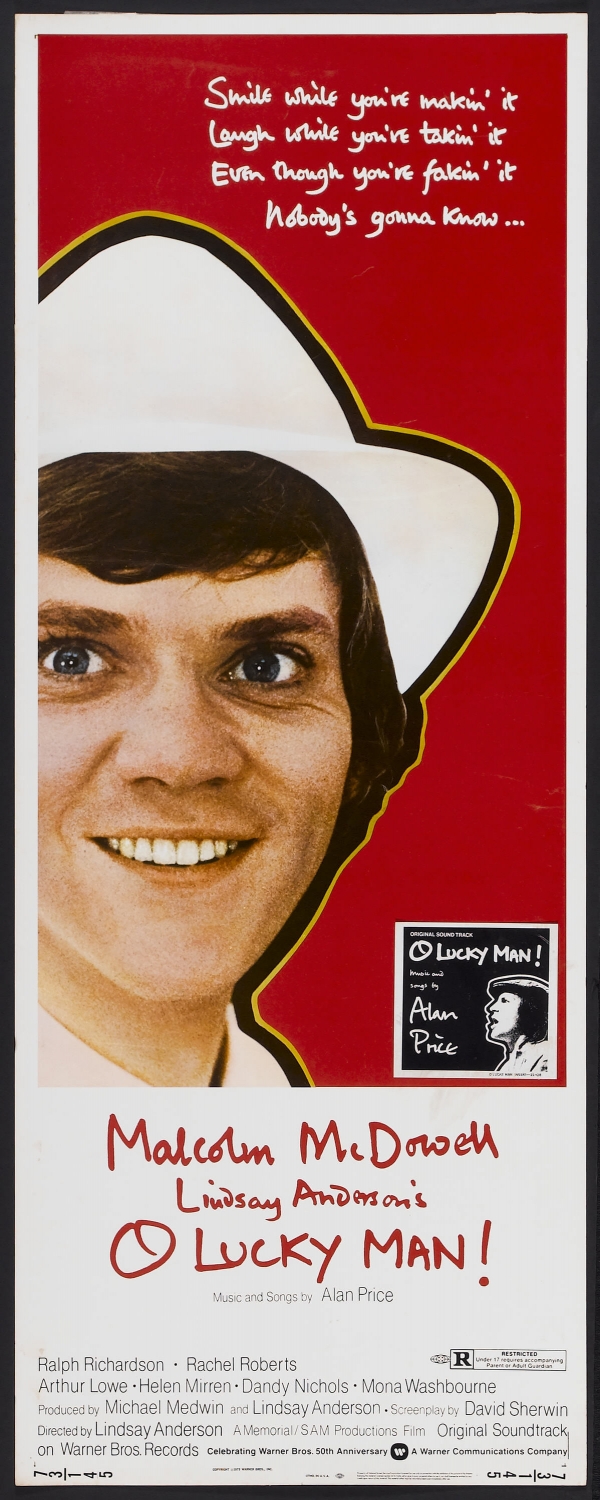
“Smile while you’re makin’ it. Laugh while you’re takin’ it. Even though you’re fakin’ it. Nobody’s gonna know” – Alan Price

One of the reasons that I have not previously considered writing a blog is that I feel somewhat ambivalent about the motivation so to do. Creative writing – which in my case means writing plays – seems quite different. When I finish a project and launch it into the world (however insignificant a part of the world that might be) the piece ceases to be mine and takes on a life of its own. Certainly there is something of me in it, but it is not necessary to know anything about me to engage with the work.

Blogging feels more self-centered – more about me, me, me! Why would anyone want to read my ramblings? Isn’t it somewhat pretentious to imagine that anything I might say could be of any interest or value? Or am I perhaps just being a bit too self-consciously ‘English’ about it all?

The truth is that I am a lucky person. More than that – I have also been very fortunate. Opinion seems to be divided as to whether these are one and the same thing, and indeed as to whether either is simply the outcome of chance occurence or can be influenced by our actions and behaviour. It may be the case, of course, that the nature of our fortune derives simply from the way that we react to chance events.

In an unusual twist we find new age thinking – with its Law of Attraction – almost entirely in ageement with ‘science’. Richard Wiseman, professor of psychology at the University of Hertfordshire, has carried out a 10 year study into the subject. His conclusions are fundamentally that those who believe themselves to be lucky invariably turn out to be so. Being open to opportunity and focussing on positive outcomes tends to lead to better fortune.

I don’t doubt this, but I do believe that my life experience also contains much good fortune that has been entirely outside my influence.

  • I am a boomer – one of the most blessed of generations.
  • I grew up in the sixties. Whatever re-evaluation there might have been of late concerning that golden age most of us are deeply grateful to have lived through it.
  • Despite having no idea what I wanted to do with my life I have had a fascinating career and have had the good fortune to work in some very special places and with some special people.
  • I have met many wonderful, clever and fascinating people, with some of whom I have been married, had relationships or developed friendships.
  • I have always been able to indulge my creative impulses and have met others with whom to do so.
  • I have always been in final salary pension schemes – though that was never something I looked for. I joined my current scheme a month before it closed to new members. This, naturally, is of particular import now.

…but, of course, most of all…

  • I met Kickass Canada Girl. She came eight and a half thousand miles to find me and, but for the most fortuitous of circumstances, we might never have met. As all my fortune and happiness is bound up with her I would say this was spectacularly lucky!

I suppose my fear is that, having been this fortunate, I should just shut up and keep quiet about it. This does raise the question of what is the appropriate reaction to being lucky. Should I feel guilty that there are many in the West worse off than I am? Should I feel even more quilty that many in the rest of the world are far worse off than 99% of us in the West?

Perhaps the best response is to celebrate all good fortune, my own and others, and to do my whatever I can to increase the happiness of those that I know and those that I meet, as well as – wherever possible – those that need it most.

“If I am only happy for myself, many fewer chances for happiness. If I am happy when good things happen to other people, billions more chances to be happy!” – The Dalai Lama.

Tags: , , ,

Newer entries »