web analytics

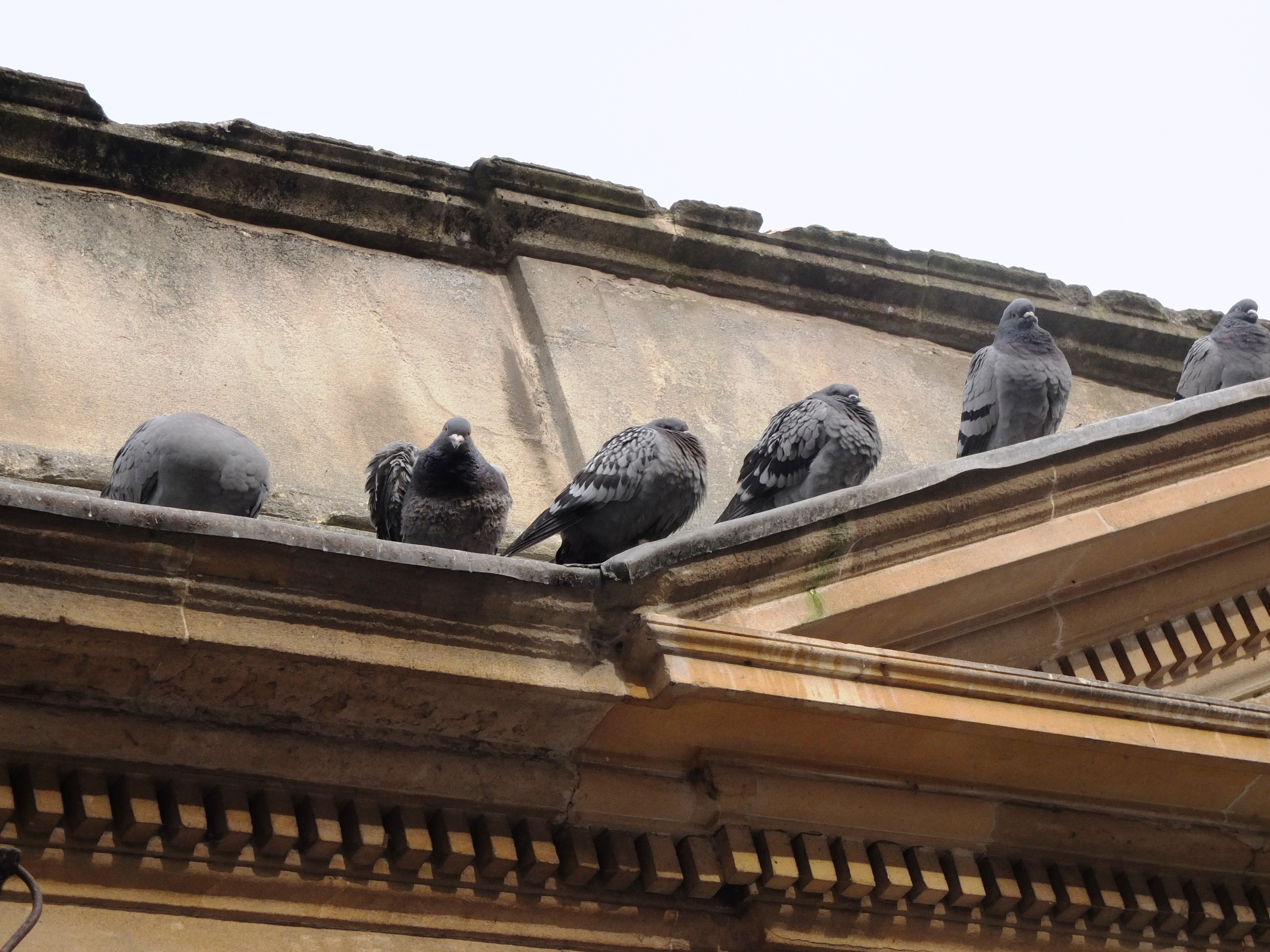
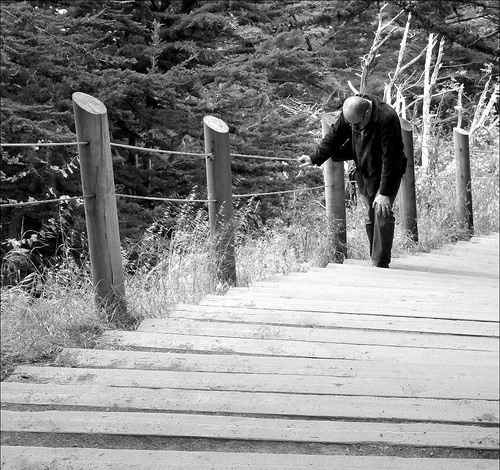
Photo by Andy Dawson ReidA tightly controlled level of something only faintly resembling panic has set in at the School as we embark on four days of inspection. The outcome is expected to be positive – if not very positive – which certainly adds to the pressure.

Independent schools in the UK are inspected by a body called the Independent Schools Inspectorate – or the ISI (should you prefer the TLA). An ISI inspection can take one of two forms – an interim inspection or a full inspection. This one is the latter. Independent schools must be inspected every six years at the outside, but inspections can occur more frequently should the inspectorate deem there to be a need so to do.

The effect of this regimen is that the more time passes without an inspection taking place the higher is the likely-hood of one being called at any point. The ISI gives one week’s notice – making the announcement of an inspection by a telephone call on a Tuesday for a visit the following week – the which has the effect of keeping everyone constantly on their toes. As time passes and the probability of an inspection increases so one feverishly checks the number of weeks left in the term during which such a visit could take place. Since much of the summer term is ruled out by examinations, had we in this instance made it through another week without getting the call we would have been in the clear until the autumn.

No matter. Better in many ways to get it out of the way.

The inspection team comprises eleven inspectors who – in addition to all of the attention that they will be paying to governance, health and safety, child protection and other policy issues – will be observing around one hundred classes over the four days. There won’t be time for the inspectors to observe every teacher but they will cover the majority of them and – understandably – no notice will be given as to which those will be. The inspectors will appear – or they won’t! I have two drama classes on Thursday – either (or neither!) of which might be chosen. At this point I am really not sure whether I would prefer to be observed – or not.

We shall see…

Tags: ,

theI was perusing some old posts on this blog… Yes – I know! – I know! – but I wanted to revisit some of the thoughts I had this time last year – at the point at which the Kickass Canada Girl departed for Victoria. One of the many benefits of maintaining a blog – of course – is that I can do so.

An idle comparison of my posts at that time with those more recent revealed something that I hadn’t anticipated – something regarding the way that I address my (considerably) better half. In early posts she is addressed directly as ‘Kickass Canada Girl’. In more recent posts she has become ‘The Kickass Canada Girl’.

Intrigued, I was moved to wonder at what point – and indeed as to why – this change had come about. Closer examination of archived posts revealed that it had happened over a fairly short period at the end of last year – in late November and December. This was – of course – around the time that the Girl returned to the UK.

The pursuit of the ‘why’ led me to consider more closely the ‘article’ itself. The British Council website includes the following in its helpful definition:

definite article: the

The definite article ‘the’ is the most frequent word in English.

We use the definite article in front of a noun when we believe the hearer/reader knows exactly what we are referring to:

  • because there is only one – as in “The moon is very bright tonight”

…or…

  • because we have already mentioned it – as in “A woman who fell 10 metres from High Peak was lifted to safety by a helicopter. The woman fell while climbing.”

I hardly need say more. Kickass Canada Girl has become The Kickass Canada Girl because she is definitely the only one – and because I believe that I have mentioned her previously… at least once or twice!

I like it – and thus so it shall remain. The Girl is the definite – and definitive- article!


Tags:

Rattle“Drums and rattles are percussion instruments traditionally used by First Nations people. These musical instruments provide the background for songs, and songs are the background for dances. Many traditional First Nations people consider song and dance to be sacred. For many years after Europeans came to Canada, First Nations people were forbidden to practise their ceremonies. That is one reason why little information about First Nations music and musical instruments is available to us.”

Aboriginal Affairs and Northern Development Canada website

Pursuant to my previous post describing my search for fresh Celtic fusion music it occurred to me that I should revisit an earlier – though less successful – quest to find something similar but based instead on Canadian First Nations’ music.

That such a fusion is relatively difficult to find doubtless has its roots in the policies implemented over a century and a half by the European settlers, the which were aimed at the cultural assimilation of the native peoples of what became Canada. Not only does this (as the ‘Aboriginal Affairs and Northern Canada‘ website makes clear) explain the paucity of knowledge and understanding of an art form that would have been handed down orally, but it also throws light on the way that those forms have been regarded since the revival of interest in the native arts over the last 50 years or so. An art form which enjoys uninterrupted pursuit and interest continues to evolve, to grow and – with good fortune – to flourish. Once the narrative is fractured perception of the art form changes from the present to the past tense and the interest therein becomes primarily historical – concerned with the preservation and nurture of its original or traditional forms. At this point the art form ceases to be a living entity – or is in grave danger of so doing.

The Kickass Canada Girl enquired as to the nature of my researches and – on being enlightened – pointed out briskly that I might have asked her first rather than wasting my time. She had a point. Not only is she a great music lover but she is also – on her mother’s side – part Aboriginal – her band originating in the North Thompson above Kamloops in central BC.

She extracted from her extensive CD collection a platter by Robbie Robertson and the Red Road Ensemble entitled ‘Music for the Native Americans’. Yes – that’s Robbie Robertson of The Band! I was not aware that Robbie – born in Montreal – was of Mohawk descent on his mother’s side – nor had I heard ‘Music for the Native Americans’. I like it a great deal and were you to check out these clips you might find that you do too:

It is a Good Day to Die

The Vanishing Breed

Coyote Dance

Grateful as I am for this discovery – however – I am still very keen to find other musical fusions from the Pacific Northwest. If Canadian – or other – readers know of such I would be grateful to hear of them.


It did occur to me to enquire of the Girl how is was that – after getting on towards a decade together – she had only just thought to introduce me to this wonderful music. I decided against! Something about maintaining the air of mystery I suppose…


Tags: ,

…they’d make it illegal!

Emma Goldman

One of the interesting consequences of being married to a girl from the other side of the planet – a side of the planet to which I myself intend re-locating – is the discovery that when it comes to politics there is simultaneously little to choose between nations whilst at the same time being a world of difference. I guess that – whereas the ‘art’ and practice of politics are pretty much universal – the intricacies of the situation at any particular point on the globe tend to render the actuality of the local political jungle opaque to the outsider.

The Kickass Canada Girl has explained Canadian federal and provincial politics to me on a number of occasions. Sadly she finds herself having to repeat things that have clearly not penetrated deep enough to have stuck, though I do believe that I am making slow progress. It doesn’t help that there would seem to be an appreciable disconnect between the politics of British Columbia and those of the rest of the nation. This should come as no surprise given the size of the country, I suppose, particularly since in the UK – a comparatively compact constituency – we seem able to support an infeasibly extended accretion of political opinion – albeit not across our major parties.

Caricature_gillray_plumpuddingPerhaps one of the best ways of getting a flavour of the political purlieu in any particular locale is to follow the work of the political cartoonists thereabouts. In the UK this noble and ancient art can be traced to the 19th century and to such luminaries as Hogarth and Gillray. The latter’s renowned cartoon – ‘The Plum Pudding in Danger’ – representing Napoleon and Pitt dividing the globe into ‘spheres of influence’ – is a particularly good example of the genre.

All this – of course – simply by way of an introduction to a cartoon that I saw in this week’s Observer, and that I thought might give quite a good flavour of current UK politics to any of you across the pond who don’t follow such things. And, well – why would you?

The cartoon refers to the recent Eastleigh by-election – brought on by the resignation of the sitting Liberal Democrat MP on pleading guilty to an offence (his wife took the rap for a speeding ticket when he was – in fact – the driver!). To make life harder for themselves the Lib Dems fought the campaign in the shadow of the fallout of a recent sex scandal (oh – really!) centring on the alleged behaviour of their former chief executive.

The Lib Dems are currently in coalition with the Tories who – though they themselves had designs on winning the seat from their coalition partners (nice!) – found themselves beaten into third place by the UK Independence Party, whose political leanings probably don’t need much introduction.

Chris Riddell’s cartoon captures the essential zeitgeist pretty well, I think. I particularly like the Lib Dems as a diminutive unicorn!


Tags: ,

photo by Gary Henderson on FlickrWith the parenthetical pertinence of the fact that this is St David’s Day in mind I will – if I may – expand on the Celtic theme of my last post.

Every now and again I feel moved – more so than I normally do – to  explore and embrace the culture and heritage of what I feel to be the key part of my ancestry. As is common nowadays I can trace my lineage in a variety of directions. One element of my mother’s family originated on the north east coast of England – another from the midlands (from the area around the delightfully English sounding town of Ashby-de-la-Zouch!).

My father was – however – always extremely proud of his Scottish heritage and in this my siblings and I have enthusiastically followed. Just as soon as we were old enough to make the journey (by train – my father could not drive!) from the home counties to the highlands we embarked on the first of an extended series of family holidays in Scotland. My father was a great hill walker and he and I covered many a mile on peaks across a swathe of the country from Ayrshire to the Great Glen. In later life I have made repeated forays to Edinburgh, both for work and for visits – as performer and spectator – to the Edinburgh Festival.

I find there to be a romantic and gently melancholic quality to much Celtic art, be it poetry, prose, instrumental music or song and regardless of whether it be of the Welsh, the Irish or the Scots. There is something particularly haunting about Scottish music, the resonance of which with the lowering hills and the exquisite straths and glens of the highlands and islands from which it originates will be apparent. I find myself from time to time overtaken by a irresistible urge to immerse myself in it. And yes – I do like the skirl of the pipes – but I also love the clarsach, the fiddle and the whistle.

Now – I have some sympathy with those who like their ethnic music pure and who demand that it be reproduced strictly according to tradition, but music is a living language and – like all languages – must be in a state of constant evolution. My own musical interests lie more in the discovery and exploration of new fusions of tradition and modernity. To this end I found myself recently reconnoitering the InterWebNet for exciting new syntheses of music based on traditional Celtic forms.

I found many interesting things – of course – but this was what I liked the most:

Paul Mounsey is a Scottish composer who married a Brazilian and subsequently moved to Brazil. His music is thus a fascinating fusion of classical Scottish themes, Gaelic voices and Brazilian percussion. His biography on Wikipedia reads thus:

Paul Mounsey (born 15 April 1959) is a composer, arranger and producer from Scotland.

He lived for over 20 years in Brazil. A graduate of Trinity College, London, where he studied with Richard Arnell, he has written for film, television, theatre, advertising and also for the Latin American pop market. He lectured for a short while at Goldsmiths College before moving on as creative director of Play It Again, one of the biggest commercial music houses in Brazil. He has also written articles on various aspects of music. He’s written pop hits for Mexican boy bands, has received commissions for chamber and multimedia works, has lived with and recorded the music of indigenous communities in the Amazon rainforest, and to date has released five solo albums. Paul’s music has featured in the television and cinema adverts for tourism boards such as VisitScotland. He is currently based in Los Angeles working as composer, orchestrator and programmer in the film industry.

Have a listen to these samples and see what you think:

Wherever You Go:              Wherever You Go – Sample

Nahoo Reprise:                   Nahoo Reprise – Sample

Taking Back the Land:        Taking Back The Land – Sample

Senses – 2011:                  Senses 2011 – sample

Tags: ,

Photo by Andy Dawson Reid“It is clear that one is a gentleman’s game played by hooligans; the other a hooligan’s game played by gentlemen.”

Chancellor of Cambridge University, comparing ‘soccer’ and ‘rugger’!
Date unknown (pre 1953)

Regular readers will be aware that, in addition to my deep love for the great game of cricket, I am also a long standing aficionado of the hooligan’s game. As a Scot I naturally and proudly follow and support the national side, which propensity – it has to be said – affords great training in the practice of stoicism.

Maybe it is just me (or maybe it is actually a national characteristic?) but it seems to me that those who follow Scottish rugby are possessed of the ability to maintain a degree of optimism entirely unjustified by the evidence. Regardless of how high-flown are our opponents – or indeed of how badly we were duffed-up the last time out – we absolutely and resolutely believe each time that the impossible is possible and that we will end the day victorious. It is a good thing – as a nation – that we are also blessed with the ‘wee dram’ – with which to console ourselves post-match.

And yet…

…every now and again the impossible does happen and we find ourselves victorious… against all the odds!

Last weekend saw the third round of matches in this year’s 6 Nations tournament (for the uninitiated – England, France, Scotland, Wales, Ireland and Italy). Our reasons for optimism this time round were that the match was being played at home – at Murrayfield in Edinburgh – and that our opponents (the Irish) had lost some half a dozen of their best players to injury or suspension.

By half time any such hopes had evaporated and I had pretty much resorted to following the BBC’s match coverage from behind the sofa! The match statistics showed that Ireland had enjoyed some 78% possession of the ball and an 80% territorial advantage. They had made – in addition – a number of searing line breaks that had torn the Scottish defence apart. There was only one thing in Scotland’s favour. In spite of all their territorial and possessive advantages the Irish were leading by a mere 3 points to nil. For those rugby ingenues – again – this represents a single score of the lowest value.

No matter how optimistic one might have felt 40 minutes earlier, however, it was impossible to avoid the conclusion that Ireland were now likely to ramp up the pressure and to blow the home side away, a belief reinforced shortly after the break when the Irish finally crossed the try line to take the score to 8 – nil. We tensed ourselves for the opening of the flood gates.

And yet – again…

…half an hour later the Scots were leading by 12 points to 8 and holding on grimly in pursuit of a famous victory. It was as though the Irish really didn’t want to win. Though they had applied immense pressure they proved themselves incapable of finishing off any of their moves, whilst the Scots mounted an increasingly heroic defence. By the end of the match the statistics had barely improved – the Irish having had 71% of the possession and played 77% of the match in the Scottish half. Scotland had visited their opponents’ half pretty much only on four occasions…

…but each time they had done so – they had scored!

Some would look at such a match and say that the Scots were extraordinarily lucky to have got away with it. We – of course – see things differently. Our conversion rate from attacks was nigh on 100%. The Irish’s – by comparison – was not – and they had thus clearly not deserved to win.

Naturally I celebrated with a considerably less than ‘wee’ dram!

Tags: ,

“Take the attitude of a student, never be too big to ask questions, never know too much to learn something new.”

Og Mandino

I thought you might like to see what northwards of £18 million can buy you – should you be in the market for a science teaching block!

Photo by Andy Dawson ReidPhot by Andy Dawson ReidPhoto by Andy Dawson ReidPhoto by Andy Dawson ReidPhoto by Andy Dawson ReidPhoto by Andy Dawson ReidPhoto by Andy Dawson ReidDSCF3006Photo by Andy Dawson Reid

Tags: ,

up-downThe colds from which the Kickass Canada Girl and I have of late been suffering are quite the most loathsome that I can recall. I am still struggling to shake off the residuum – in the shape of a vicious dry cough – nearly two and a half weeks after first succumbing to this pernicious pestilence. The Girl is following on roughly a week behind me and an entire month will thus have passed by the time that we have both fully shaken off this scourge.

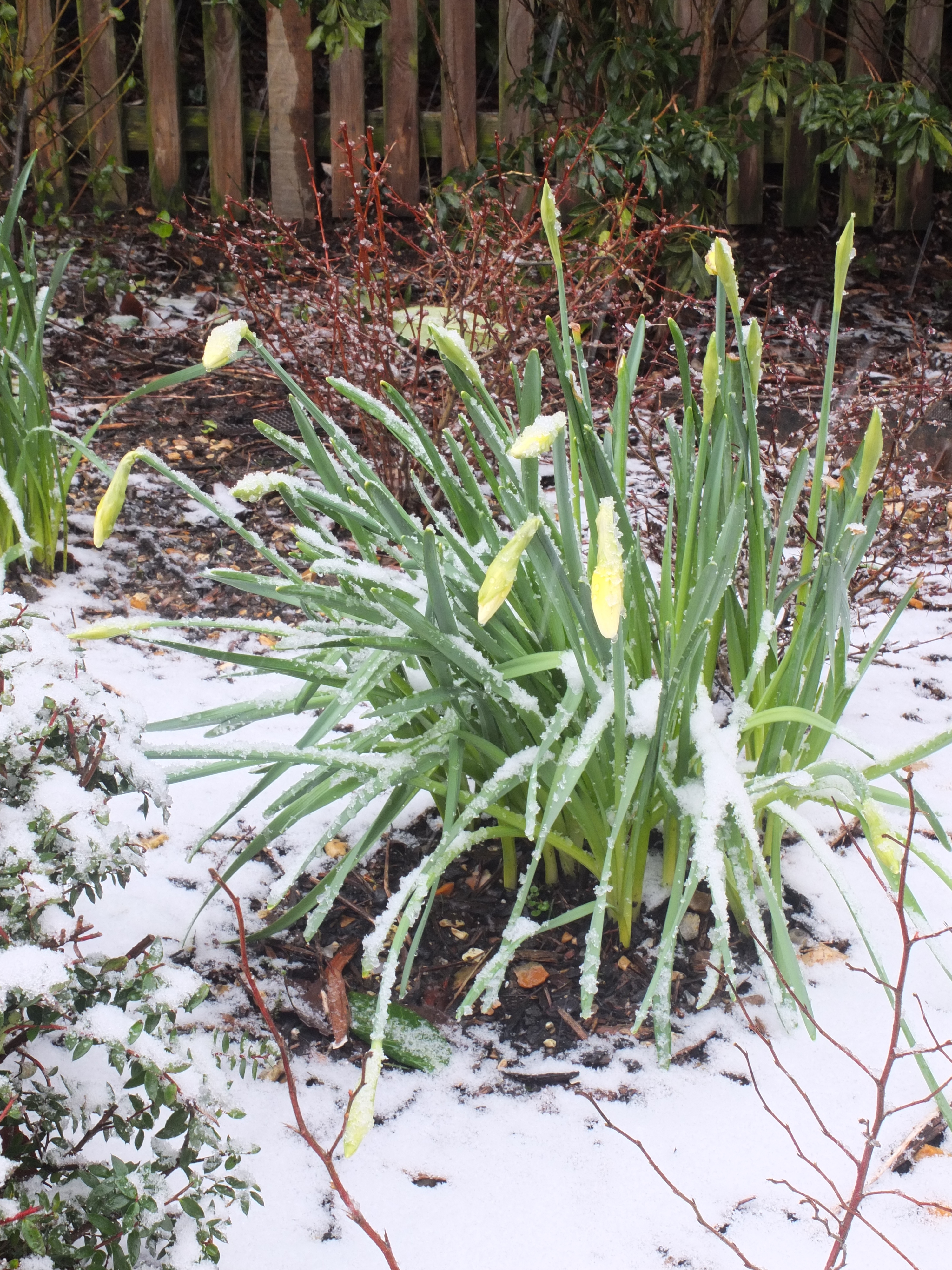
Neither of us has felt throughout this period like doing anything much more than hunkering down and waiting for the storm to pass. This last weekend however – although it is still only mid-February and the mornings are yet frosty – there was a distinct intimation of the imminence of spring in the air. Closer attention to the world outside revealed that the first green shoots had started to poke their sleepy heads through the permafrost. Lambent spring colours may thus shortly bring relief to our saturnine winter gardens.

Once back in the land of the living it will be high time to make a point of getting together with old friends, some of whom we seem not to have seen for ages. I suppose that this negligence could be considered an ineluctable side effect of the customary brouhaha of Christmas and the dark days that follow, but that does rather feel like excusing the inexcusable.

The joyous sensation that the thought of such engagements engenders is – however – tinged at the same time with sadness… not at the prospect of rekindling old friendships, but on the recognition that other such occurrences will not be possible in the near future. Over the past few years the Girl and I have become rather accustomed to making frequent trips to British Columbia. In 2010 our wedding and the arrangements therefore prompted several trips to the province, including one extended visit for the event itself. 2011 – through a combination of circumstances both happy and sad – saw another brace of visits and, of course, once the Girl moved back to Victoria last spring I became – as regular readers will know – a regular myself on the transatlantic route.

All of which led us to becoming somewhat spoiled with regard to the access that we had to our dear and lovely friends in Victoria and Saanichton. One of the consequences of our recent decision regarding my 60th birthday celebration next January is that we will not now be able to revisit Canada until next Christmas. For me that will mean a gap of a year and a half – and more – without my setting foot in BC…

…and I miss the place – and I miss our friends…

Sniff!

Tags: , ,

luckenbooth‘Tis the feast of St. Valentine – a day that can apparently trigger a wide range of responses. I am – as you have probably gathered by now – a romantic, but on this occasion I will do my very best to avoid inducing a surfeit of nausea.

In historical terms the ever resourceful Wikipedia reveals the following:

“The first recorded association of Valentine’s Day with romantic love is in Parlement of Foules by Geoffrey Chaucer. Chaucer wrote:

For this was on seynt Volantynys day
Whan euery bryd comyth there to chese his make.

(For this was Saint Valentine’s day, when every bird of every kind comes to this place to choose his mate.)”

Whilst on the InterWebNet I couldn’t resist getting just a tiny bit self-referential. I was deeply gratified – and not a little humbled – to discover that a Google search for “Kickass Canada Girl – Valentine” returns links to this unassuming blog as the top three items. The second such is for a post that I added at this time last year entitled – ‘My Canadian Valentine’. The subject of this particular missive will come as no surprise to anyone, and those who just have to (re-)read it will find it here.

Those who attended our wedding or blessing ceremonies back in the summer of 2010 will doubtless recognise the image that accompanies this post as being that of the Luckenbooth, which featured extensively on both of those occasions. The Luckenbooth – in the form of a brooch – originated in 16th Century Edinburgh. They were given as love tokens or as lucky charms to ward off witches and were purchased from the locked – or ‘lucken’ – booths near St Giles Cathedral on the Royal Mile. These booths housed mainly silversmiths and goldsmiths and were amongst the city’s first permanent shops. The Luckenbooth has since gained a reputation as the traditional Scottish love token and is often given as a betrothal or wedding brooch.

Last year’s Valentine’s day was tinged with a touch of sadness at the impending departure of the Girl for Canadian shores. This year’s is a celebration (if for economic reasons a slightly low-key one) of her restoration to my side. For this – and for so much else – I am most eternally grateful.

I will – naturally – keep private the true expression of my feelings for the Girl – but would like to take this opportunity to wish lovers everywhere:

…Happy Seynt Volantynys Day!

Tags: ,

ballotOne of the sadnesses of modern life… well – of my modern life at any rate… is that I don’t have time to read a daily paper. I am sufficiently old-fashioned that, whereas I find the BBC’s online news coverage to be completely indispensable in many ways, I do prefer to be able to sit down with folded newsprint and ink – preferably over a cup of something decently hot and caffeine infused.

These days I often purchase The Independent on a Saturday (my apologies to those Canadian and other readers to whom these titles are meaningless) in part because it has a decent listings section, but the mainstay of my print media habit is that doyen of the British Sunday press – The Observer. I don’t recall exactly when it was that I started reading The Observer, though it must have been either in the late 70s or early 80s, but since happily surrendering myself to the timeless tradition of devoting a sizable chunk of my Sundays to ‘the Papers’ I have seldom missed an edition. I follow The Observer now for same reasons that I ever did – the quality if the thinking and the quality of the writing.

Two recent articles caught my eye. The first piece concerns the documentary film ‘Inequality for All‘ – winner of the special jury prize at this year’s Sundance Film Festival – whilst the second is from one of The Observer’s regular political columnists – Nick Cohen. Though ostensibly unrelated both pieces address a subject that has been much in my mind of late – the ever growing gap between the richest and the poorest in our society… indeed between the richest and all of the rest of us!

Directed by Jacob Kornbluth, ‘Inequality for All’ stars (if that is the word) Robert Reich – who was Bill Clinton’s Secretary of Labour and is now a professor of public policy at the University of California at Berkeley. The film is based largely on his book – ‘Aftershock’. Reich’s thesis is that in economic terms something changed dramatically in the 1970s. Though the world’s economies continued to grow strongly thereafter until the 2007/8 crash, middle and lower class wages did not – becoming basically static. At the same time, however, the incomes of the top 1% not only continued to grow, but did so exponentially.

Nick Cohen’s article references work by the economist Emmanuel Saez on the aftermath of this most recent recession. Antithetically to previous major recessions – the impacts of which were felt on incomes and stock yields for decades afterwards – by 2010 the incomes of the top 1% in the US were growing again at healthy rate. Not so the remaining 99% – the incomes of whom remain stubbornly mired even now. Yet again there is evidence of an increasing disconnect between the world’s richest and the rest.

If these trends trouble you at all I urge you to check out these – and related – articles for the full picture.

My own thoughts run somewhat tangentially to the main thrust of these articles. It occurs to me that – in large part – the increasing disillusionment with politics in the UK in particular – as reflected in the ever declining turnout at elections – is evidence of an electorate that is coming to believe that those who govern us actually do so solely in the interests of the 1%. Further – this would now seem to be true across the entire political spectrum, either because the politicos are themselves of – or have connections to – the 1%, or – rabbit-like in the face of the on-rushing ‘artic’ (Canadian: truck!) – they fear or are mesmerised by its power and influence. Either way, the middle and lower classes would appear to be – to put it impolitely – screwed! As Reich suggests (quoting an untypically prescient billionaire, Nick Hanauer) this is problematic because – contrary to received wisdom – it is not the 1% that actually generate growth (intent as they are on taking cash out of individual economies), rather it is the great mass of the middle classes (by spending it!).

History would suggest that were this trend to continue unchecked, at a certain point a revolutionary ire would finally be aroused, the formerly silent majority would declare that enough was enough and an insurrection – in some form or other – would almost inevitably follow. The difference this time is that the 1% – by becoming a global phenomenon and by disassociating themselves from any particular nation state – have thus essentially rendered themselves untouchable.

And if not the state then against whom should we rebel – and how?

Tags: ,

« Older entries § Newer entries »