Some more images from the far east. We were really rather taken with Hong Kong…

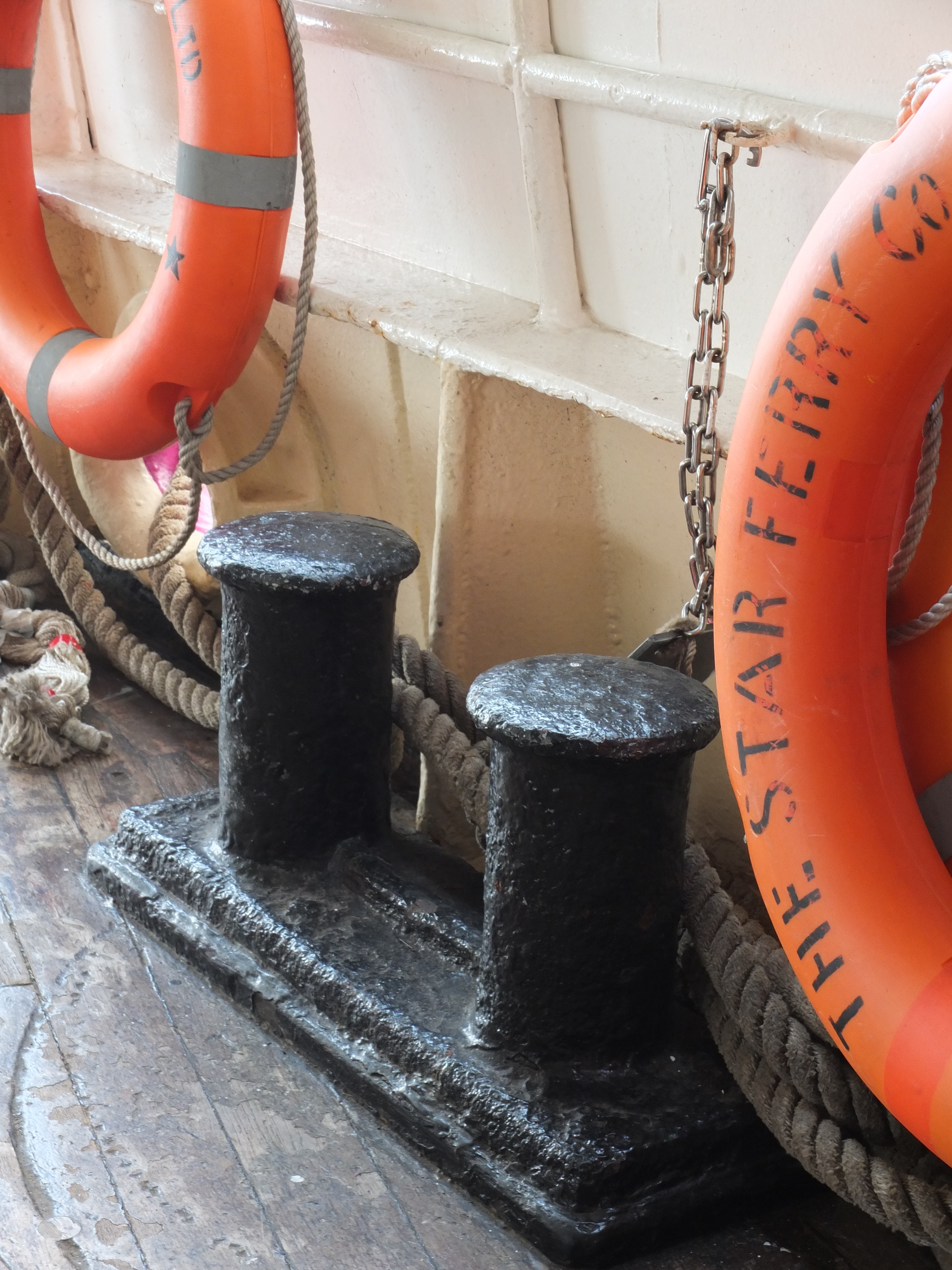




In Canada
Some more images from the far east. We were really rather taken with Hong Kong…
Travel is the most private of pleasures. There is no greater bore than the travel bore. We do not in the least want to hear what he has seen in Hong Kong.
Vita Sackville-West
Mindful of the above I certainly have no intention of boring. Here instead are just a few images from our hectic but most enjoyable wedding trip…








 Every so often I feel the urge to listen to some ‘new’ music.
One of the drawbacks of growing older – at least where listening to ‘popular’ music is concerned – is that it is all too easy to lose touch with recent trends, persisting instead with that which one already knows. The reasons for this are pretty obvious. Much new music is aimed at the young – both in terms of content and in the way it is marketed. This should come as no surprise of course, since the young comprise the main market for it, but the result can be that the rest of us – and our money – are left out in the cold.
We make up for it in many cases by buying new versions (or just new copies) of the music that we listened to in our own youth. Many of us believe in any case that the music scene has steadily gone downhill since whenever that was, and that what remains is but a pale shadow of those glory years. Much recent music seems artificial – driven by the wants of TV ‘talent’ shows – and the rest has steadily become more and more self-referential (pop indeed eating itself) as the same pool of material is repeatedly re-mined, re-sampled and re-used in ever more dilute proportions. It is worryingly difficult to distinguish much sign of the creativity and imagination that pervaded the music of my youth – though it is, of course, pretty difficult to see anything at all through these rose-tinted shades!
I am – naturally – making far too much of this. There is plenty of interesting music around, but with the decline of the once accepted methods of production and dissemination – record companies, record stores, radio playlists and so forth – and the rise of the InterWebNet as a tool for publishing, acquisition and the discovery of music, it is surely much less likely that any gems out there would these days be discovered by chance.
I used to listen to music on the radio a great deal. I no longer do so, as I find most of the UK music stations pretty intolerable. I fear I have reached the age when I prefer to listen to the spoken word – or at least I prefer to listen to the BBC’s radio 4 – which is much the same thing. Oddly I find music radio in Canada to be considerably more agreeable. There seems to be less ‘ghettoisation’ of music into apparently irreconcilably disconnected genres.
Still – as I said at the very top – I felt the need to discover something with which I was not yet familiar. I knew the broad type of music that I hoped to find and – armed with a couple of suitable examples from my existing catalog – I ventured into the digital world. Now – this is something that the InterWebNet is good at, though one has (quite rightly) to work pretty hard to get the desired results. What did we do in the days before we could ask the oracle questions such as “What else is a bit like this, that I might like”?
“Cut the crap”, you say “and just tell us what you found!” Now, now – don’t be impatient…
OK – ladies and gentlemen – I give to you – the ‘Poets of the Fall’.
This Finnish band (yes, really!) – who are pretty much unknown in the UK and Canada as far as I can tell – create a splendidly melodic blend of old and new. They seem to be big in Germany and India (!) where they tour extensively, but they don’t appear as yet to have played in the UK and they have certainly not made it to Canada.
I like them. They may not be your bag, but why not give them a listen? Here are some clips:
Enjoy!
 The November edition of GQ magazine (British edition – which I purchased because it contains a number of Bond related features) details the winners of the GQ 2012 ‘Men of the Year’ awards. The Bond link is a tie-in with the (very) imminent release of the new Bond opus – ‘Skyfall’- which marks the 50th anniversary of the franchise. You can all rest safe in the knowledge that I will be returning to the subject of Bond (if not of Daniel Craig!) in the not too distant future. For now, though, I want to focus on one particular man of the year…
It is 23 years since ‘A Few Good Men’ premiered on Broadway and kick-started Aaron Sorkin’s writing career. Sorkin – who sold the film rights to the script before it had even opened – was subsequently engaged to write the screenplay for the 1992 movie version, which earned him a Golden Globe nomination later the same year.
Sorkin’s career highlights have been rehearsed often enough that there is no need for me to repeat them here. It is a testament to his talent and longevity that adding the 2012 GQ ‘Men of the Year’ award for best writer to his trophy cabinet comes as no surprise, and indeed as something of a relief to those who hanker after the sort of high quality writing that – Stoppard and a few others excepted – seems sadly in short supply in this day and age.
For those unfamiliar with Sorkin’s oeuvre, however, I feel compelled to give just one example – from the first series of the multi-award winning ‘The West Wing’ – by way of an illustration and encouragement to all budding playwrights and screen writers.
As is the norm for ‘The West Wing’, in this episode – ‘The State Dinner’ – a number of plot threads evolve simultaneously. The main strands are as follows:
As ever in Sorkin’s scripts the narrative development of these major issues of the day is seamlessly blended with a multitude of personal involvements, by which means the richness of each character is revealed and developed. The whole creates a multi-layered tapestry woven through with many detailed threads… much like life itself!
The underlying theme of the episode is that of the powerlessness of those in high office in the face of events. Martin Sheen’s President Bartlett eventually mounts a feisty intervention in the truckers’ dispute precisely because – as the Stockard Channing’s First Lady explains to one of the other dinner guests – he is powerless to influence the Idaho hostage negotiations and he cannot stop the hurricane!
It is in the nature of such drama series that – to achieve maximum emotional or philosophical effect – each episode will most likely culminate with one of the featured storylines proving to be the ‘doozy’. Part of Sorkin’s genius lies in his adding to the impact by keeping us guessing as to which it will be. In ‘The State Dinner’ each of the themes builds inexorably to a series of climaxes, each out-doing the one before.
Finally – having been sold a dummy on hearing that the hurricane has changed course and will no longer make landfall – it is revealed instead that the naval carrier group that has previously been diverted to avoid the storm – is now directly in its path and cannot escape. Surrounded by a silent tableau of horrified aides the President tries to make radio contact with the commanders of the group – the scene rendered all the more powerful because we only see the White House end of the connection.
The radios on the carriers have been knocked out by the storm. The only contact that can be made is with a small auxiliary supply vessel, which has already been badly damaged by the huge waves. The captain has been summoned to the radio room but does not appear – leaving the President on the line to the terrified youth who is the radio operator. Knowing the inevitable fate of those concerned the President promises to stay on the line as long as it is open…
Pure class!
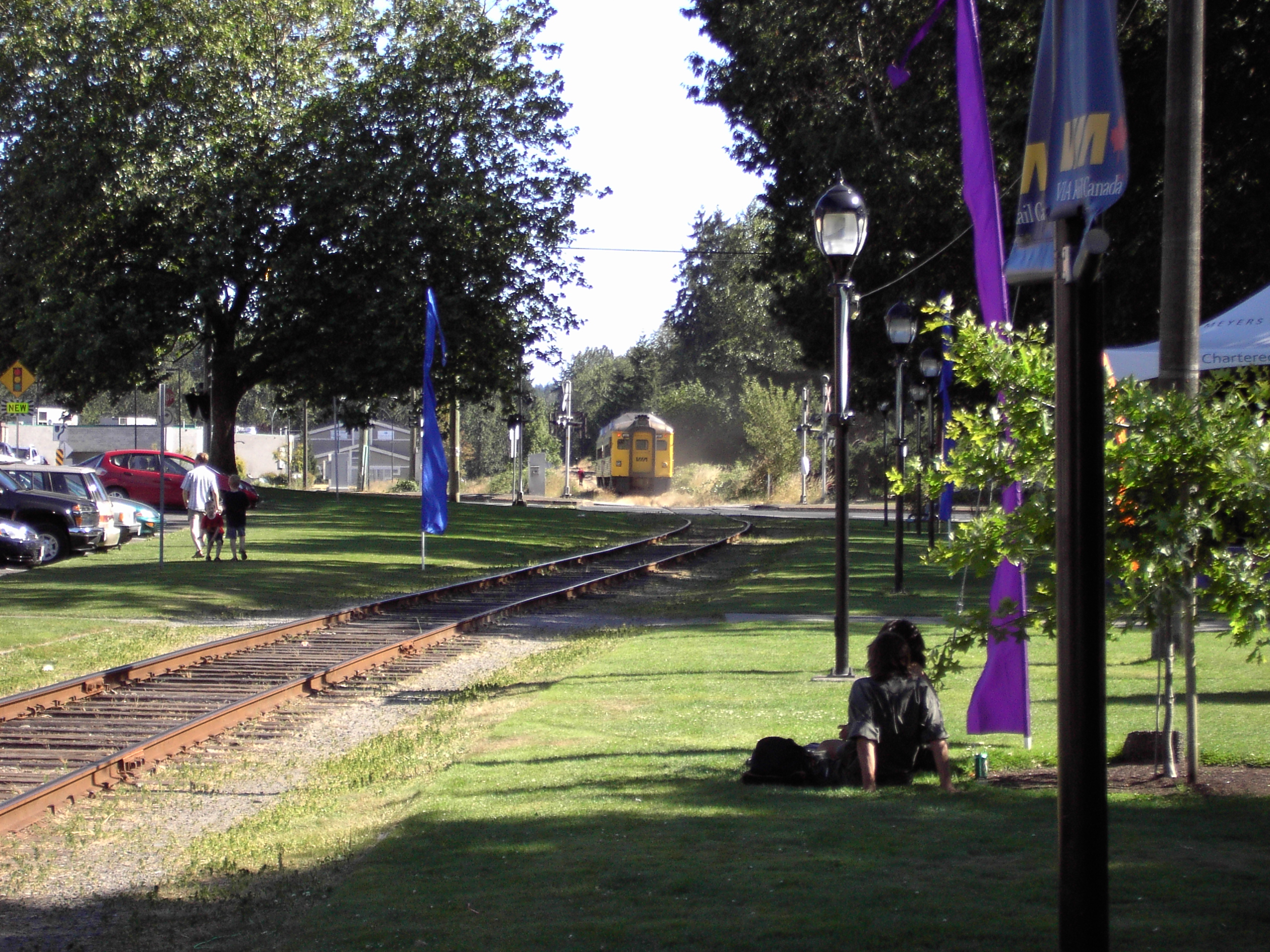 For English chaps of a certain age – those who were in their mid-teens at the turn of the decade from the 60s to the 70s – memories of those inevitable teenage romantic ‘crushes’ on the unobtainable will more than likely number amongst them some such pertaining to that most English of actresses – Jenny Agutter.
I was sixteen in 1970 when Lionel Jeffries’ adaption of E. Nesbit’s classic – ‘The Railway Children’ – premiered before Christmas and I and countless others fell immediately in love with this luminous young lady. The following year’s ‘Walkabout’ (actually filmed before ‘The Railway Children’) showed us Ms Agutter in an altogether different light and we were smitten afresh – though this time in an markedly more adult manner!
‘The Railway Children’ is one of those films that I am happy to watch time and time again, admiring not just the radiant Ms Agutter but also the beautiful evocation of Haworth, the Yorkshire village whose parsonage was home to the Bronte sisters. The film’s ending still packs the same emotion punch as ever and I – naturally – still dissolve in time-honoured fashion. The film was shown again last weekend on one of the myriad Freesat stations by which we are routinely teased with the illusory prospect of there being something worth watching on TV. I stopped – I sat – I watched – I blubbed!
It was not, however, my intention that this post should be merely a eulogy for the lady. As it happened I had thought that I would catch another showing of the film a couple of months before, only to find – once so engaged – that I was watching a wholly different movie. It seems that ‘The Railway Children’ was ‘remade’ in 2000. This new version also featured Ms Agutter, but this time playing the mother of the character that she played in the original.
What interested me about the remake was that though much of the script was almost exactly as before – not surprising given that a significant proportion had been extracted directly from the dialogue of the novel – this film was no-where near as good. Familiar scenes seemed to lack the sparkle – the detail – of the original, and even Ms Agutter had lost some of the quality that shone through in Jeffries’ version. I fell to wondering why they had gone to the trouble – and expense – of remaking a film for which a perfectly good rendition already existed.
This, naturally, set me thinking about remakes in general. I know why they are made, of course – for the money! – but it seems to me a great shame to produce an inferior remake of a much loved – even iconic – film rather than trying something fresh. How many remakes can you think of that could complete with – let alone better – the originals? Yes there are a few – but then again…
Please do feel free to nominate remakes of your choosing, either as complete turkeys or – perhaps rather more rare – the occasional hit. For what its worth I consider the remake of ‘The Thomas Crown Affair’ to at least be able to hold up its head in the presence of the McQueen/Dunaway version, but when it comes to ‘The Italian Job’ – I shudder! What were they thinking? The original is nothing if not a tongue in cheek examination of the death of deference in the swinging sixties. The remake is – well – nothing!
“…as the slow sea sucked at the shore and then withdrew, leaving the strip of seaweed bare and the shingle churned, the sea birds raced and ran upon the beaches. Then that same impulse to flight seized upon them too. Crying, whistling, calling, they skimmed the placid sea and left the shore. Make haste, make speed, hurry and begone; yet where, and to what purpose? The restless urge of autumn, unsatisfying, sad, had put a spell upon them and they must flock, and wheel, and cry; they must spill themselves of motion before winter came.”
― Daphne du Maurier, The Birds & Other Stories




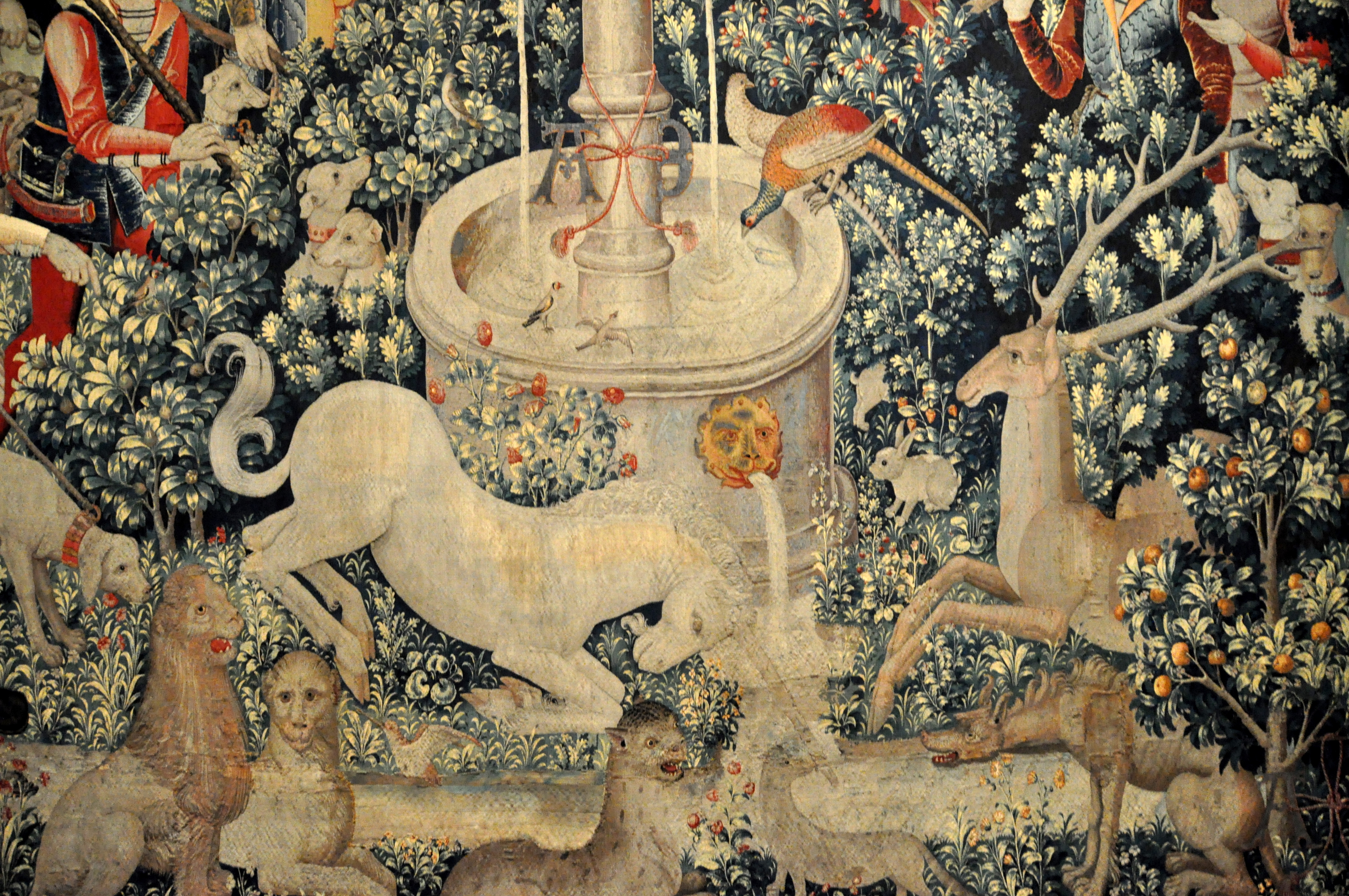 “The mind is like a richly woven tapestry in which the colors are distilled from the experiences of the senses, and the design drawn from the convolutions of the intellect.”
Carson McCullers
One of joys – amidst the many drawbacks – of accomplishing maturity (growing old!) is that afforded by the slow accretion of knowledge which – one must surely most devoutly wish – will lead eventually to the attainment of wisdom. Sometimes it seems to me that this process – as the years advance – consists in the main of going back over old ground, slowly joining up the dots and nurturing the seeds that were sown a long time ago. Perhaps one day the final thread in this immeasurable tapestry will be woven, all the connections will be made and learning will come to a full stop.
Somehow I doubt it!
What prompts this particular reverie, I hear you enquire – tentatively?
Growing up – as I did – in the 1960s there was a fair chance that I would be a fan of the Beatles. You will be unsurprised to hear that this is indeed the case, and that I count myself amongst the more partisan of enthusiasts. I have read exhaustively, viewed widely and – of course – listened relentlessly to each and every note.
There has been until recently, however, one glaring omission to my ardent pursuit – and that can be explained by the fact that even in late 1967 – as I was on the verge of recording my fourteenth birthday – my parents were still, and determinedly, resisting demands that we should acquire a television set. We were thus unable – that Boxing Day – to join the bemused multitudes who sat in stunned silence through the premiere of the Beatles Magical Mystery Tour.
Such was the subsequent critical storm that the one hour film has since had very few public airings and somehow – though it has been made available on VHS and DVD – I have never really felt moved to track it down. Most likely I recoiled from the notion that my idols had after all proven to be encumbered with feet of clay.
Since then, of course, much has changed. Critical opinion now recognises the film to be a valid – if somewhat naive – adjunct to the burgeoning avant-garde that emerged from the 60s counter-culture. McCartney himself has been understandably and justifiably keen to promote the significance of his role in that movement. Further – the film itself is now seen as a precursor to the entire genre that is ‘pop video’, from which the whole MTV phenomenon and generation has since sprung. In this – as in so many things – it seems that the Beatles were after all truly ahead of the curve.
Last weekend the BBC finally broadcast a restored and digitally re-mastered version of the film – along with an accompanying documentary on its genesis – to mark the 50th anniversary of the release of the first Beatles single, Love Me Do. It was good finally to catch up with that which I had missed back in the winter of 1967.
Viewing the film also resulted in another connection being made – another strand finally woven. I have over the last year or so been somewhat fascinated by an American alternative rock band called ‘Death Cab for Cutie’. Actually, it is really the name that fascinates; somewhat bizarre but quite imaginative. I had not, though, investigated further.
Lo and behold, as I watched Magical Mystery Tour at the weekend, what should I see – making a guest appearance – but that well-known 60s surrealist comedy ensemble, the Bonzo Dog Doo-Dah Band, singing a song clearly titled – wait for it – “Death Cab for Cutie”! A little further investigation shows that Neil Innes and Vivian Stanshall of the Bonzos wrote the song for the film, taking its title from an invented pulp fiction crime magazine which had been devised by British academic Richard Hoggart as part of his 1957 study of working class culture, The Uses of Literacy. Small world!
Neil Innes, of course, went on to write and record the songs for Monty Python’s Flying Circus. Vivian Stanshall – amongst many other achievements – made an ‘appearance’ as the narrating voice on the last segment of Mike Oldfield’s Tubular Bells.
Back in the 80s I vaguely knew Vivian Stanshall’s then wife. She and a friend of mine were the main drivers behind a project to convert an old German coaster into a floating theatre/restaurant in Bristol docks. The ship – the Thekla – is still there, though it is now a nightclub/music venue. The ladies fell out with each other and moved on many years ago.
I recall attending the opening night party for the floating theatre – which was filmed by the BBC for a documentary on the project – back in 1982. Vivian Stanshall was present – though perhaps the less said about his presence that particular night the better!
Nice to finally tie up these loose ends. In the phrase that E. M. Forster adopted as the epigraph to Howard’s End – “Only connect”…
 “That’s the way I do things when I want to celebrate, I always plant a tree.”
Wangari Maathai
This last weekend saw the final cricket match of my season. It was a very relaxed, festive affair – taken in good heart by both sides and with much jolly banter and gentle joshing. I found myself batting for a while alongside a much younger chap whom I had not met before. This is not unusual as the nature of a wandering side such as ours is that players come and go over the years, playing a few fixtures here and there as and when they can, or when the mood takes them. You might gather that – given my advancing years and general inability to keep up with the keen youngsters who turn out for more ‘serious’ sides – this suits me rather well.
As it turned out this particular batsman had well and truly got his eye in and laid waste to bowling of all complexions, only finally succumbing shortly before our allotted overs were up for a score in the mid 60s. (Note for the uninitiated: I am not even going to try to explain cricket here. Maybe in a future post… or ten!) The chap concerned was delighted. He had been playing for 9 years, and this was the first time he had scored a ‘fifty’!
Whilst congratulating him unreservedly I couldn’t help feeling a small pang of envy. I came back to cricket in my mid 40s – having played in a desultory fashion at school – and I have thus only been playing semi-seriously for about a dozen years. Scoring a ‘fifty’ has been a major ambition of mine throughout this period and – though I have flirted a number of times with the 30s and once almost made 40 – I have never been able to go on to get the ‘big one’. Maybe there is yet time – maybe not. Though I am learning to “treat these two impostors” with equanimity I have to admit that this has been the cause of some small sadness.
No matter – this post is intended to be purely celebratory. I may not have scored a ‘fifty’ at my favourite game – but I have scored a ‘ton’ when it comes to blogging. Yes – in a little over 38 weeks since I took up blogging as a complete novice I am now posting my 100th entry. Hooray!!
Well – I’ll drink to that – and also to the gentle reader for sticking with it…
Cheers!
 Look – I’m sorry to bang on about this – and I really don’t want to bore the gentle reader more than is absolutely unavoidable – but I really must just put in one final word for Tom Stoppard and the BBC’s adaptation of Ford Maddox Ford’s ‘Parade’s End’, which finished on BBC2 on Friday evening.
Achingly beautifully written, acted, directed and shot this (hopefully!) award-winning drama represents all that has ever been best in what really has become a very sorry creative sphere – that of modern television production. Those who know me even marginally will be only too aware of how little I find to admire these days in the televisual and filmic arts. Kickass Canada Girl claims – with some justification – that I have spoiled the cinema going experience for her. It is no fun at all to sit through a film at my side as I sigh, grunt and squirm irritably when faced with clunky dialogue, unbelievable characters and unnecessary yardage of exposition. The trouble is that she herself has now become much more critical and less able to sit through such mediocre offerings. Sorry about that!
The greatest failure to my mind on the part of TV and film producers – and one which is almost certainly a result of there being too many ‘executives’ now involved in the process who mistakenly think they know how to make drama – is that of not trusting the intelligence of the viewing audience. Let’s put that another way – of patronising the viewing audience. There is nothing more eloquent in drama than that fragmentary understated occurrence or reaction that generates in the viewer a small shock of recognition and understanding. This – surely – is how art can have such a great and direct impact on those eager to learn from it. These days in film and on TV it seems that there is a belief that only if signposted in huge letters on enormous billboards will the viewing audience actually get the point. My worry is that this in itself is breeding a new generation who indeed will not be able to ‘read’ creative works without such assistance.
By way of illustration of what can be achieved let me give just the tiniest example from ‘Parade’s End’ – and that not from any of the main plot threads but of just a single small incidental detail – beautifully handled.
In the trenches of the first world war Ford Maddox Ford’s passe protagonist, Tietjens (played exquisitely by Benedict Cumberbatch), finds himself unexpectedly and unwantedly in charge of his battalion. One of the more unexpected duties he is called on to perform is to give permission for a private – whom we have heard unknowingly for some minutes in the background practicing his bugling – to play the following night before the top brass at an event behind the lines.
A while later – during a German artillery barrage – Tietjens is given the news that a shell has burst in the entrance to a slit trench, and that there has been a single fatality. Tietjens hurries to inspect the scene and sees – half buried in the mud thrown up by the blast – the bugle case that we have seen previously. There is no dialogue – no lingering shot – merely the briefest reaction in Cumberbatch’s eyes.
Then – after some further narrative development – both we and Tietjens hear again the distant refrain of the bugler at practice. Again – no dialogue – no labouring the point – simply the realisation as revealed on Cumberbatch’s face.
This sort of thing requires (under)writing and acting of the highest order, but stirs in the viewers breast an empathy and understanding that no amount of dialogue or elaborate visual symbolism could have effected.
Enough! You have missed ‘Parade’s End’ in its first run (congrats to those who did not!) but it will doubtless be repeated.
…and there is always the boxed set – which would doubtless make a wonderful Christmas present!
 I carry with me at all times what might these days probably be best described as a ‘man’s clutch organiser’.
It might, of course, also be called – usually with a whiff of obtrectation – a ‘man bag’.
This pejorative – with its invidious and somewhat mysogynistic insinuation both that the female of the species is in some way inferior and that a man who carries such an item is, by implication, somehow lacking – might in no small part explain why so few men – even in these enlightened times – actually carry one.
Such opinions trouble me not, as I have carried a bag in one form or another since the early 80s. I started doing so at roughly the same time that I cut my hair! Yes, when I left school in 1972 – having been required to keep my locks “above the ears and ‘orf’ the collar” throughout the fag end of the 1960s – I determined that I would henceforth wear it as long as I wished, and thus did not subsequently get it cut again until 1981 or thereabouts. Having surviving – from the unenlightened – the torrents of ‘humorous’ obloquy on the subject of my appearance throughout that godforsaken decade I am rendered completely immune to any such jibes.
I am frequently asked what I carry in my bag. The short answer is – ‘everything’! The slightly longer answer is – ‘all the things that other chaps stuff in their jacket, shirt and trouser pockets – then have to remember to switch to other clothes when they change – and have to remember to take out before they sit down or they’ll break their mobile phone”. That sort of thing…
The other question that I am asked is – “aren’t you afraid of losing it?”. Well – I never have lost one, but I have suffered several thefts. On one occasion my wallet was stolen from the bag… whilst I was holding it front of me… in a lift… in the Hotel Cosmos in Moscow! When – subsequent to the event itself – I worked out how it had been done, I was almost in awe of the execution of the heist. The setup had featured a little old Russian lady acting as the distraction, whilst the ever-so-helpful young Russian guy ever-so-helped himself to my wallet whilst ever-so-helpfully holding the lift doors open. Sweet!
On the other occasion the bag itself was stolen – in the bar at the National Theatre in London. This was particularly embarrassing as I had gone there to meet someone that I had not met before and did not know – to discuss a creative project. The bag – containing all my worldly possessions – was lifted from the foot of my chair as I sat in the bar having a drink with her. Without keys I had to abandon my car in the service road in front of the theatre, and without money I was forced to borrow from the stranger that I had just met in order that I might catch the train home.
I have replaced the bag at intervals as each has – one by one – fallen apart. As a result I have observed that these things go in and out of fashion, and that it is sometimes virtually impossible to get a bag with a sensible configuration – one that can hold everything without being ridiculously bulky. When I found the present incumbent – five years ago in Paris (don’t we sound cosmopolitan!) – I snapped it up immediately even though it was wickedly expensive, because it was the closest I had ever found to being the perfect bag.
Recently, however, it has started to show its age. One of the main zips has failed rendering it insecure and thus considerably less attractive. I enquired of Tumi – the manufacturers – as to whether or not it could be repaired, given that the leather itself is still in pretty good condition. Tumi hinted that they would need to send the bag away to Germany and wanted to charge me so much for the pleasure that it was really not worth doing.
It crossed my mind that – like me – the bag was ready for retirement and I took the opportunity of meeting friends in London last weekend to try to locate a suitable replacement. I was in for a shock. Tumi had discontinued this, the most useful bag in their range, and had no substitute that was even close. Further investigation revealed that – as far as bag manufacturers are concerned – this sort of thing is now distinctly out of fashion again. After a frustrating afternoon’s search I had to concede that I was not going to find a bag anywhere near as perfect as the one that I was about to retire.
Perhaps I should think about this a little more…
Naturally the InterWebNet provided the solution – a firm on Eton High Street called ‘1st Class Leathergoods Repairs’. Those that know Eton will, of course, not be at all surprised that in the end the solution was more or less on my doorstep, or indeed that it should take this form. The firm’s website announces:
“We are repairers to
Customers over the years have been unusual and varied in their requirements, and include historically famous families, celebrities, and business and professional personalities, as well as meeting the every day needs of ladies and men and people on the go.”
I can’t argue with that – and my ‘man bag’ is now safe in their hands.
I did reflect – as I walked away from their shop clutching all my worldly possessions in a plastic carrier bag – if there wasn’t a message in this for my own retirement!
Can’t think what it might be though…