web analytics

Memories

You are currently browsing articles tagged Memories.

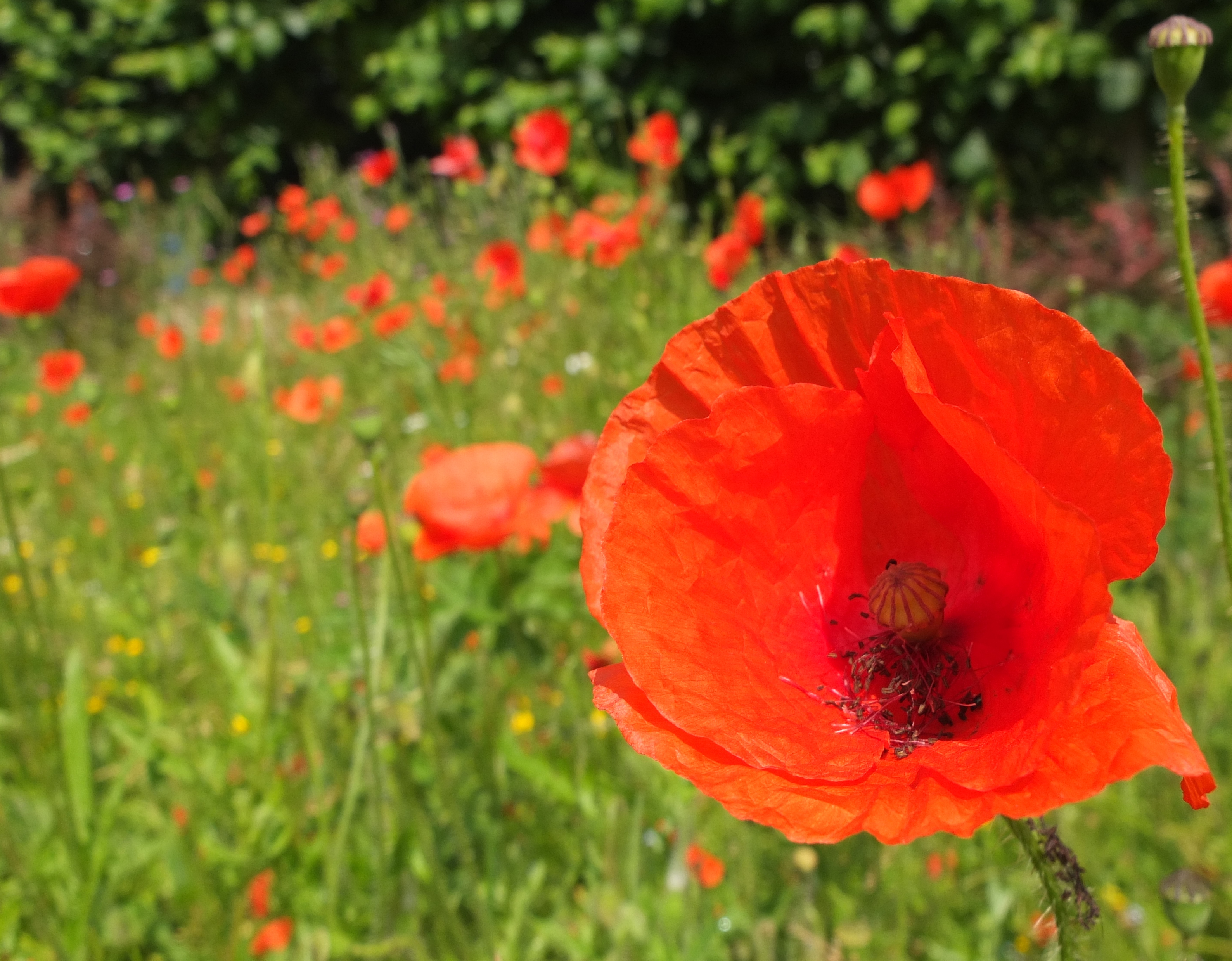
Image from PixabayToday was Remembrance Day – the eleventh day of the eleventh month – which marks the falling silent of the guns on the western front at the end of the Great War.

In the UK it is a normal working day and the occasion is marked – for those who mark it at all – by a two minute silence at the eleventh hour. The UK has always made more of Remembrance Sunday, which is held on the nearest Sunday to Armistice Day itself.

In Canada the day is a public holiday!

Either way it is entirely right and proper that there should be an annual reminder of – and a chance to reflect upon and give thanks for – the sacrifices made by those obliged to become engaged in armed conflict on behalf of their countries and who have paid the price thereof. It is a time also to extend thoughts and sympathies to those left behind.

I have always personally felt ambivalent about the wearing of the poppy, though it is a splendid symbol and the campaign raises essential monies for a truly worthy cause. During the sixties and seventies – when I was in my youth – the campaign in the UK featured the tagline “Wear your poppy with pride”. The prevailing mood at the time seemed very much to celebrate our glorious military history.

I couldn’t help feeling that – whereas pride might be an appropriate emotion for the combatants themselves, given the part they had played – for those of us with no direct involvement neither pride nor glory had a place in the remembrance of loss and sacrifice. It was surely more appropriate to feel sadness, regret and shame… shame that our country had been obliged to ask its young men to kill the young men of other countries and to make the ultimate sacrifice themselves.

Whatever one’s notion might be of ‘just’ war it is indisputable that of all the conflicts that have raged throughout history wars that could truly be thus classified are far outnumbered by those that could have – should have – been avoided. It is a shameful reflection on humanity that, whereas we continually spend vast fortunes and devote considerable ingenuity to developing newer and more hideous ways to kill each other, we are incapable of making a similar investment towards bringing war itself to an end. We struggle even to terminate the most prosaic of conflicts.

Perhaps on this day of remembrance we should also turn our minds to all those who are responsible – through their madness, their bigotry, their misguided idealism, their fanaticism, their political ambitions, their misplaced xenophobia and jingoism, their greed, desire, lust – for any part in fomenting or promoting armed conflict.

It seems – tragically – that remembering the dead alone is not enough to bring an end to war. Perhaps we must also keep fresh in our memories all of those whose actions – or lack thereof – have helped to sew the seeds of conflict.


Tags: , ,

Image from Pixabay“What bothered me about this terrible recognition was the way in which the evidence of past things lies before us, trailing clouds of meaning… and we miss it!”

Hugh Hood – ‘A New Athens’

In my last posting – with reference to the start of my final term at the School – my train of thought terminated with a perhaps slightly unexpected reference to the circle of life. It was not the first time that this notion has featured in this eclectic assemblage of jottings.

I find myself – as life progresses – increasingly aware of its oblique nature. The events of the past make appearance alongside that which is present and – indeed –  that which is yet to come. Should an analog assist at this point you might try imagining that you are standing on the face of a huge clock at – say – seven o’clock. You can look back across the clock face to three o’clock – and indeed look ahead to ten o’clock, but when all is said and done time will still appear to sweep by in a continual circuit – a sort of temporal Mexican wave – with midnight marking both the end of the old and the start of a new cycle.

To what – I hear you ask – might this metaphysical mood be attributed?

On Friday last I attended the funeral and wake of a widely loved and sadly prematurely deceased member of the School’s support staff. The turnout was of such proportion that the diminutive chapel at the cemetery was almost literally bursting at the seams, the magnitude of which congregation might at least have offered some small consolation to the grieving relatives.

Such occasions do of themselves have a tendency to promulgate the philosophic. A little more than a year ago – in March 2014 – I posted this piece on the occasion of a not dissimilar event that had contemporaneously marked the the passing of one life and the arrival of another. The Kickass Canada Girl and I had attended the memorial service for a very old friend, the day before hosting a gathering at which was present a very dear but considerably younger friend, whose four month old baby boy inevitably and utterly stole the limelight.

At last Friday’s gathering the self-same friend (whose connection to the School was the source of our friendship) was once again present – this time bearing another very recent and as yet unmet addition to the family – a three week old daughter. On both occasions it was impossible not to be moved to the quiet contemplation of higher matters.

It would seem that – in these days – even our reminders of the cyclical nature of existence are now arriving periodically…

Perhaps the ultimate cybernetic system!

Tags: , ,

Flashback!

Image by  Bushey on Clker.comEvery once in a while something happens that takes one by surprise – that brings one up short – that shakes one abruptly out of any sense of complacency. Well – such a thing happened to me just this last weekend. The Kickass Canada Girl flew back to Victoria for a brief sojourn to visit loved ones and friends.

Why did this come as such a shock – given that I knew well in advance that she was going?

For the answer to this question one need only look back over this journal to the entries from a couple of years ago. At the start of December 2012 the Girl flew back to Victoria to wind up her affairs there after the nine month experiment of the two of us living on different continents. Her job in Victoria had gone up in smoke, as had our plans of a rapid redeployment into retirement on the Saanich peninsular. The Girl was on her way back to the UK in time for Christmas – and our plans were on the way back to the drawing board.

This visit marks the first occasion since 2012 upon which the Girl has gone to Canada without me – and I have to say that I don’t at all care for the experience. I was not expecting such a strong echo of the many poignant occasions during those nine months when – following our all too brief visits to each other – we endured the abrupt wrench of renewed parting as we went our separate ways for a further six to nine weeks.

This period of absence brings back the sort of memories and feelings that I thought I had safely tucked away for good.

It is – of course – but a brief parting and we will soon be back together under the same roof – enjoying another Christmas together. In all probability the next time we make the journey to BC we will be traveling one way only.

All of this I know – but I still don’t like the sensation…

Sigh!

Tags: , , ,

Photo by Andy Dawson ReidFor the first time since since I joined the School not far short of a decade ago, the whole community gathered as one in the Founders’ Court just before 11:00am yesterday morning to participate in a simple but effective ceremony of remembrance.

It is – I suppose – little surprise that this particular Armistice Day should be accorded such significance though, of course, 2014 is the centenary of the commencement of the Great War rather than of its close. That it has acquired this importance may be determined from – amongst other like signifiers – the public response to ceramic artist Paul Cummins’ installation at the Tower of London. This extraordinarily moving presentation – entitled “Blood-Swept Lands and Seas of Red” – has clearly caught the public imagination far beyond the expectation of those who commissioned the work.

That we stand in silence and remember those who gave their lives is entirely apposite. Given even that the images of modern warfare are these days beamed into our homes like some obscene computer game, we still cannot begin to imagine the true nature of the ordeal experienced by those who find themselves in the combat zone. The utter horror of warfare – the mechanisation of destruction – the unimaginable cruelty of the carnage that men are persuaded to inflict upon one another – the impossibility of ever truly ‘coming back’ from war…

Those of us fortunate enough to have avoided any need to undergo such a baptism can only marvel at the fortitude, the courage, the sacrifice of those that have done so. There but for the grace of god – go each of us…

What should not be forgotten – especially at this time of remembrance – is the part played by those powers and potentates at whose behest and command our young men head for the battlefield. We would – of course – love to imagine that the wise heads and stout hearts of our leaders direct them to strain every sinew to ensure that any such conflict be avoided if at all possible. War should only ever be a last desperate act of self-defence. It is sadly all too clear that in many conflicts this is simply not the case.

I was moved to tears by an article in Saturday’s Independent newspaper that drew attention to the scarcely believable fact that – since 1945 – there has been but a single year (1968) in which no member of the UK armed forces was killed in action. This is a truly shocking statistic!

When we as a nation ask the ultimate sacrifice of our young men – the most precious gift that is life itself – do we not bear the immense responsibility of ensuring that we do so only when there is absolutely no alternative?

The Great War – as so many others – should never have happened. Europe’s rulers and political leaders – by their mendacity, their naivety, their ignorance, their incompetence… their fragile egotism… allowed the continent to slide into a cataclysmic conflict that wiped out a generation and changed the world utterly!

This also we must remember.

Tags: , , ,

Bake on

Photo by Andy Dawson ReidThose souls who reside in the United Kingdom and who still consume the products of the organisations both private and public that engage – for better or worse – in the televisual arts, will have been unable to avoid over the last year or so the nationwide enthusiasm for the category of comestible cookery that utilises prolonged dry heat by convection rather than by radiation… known more commonly as baking!

I refer – of course – to the ‘Great British Bake Off’.

The Kickass Canada Girl is a fan. I don’t mind it being on in the background. The recent ructions on the show – which need not detain us here – have done little to impinge on its overall veneer of gentle British whimsy which has proved for many a welcome corrective to the endless diet of so-called ‘reality’ shows.

Naturally, our broadcasting and other media corporations – never known to go easy on an expiring equine – have parachuted aboard the passing bandwagon and all things bakery related have now been hailed as the best thing since – er – sliced bread!

Thus is was that I found myself on a recent Saturday morning listening to one of those Radio 4 (a sort of talk radio, for north American readers) programmes that is a miscellanea of items comprising in the main interviews with interestingly ‘normal’ people (sometimes in extraordinary circumstances but just as frequently not so) only to discover that this particular episode had a ‘baking’ theme.

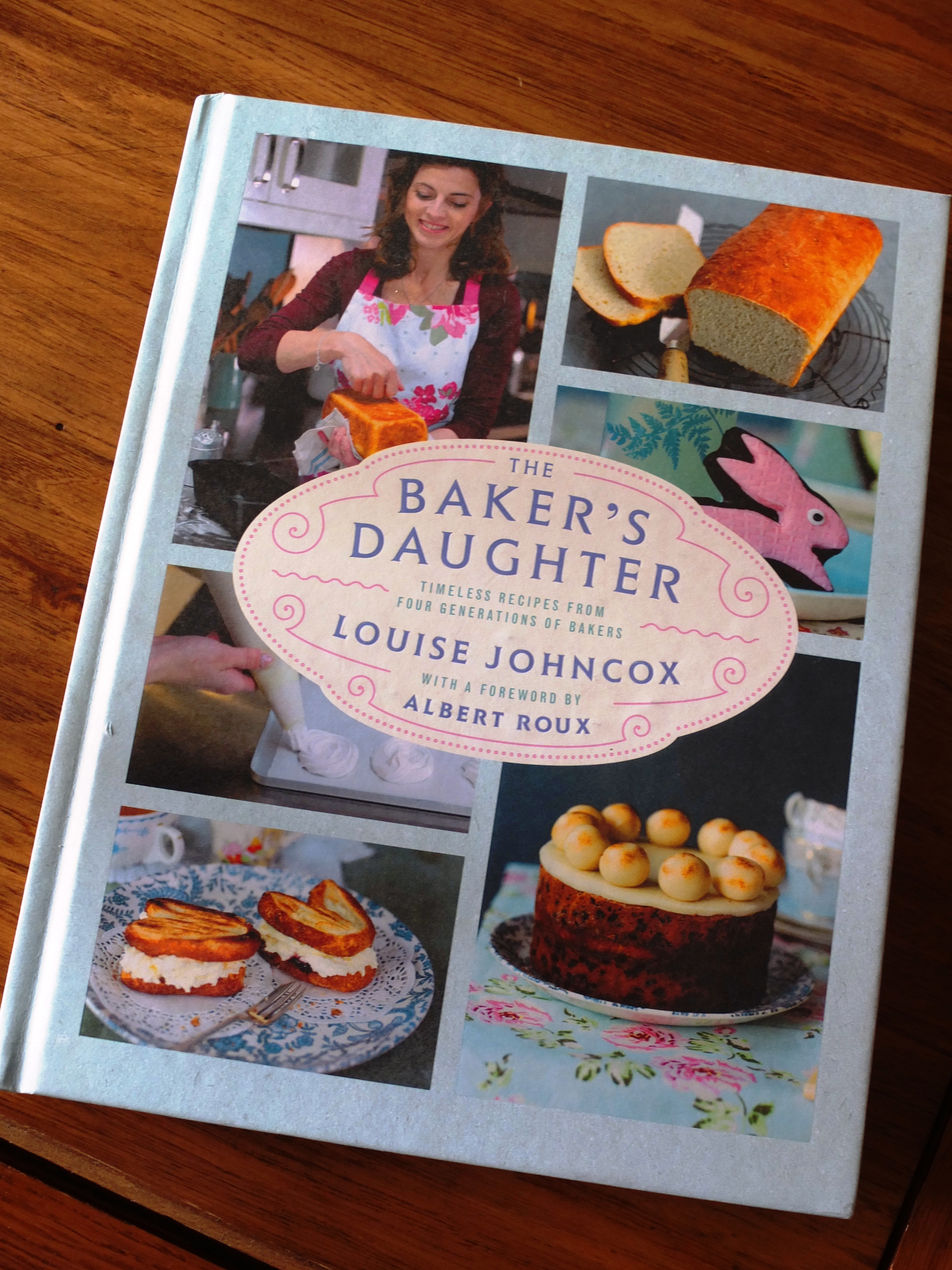
One interviewee in particular caught my ear. Louise Johncox – a journalist who writes for publications such as The Times, The Sunday Times, The Daily Telegraph and The Guardian – comes from a long line of bakers and confectioners. Her father ran a tea shop for more than forty years in the Home Counties and she grew up surrounded by the smells and tastes of fresh-baked bread, cakes and patisserie.

The object of Mrs Johncox’s appearance on the radio was to promote a book that she has recently had published. The Baker’s Daughter is a charming cross between a memoir and a recipe book. Mrs Johncox speaks well and passionately on the subject and has a clear love of all things related to the baker’s art.

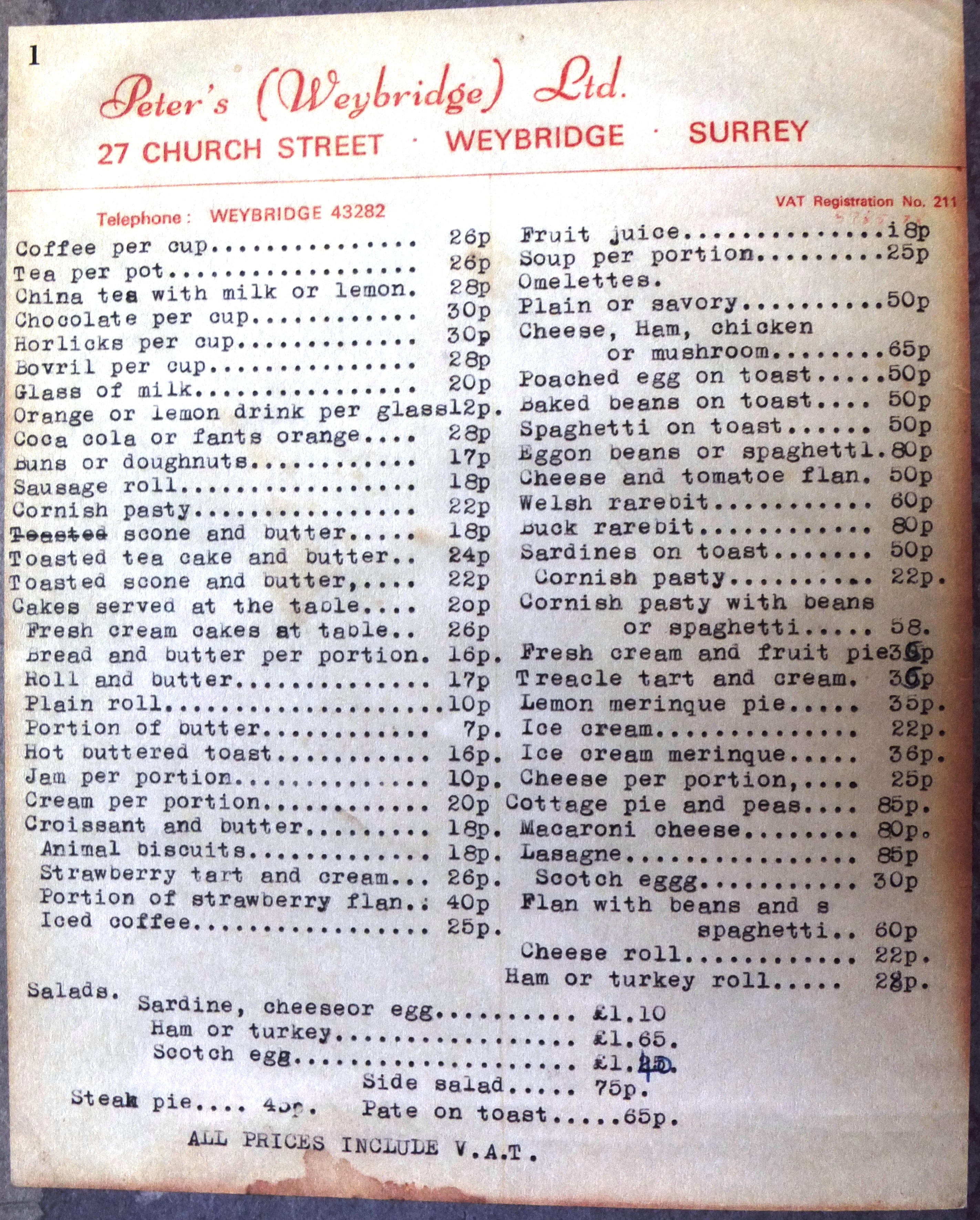
Given my ambivalence on the subject you might be surprised that I am expending precious words on it. Well – as you might have guessed by now – there is a hook. Mrs Johncox’s father’s tea shop – Peter’s, Weybridge Ltd – was located in the small Surrey town in which I grew up.

Peter Johncox and his wife Frankie moved to Weybridge in the spring of 1960 – in the same year as did my parents! I was six at the time and I remember this delightful emporium existing virtually unchanged throughout my adolescent years. Peter’s was famous amongst other things for its Welsh Rarebit which I swear – no doubt erroneously – that I can still remember. The recipe for this treat is – fortunately – included in the book. The tea shop stayed open until after the turn of the millennium, by which point Peter Johncox had become too old and infirm to continue its management.

Photo by Andy Dawson ReidWhat really took me by surprise – as I listened to Mrs Johncox’s reminiscences on the radio – was just how teary I found myself all of a sudden. My mother never drove a car and thus could for many years be seen trundling her shopping bag on wheels the mile or so from our house down to the centre of town to do the shopping. Once all had been crossed from her list she would repair to Peter’s for a much need cup of tea and – mayhap – a sweet treat – as a means of recharging the batteries for the fully laden return trip up the hill!

My mother died in 2010 – a mere two years before Peter Johncox. Peter’s – as with so many other such familiars – is long gone, and I rarely now find myself with a reason to visit Weybridge.

The book is a delight – both as a culinary treat and as a reminiscence of times past. I thoroughly recommend it.


Tags: , ,

They shall grow not old, as we that are left grow old:
Age shall not weary them, nor the years condemn.
At the going down of the sun and in the morning,
We will remember them.

Laurence Binyon – ‘For the Fallen’


Today is – you will not need to be reminded – the seventieth anniversary of the D-Day landings in Normandy in June 1944.

This major anniversary is rendered more poignant by almost certainly being the last such on which any number of those involved on the day itself will still be alive. This pivotal event from our recent history will slip increasingly quickly into the mists of the past, to become – as has the subject of the other major anniversary this year, the start of the Great War – an event that is now only revealed to us through the history books and to which we can no longer discern a direct connection.

I was born in 1954 – a mere ten years after the events being commemorated today. At that point the memories for my parents’ generation were still razor sharp and the now familiar process of ‘reassessment’ had not yet commenced. So much has changed throughout the world since that day.

No matter how vivid are the accounts that we read – or how searingly accurate the computer-generated movie images with which we are assailed – it is now simply impossible for us to truly comprehend what it must have been like for those who were actually involved. I – for one – am most grateful that I have never been called upon to make such choices – such sacrifices.

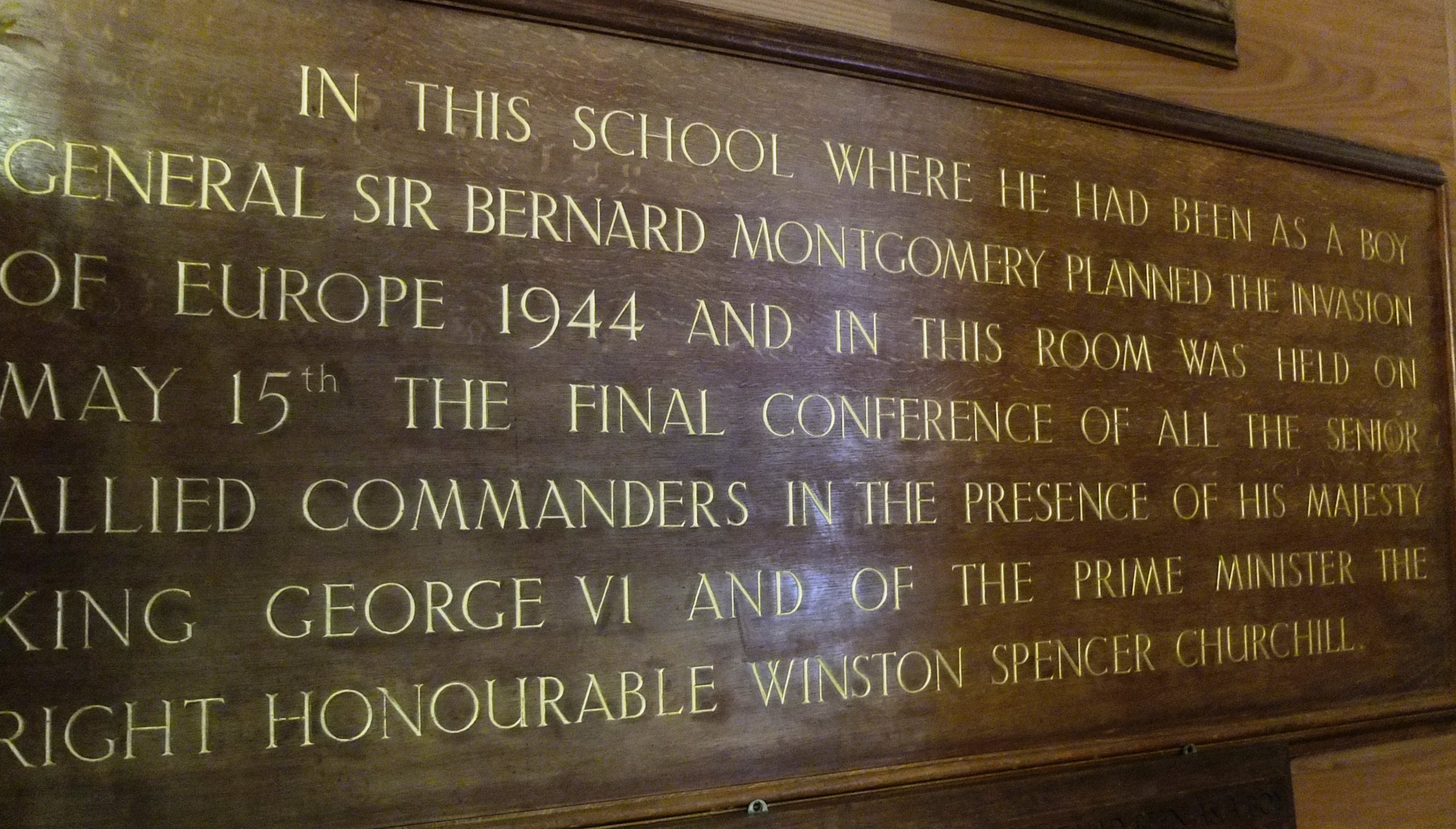
Photo by Andy Dawson ReidThere is a connection with the School. Montgomery was an old boy – and when the community decamped to leafy Berkshire to ride out the Blitz the school buildings were requisitioned by the military. The Board Room was used for much of the planning of the British part of the invasion and the final conference at which the decision was taken to launch the attack was held there.

The buildings that housed the School in 1944 no longer exist – the School having moved across the river in the late 60s – but the map used by Monty and the commemorative plaques installed after the war are still extant in the current equivalent space.

These artifacts provide a lasting reminder – lest we forget…

Tags: , ,

photo credit: <a href="http://www.flickr.com/photos/trawets/523630550/">trawets1</a> via <a href="http://photopin.com">photopin</a> <a href="http://creativecommons.org/licenses/by-nc-nd/2.0/">cc</a>On re-reading my recent post – ‘Blue remembered hills‘ – I realised that I had not expressed to my satisfaction that which was on my mind when I composed same. This is a not infrequent occurrence for me as it happens, but on occasion – this being one such – I feel moved to revisit a topic… to give it a second shot, as it were.

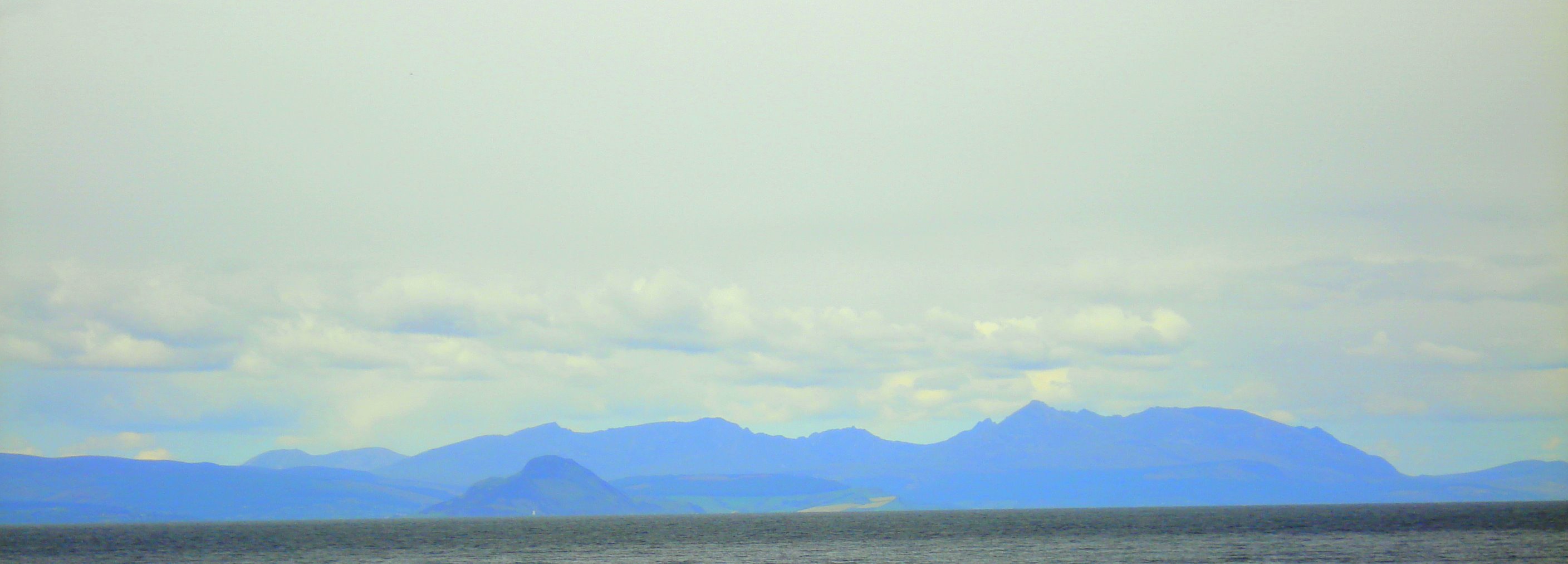
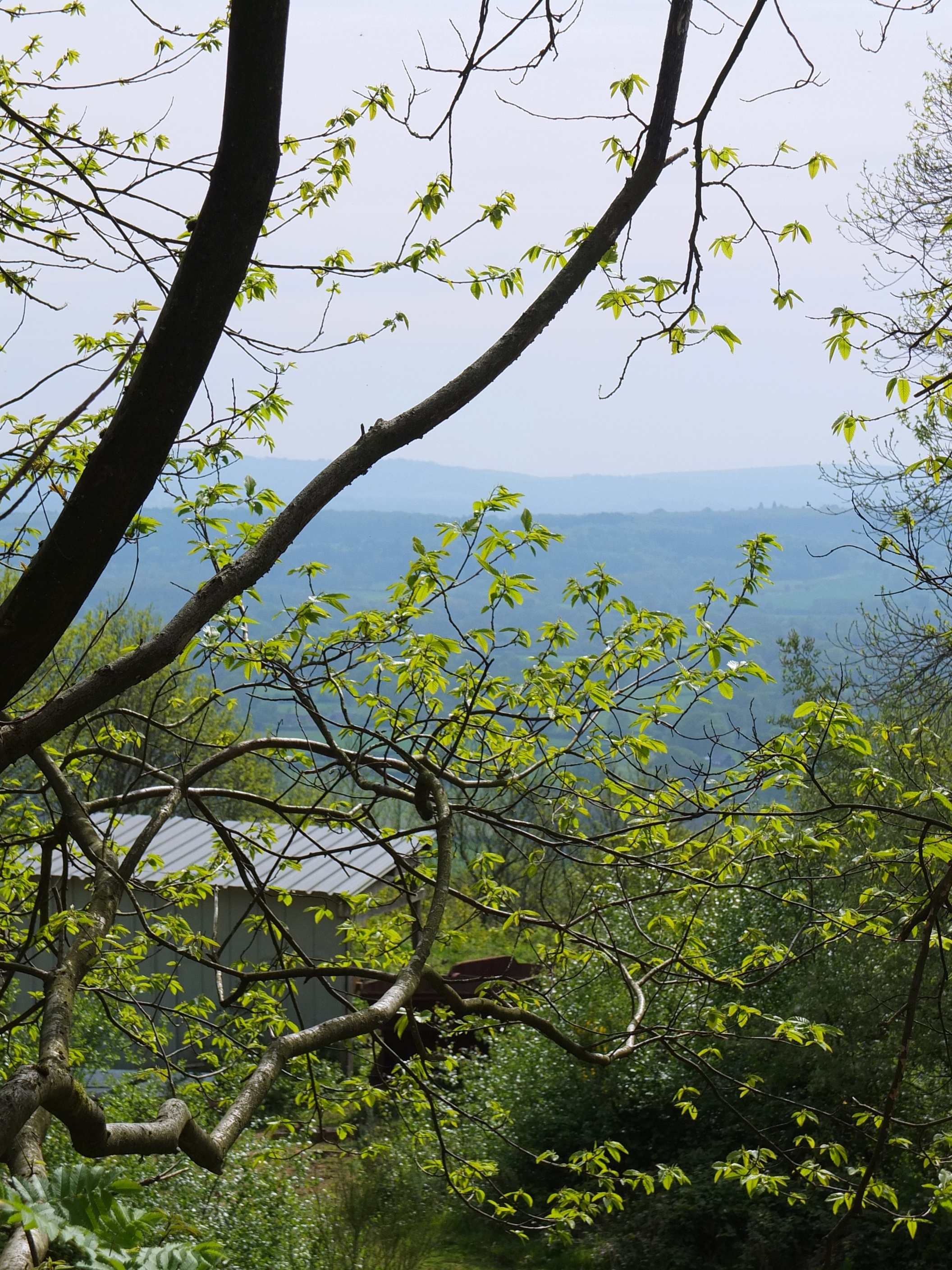
The seed for that particular post was in the photograph that accompanied it – the which I took over the bank holiday weekend on the West Sussex/Surrey borders whence we had gone in search of azaleas. Whenever I find myself gazing at a vista comprising ever distant ranges of hills – each hued in an increasingly translucent azure – I am reminded of those lines from Housman’s ‘A Shropshire Lad‘ most commonly known as ‘The Land of Lost Content‘. There is to this – of course – no surprise and I feel sure that many another stargazer would float reflectively down a similar stream.

There has been a fair degree of conjecture as to the subject and meaning of Housman’s verse – this segment no less than any. Its enduring appeal may – quite naturally – be in fair measure attributed to its ambiguity. On one point – however – there can be no equivocation… this particular poem is concerned with Loss!

I suspect that my fascination of recent decades with Loss – which along with Longing and Love (as I have ventured previously) comprise the three great subjects of all art – is in no small way connected with my advancing years. Those of a similarly cogitative nature will quite probably also find themselves at some point thus contemplating the infinite.

Some read Housman’s lines as a lament for a passing pastoral idyll – the mythical ‘golden age’. ‘A Shropshire Lad‘ was published in 1896 but did not really catch the public’s attention until the turn of the century, by which time the second Boer war was well underway. The work’s depiction of the premature deaths of young men clearly struck a chord and its popularity only increased further with the outbreak of the Great War – many soldiers reputedly carrying a copy into battle with them. At a time of great change – the thinking runs – it is hardly surprising that those caught up in the maelstrom should needs cling to the certainties of the past. As the mechanised beast of the war machine devoured Europe, longing for a lost arcadian utopia made perfect sense.

Those critical of this view claim that such a paradise never actually existed – that this ‘chocolate box’ view of pastoral life was a myth and that in truth rural life for many really was – to quote Hobbes – ‘nasty, brutish and short‘.

An alternative reading of this ‘lost content‘ is that it refers to childhood – and more particularly to the blessed state of innocence with which those formative years are commonly associated. Denis Potter dealt this view an irrevocable blow in his 1979 BBC television drama for the title of which he ruthlessly appropriated Housman’s own phrase – ‘Blue Remembered Hills‘. This classic – if somewhat dyspectic – work required adult actors to take the roles of a group of children, demonstrating in the process that savagery and intolerance are by no means the exlusive preserve of those of us supposedly old enough to know better.

What does that leave us with?

Well – whenever I am brought up short by some breathtakingly beautiful vista of varigated cerulian and those lines of Housman’s insinuate their way into my brain – it is not the loss of childhood innocence that I lament (for though I have no complaints about my early years I certainly have no wish to revisit them) and nor is it a rose-tinted yearning for some mythical golden age – and that even though I grew up in the magical decade of the sixties! Rather it is that the distant azure horizon speaks to me of all of the choices not made, of all the opportunities let slip – and that however wonderful life actually is (and mine is particularly blessed) it is our human nature to regret that we can only select from the astonishing palette of life a limited number of possibilities… and all the rest must be forever lost as the flood tide sweeps them away into some far ocean.

Time to turn away from the view – to count one’s blessings – and to focus on that which is…


Tags: , ,

I am one of those people for whom a vista – a distant prospect – is of considerable import, whether I be in my own home or off traveling. For as long as has been possible – in other words, ever since I could afford so to do – I have chosen to live in a domicile with a view.

I feel sure that someone, somewhere, has written a learned treatise on just why human instinct seems – for most of us at any rate – to be thus inclined. I would be surprised if this disquisition did not posit the survival instinct as probable cause – the desire to live on a hilltop that one might better recognise approaching danger.

The poet’s cynosure might lie elsewhere – perhaps on the notion that gazing upon a distant panorama is in fact emblematic of our longing for the unobtainable – for that which is beyond our reach – and that the resultant wistful longing tugs at our heart-strings in a manner that we find strangely gratifying.

As I say – I am sure that there have been studies of this phenomenon. I – however – could not find one and you will have to make do instead with one of my favourite poets…

Into my heart an air that kills,
From yon far country blows.
What are those blue remembered hills,
What spires, what farms are those?

That is the land of lost content,
I see it shining plain.
The happy highways where I went,
And cannot come again.

A. E. Housman

Photo by Andy Dawson Reid


Tags: , , ,

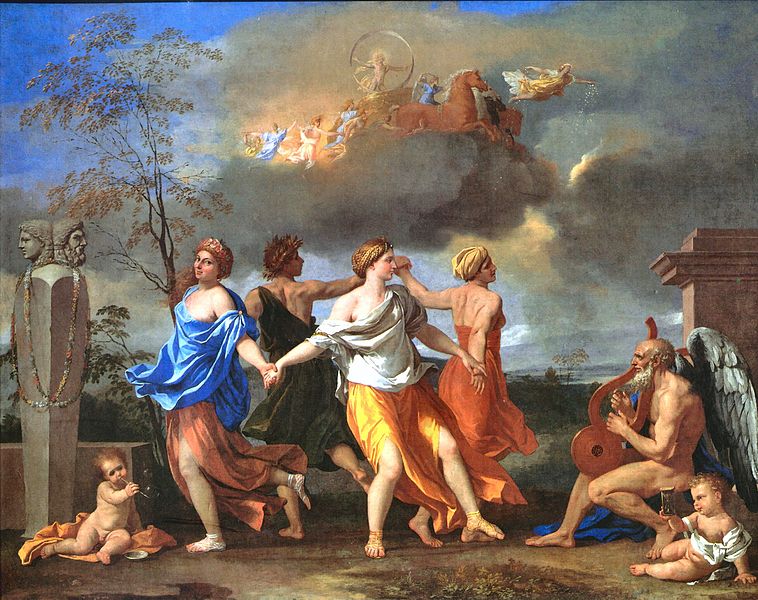
758px-The_dance_to_the_music_of_time_c._1640For reasons not always at the time explicable, there are specific occasions when events begin suddenly to take on a significance previously unsuspected, so that, before we really know where we are, life seems to have begun in earnest at last, and we ourselves, scarcely aware that any change has taken place, are careering uncontrollably down the slippery avenues of eternity.

Anthony Powell – A Dance To The Music Of Time 

The weekend recently past found the Kickass Canada Girl and I (‘me’ for the purists – though that sounds wrong, wrong, wrong!) engaged at two very different events (home and away – one might say) which – between them – gave considerable pause for thought. It does no harm at all on occasion to step back from the hurly-burly to contemplate what this existence might truly mean and how all is ultimately connected.

This post might as easily have been entitled ‘The Circle of Life’ but the chance to reference Poussin’s wonderful painting (“A Dance to the Music of Time” – a particular favourite of mine) was too good to pass up. The statue therein of the double-headed god Janus is particularly pertinent in this instance.

The first of the weekend’s events was the memorial service for a very long-standing acquaintance – my oldest-friend’s wife’s father – whom I have known for more than four decades. He was, of course, of my parents’ generation – of whom in our circle only a very few now remain. He enjoyed a good life and the occasion was very much a celebration thereof rather than being overly solemn. None the less, such acts of remembrance always invite a degree of introspection regarding the transience of our existence – this one being no exception.

The occasion was also – however – a rather lovely gathering of family and friends ordinarily these days spread far and wide. It was a great pleasure to meet again so many good acquaintances with whom we only seem to coincide nowadays on feast days such as this.

The following day we ourselves hosted a long planned gathering of friends, some of whom had also been present the day before. This convocation had a considerably lighter tone and was – as far as could be discerned – greatly enjoyed by all those in attendance (thanks in no small part to Lidgates of Notting Hill and their wonderful pies!). Amongst those present was the lovely friend at whose wedding in Hong Kong the November before last we had been guests. The couple have recently added a brand new member to our extended circle; the devastatingly cute four-month-old inevitably being the centre of attention throughout the evening.

Between them these two events pretty much epitomised the aforesaid circle of life. The passage of old life passing as the tender buds of the new start to unfurl; connections re-kindled in friendships established over the decades; new faces welcomed and – mayhap – new affinities inaugurated; acquaintanceship initiated between companions previously unmet. We rejoice in the sharing of reminiscence. We celebrate the discovery of ‘ontologia exotica‘. We revel in our anecdotage. Life is affirmed. All is as it should be…

Such gatherings have a tendancy to foment the philosophical. I watched as the Kickass Canada Girl headed for the buffet deep in conversation with my ex-wife! Oldest Friend leant over to me:

“You’re in trouble!”, he opined trenchantly…

Well – I probably am now!

Tags: , ,

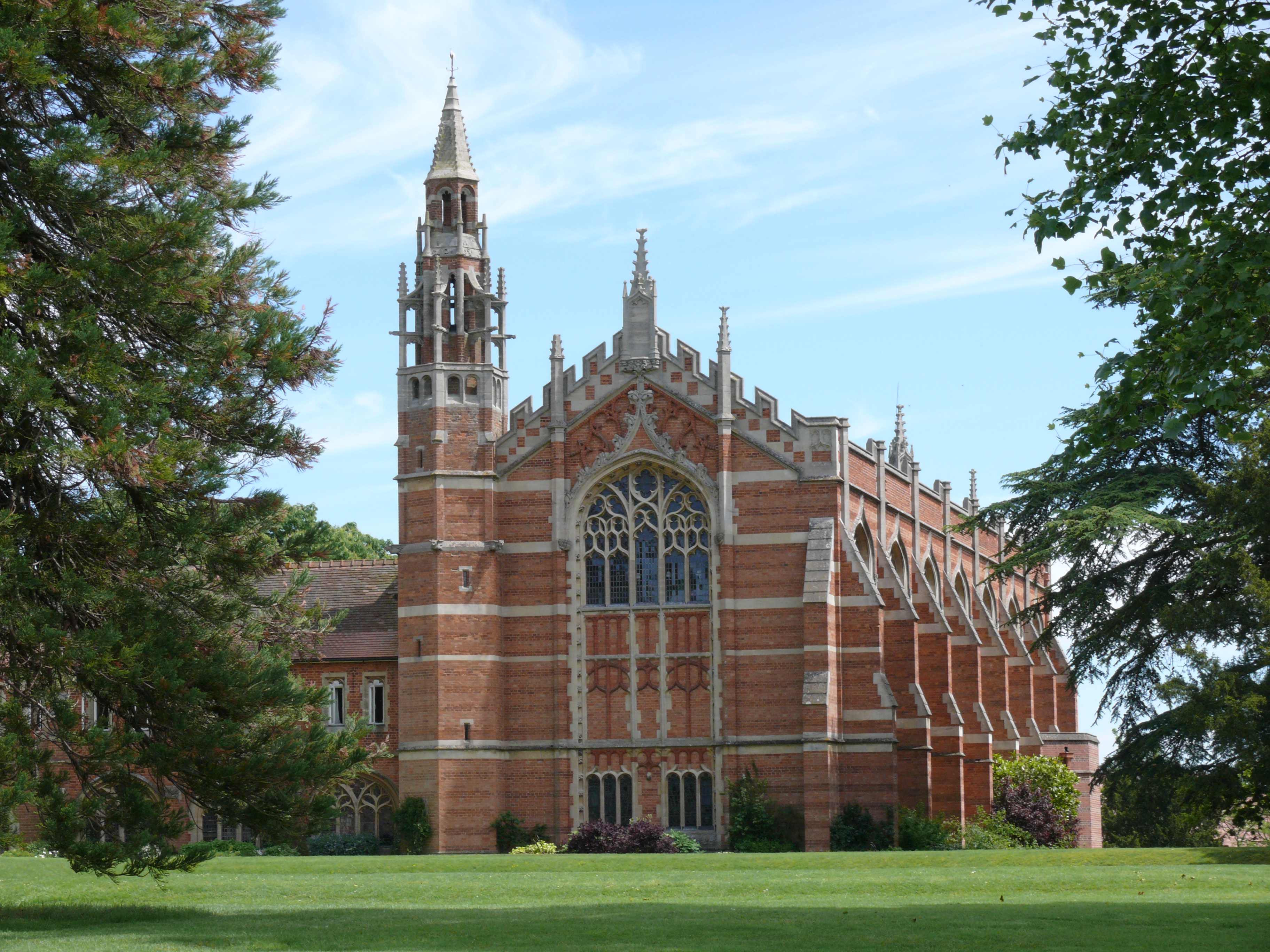
Chapel,_Radley_College,_22-05-2007Regular readers will doubtless not have missed within these postings the frequent references to those venerable institutions – the English public schools. Those without these shores – should they feel moved to investigate a little more closely – may find that any preconceptions that they hold concerning the nature of these august establishments and of the type of characters they attract – and indeed breed – are at best partial. Safe to say that the stereotype of the English public school boy – whilst indubitably having at least some basis in truth – paints a somewhat misleading picture.

Those wishing to know more would have done well to catch – on the BBC last weekend – a splendid documentary by Hannah Berryman entitled “A Very English Education”. The conceit behind the production was the revisiting of some of the subjects of a previous BBC documentary series – first shown in 1979 – which examined the daily lives of a group of young men then attending Radley College. The purported intent was to discover the effect that a public school education had on the lives of these privileged youths, and to that end the first part of the film took them back their younger days to observe and to comment – in the light of their later experiences – on these rarified schooldays spent in the bucolic Oxfordshire countryside.

The programme provided – as one might expect – a fascinating insight into the nature of such an education. As it progressed – however – it became apparent that the true heart of the piece lay elsewhere. Ms Berryman astutely withheld until the very last segment the revelation of what had become of these entitled scholars as they journeyed through life. When their fates were finally revealed – in what proved an unexpected and delicately moving series of sequences – it became apparent that the real subject of the piece was considerably broader than had first appeared – on childhood and growing up – on the nature of ambition (or lack thereof), success and failure – of family and of its echoes across the generations… In short, the stuff of life itself.

“A Very English Education” was beautifully judged and expertly made, proving far greater than its initial impression promised. You may – if you act quickly – be able to catch this excellent piece on the iPlayer. If that proves impossible this review by the Guardian’s Sam Wollaston catches the tone. Don’t read it if you have a chance to catch the programme though…

I missed the first showing and had to catch up on the iPlayer myself. That was enough to reduce me to tears, but then – I am a notorious softy!

Tags: , ,

« Older entries § Newer entries »