web analytics

Smokey Joe’s

Photo by Andy Dawson ReidSpeaking of Scouts (as I was in my last post) brings to mind no end of memories from way back in the 60s and 70s. No surprise there really…

There was (and indeed still is, I see) a Scout campsite but a few miles from where we grew up in (reasonably) leafy Surrey in the UK. We used to go there quite a lot for weekends throughout the year and the site was heavily used even back then. It is now billed as a ‘multi-purpose site’ and is clearly open to all manner of youth and educational organisations, rather than just to scouting boys as it was then.

I have a strong recollection of hiking to the site with a reasonably large group, carrying all of our camping gear along what was even then a busy main road on a trek cart. I don’t know how many of these splendid contrivances yet survive but I would not be surprised if it were no longer legal to take one out on the public highway.

Winter visits to the campsite were particularly interesting. We considered that sleeping in the scout tents of the day was just too brutal when there was a thick frost on the ground, but were fortunate in that the site had a cabin (it now has three!) with a big wood stove in it. Many a happy weekend was spent figuring just how much of a fug could be engendered therein by firing up a big blaze and stoking the stove as furiously as we could. Of course, we then had to try to sleep through the ensuing miasma!

As I recall the place was affectionately and unsurprisingly known as ‘Smokey Joe’s‘.

At that age I naturally simply followed the example of my peers and it didn’t occur to me to wonder as to the origin of that soubriquet until I used it as the title for this post. The InterWebNet is slightly less helpful than usual – with most references being to contemporary food joints, cigar lounges and clothing companies – not to mention the Leiber and Stoller based songbook musical, “Smokey Joe’s Cafe‘.

These references are, however, all too recent.

The Urban Dictionary offers an alternative slang definition which refers to a somewhat ‘colourful’ sexual practice that I certain would have been far too young to have understood at the time.

Probably the closest I can get is the somewhat older phrase ‘Smoking Joe‘ which – long before being applied to the legendary Joe Frazier or being adopted as slang for cigarettes – was used to refer to the steam engines that were developed in the eighteenth century to power the nascent industrial revolution.

That at least seems appropriate.

These atmospheric remembrances are particularly brought to mind just now by the fact that – somewhat later than last year but just as unwelcome – the view from our windows has vanished in a haze of smoke from the various wildfires burning not just in BC but also down through the US as far as California. I gather that this year’s smoky cloud cover is unlikely to last as long as did last year’s, but we still cannot wait to see the back of it.

In a post that already features one great heavyweight, let’s end with another:

“Generally when there’s a lot of smoke… there’s just a whole lot more smoke.”

George Foreman

Simple as a child

“A sailor’s joys are as simple as a child’s”.

Bernard Moitessier

A few more images of simple joys…

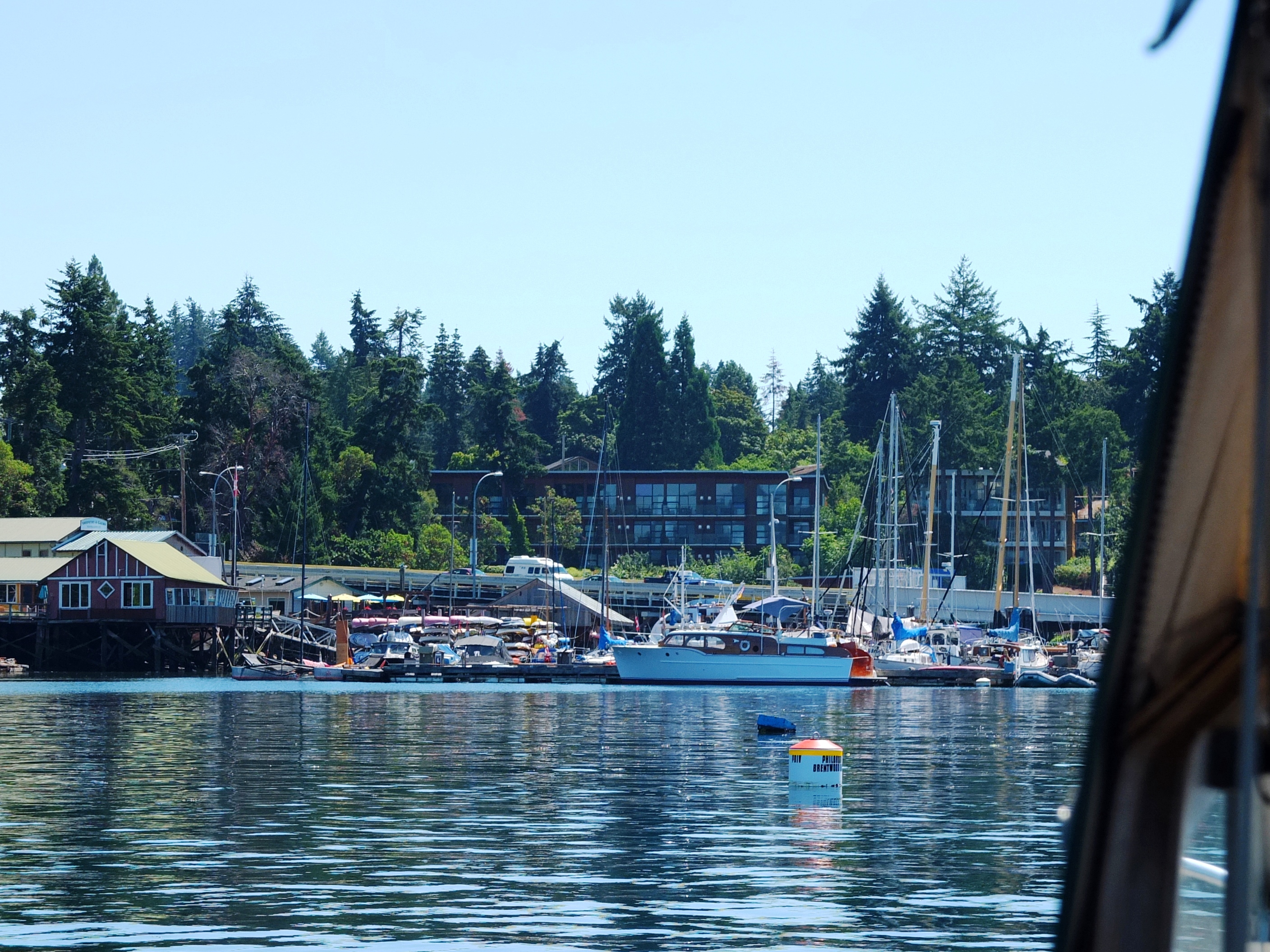
Here we are, approaching Portside Marina. Lots of expensive hardware ahead. The trick is not to hit any of it!

Photo by Andy Dawson ReidNearly there…

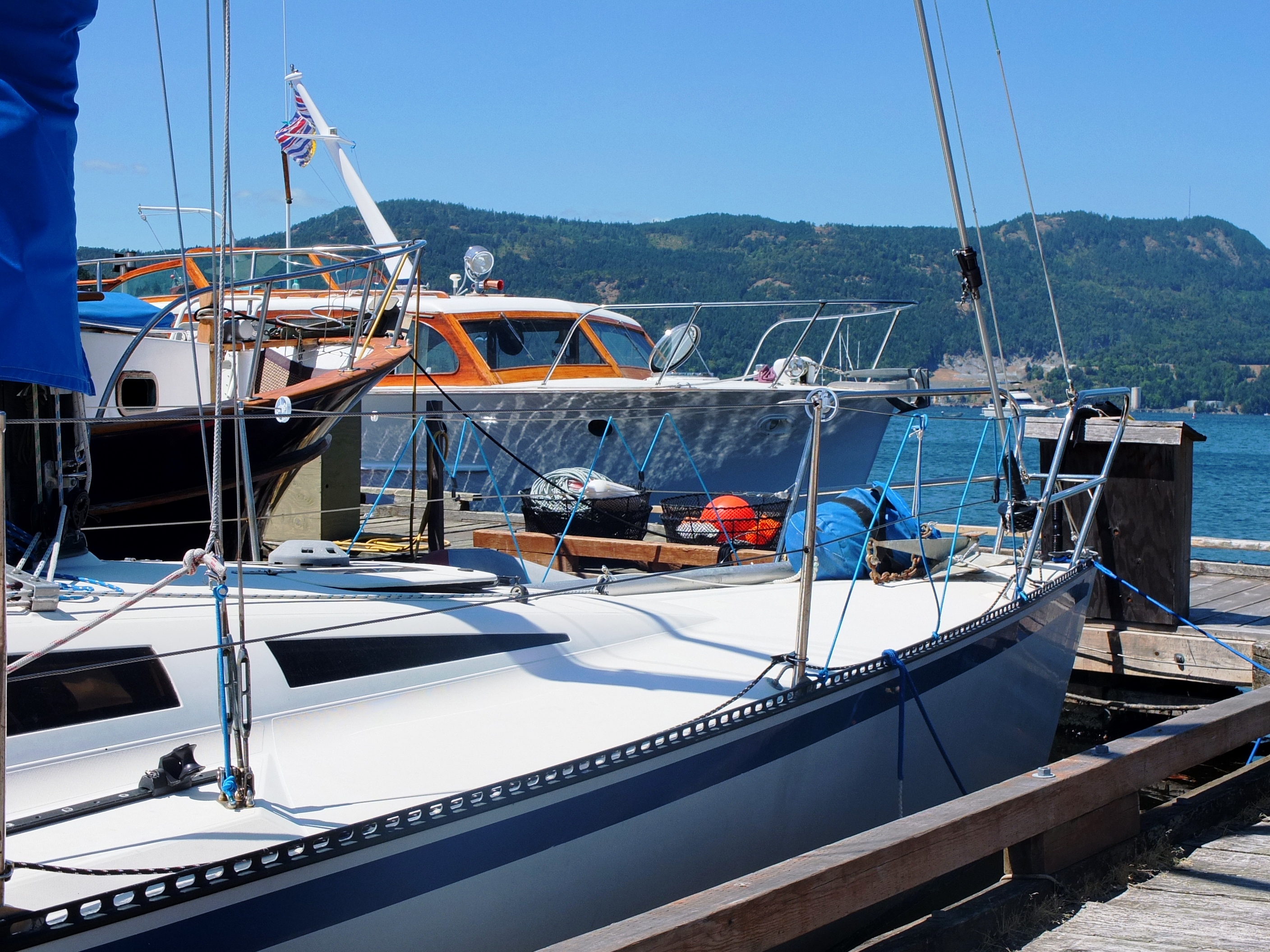
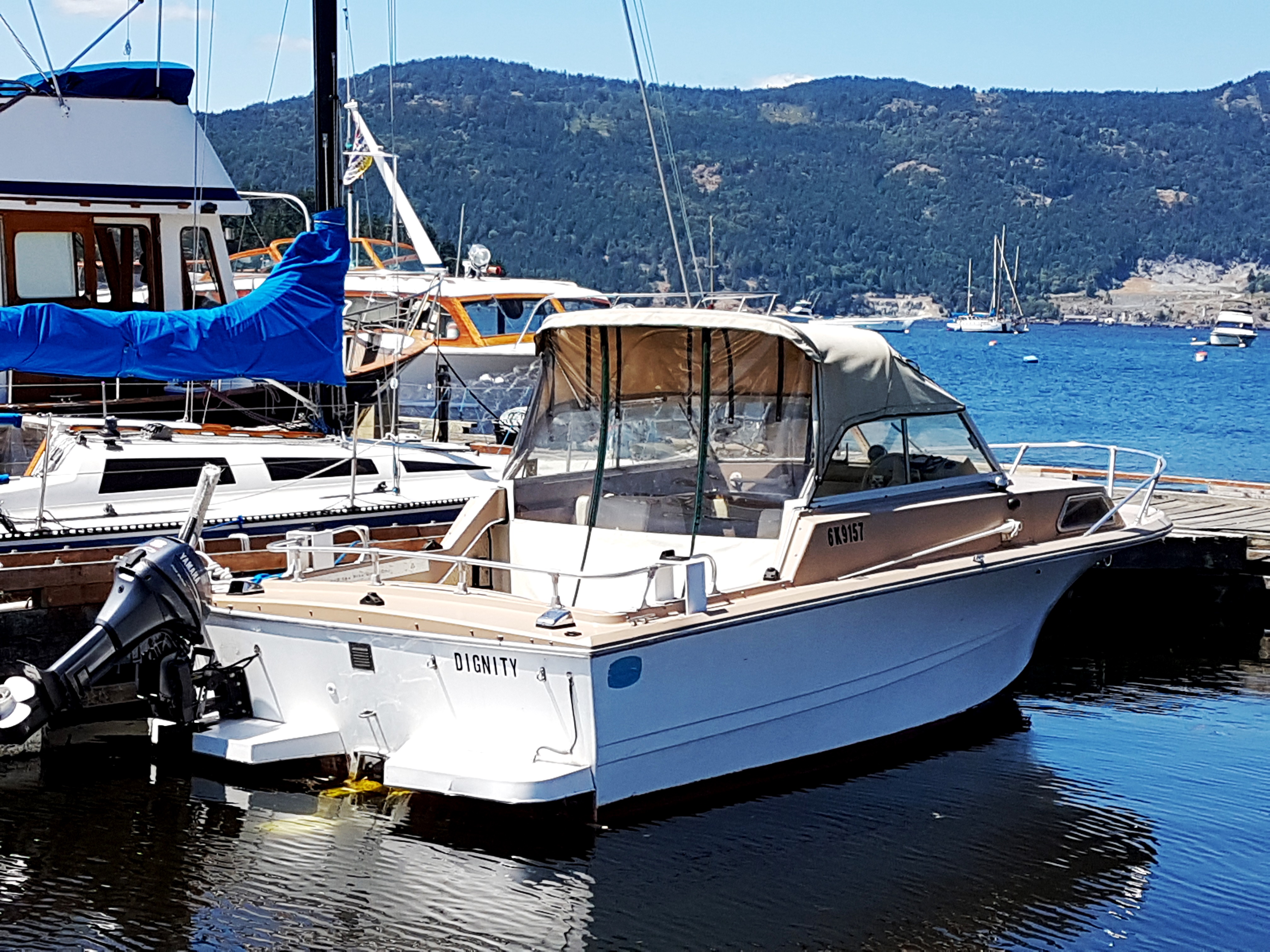
Photo by Andy Dawson ReidPhoto by Andy Dawson ReidAnd here is Dignity – safe in her slip. Note that she now proudly carries her name on her transom.

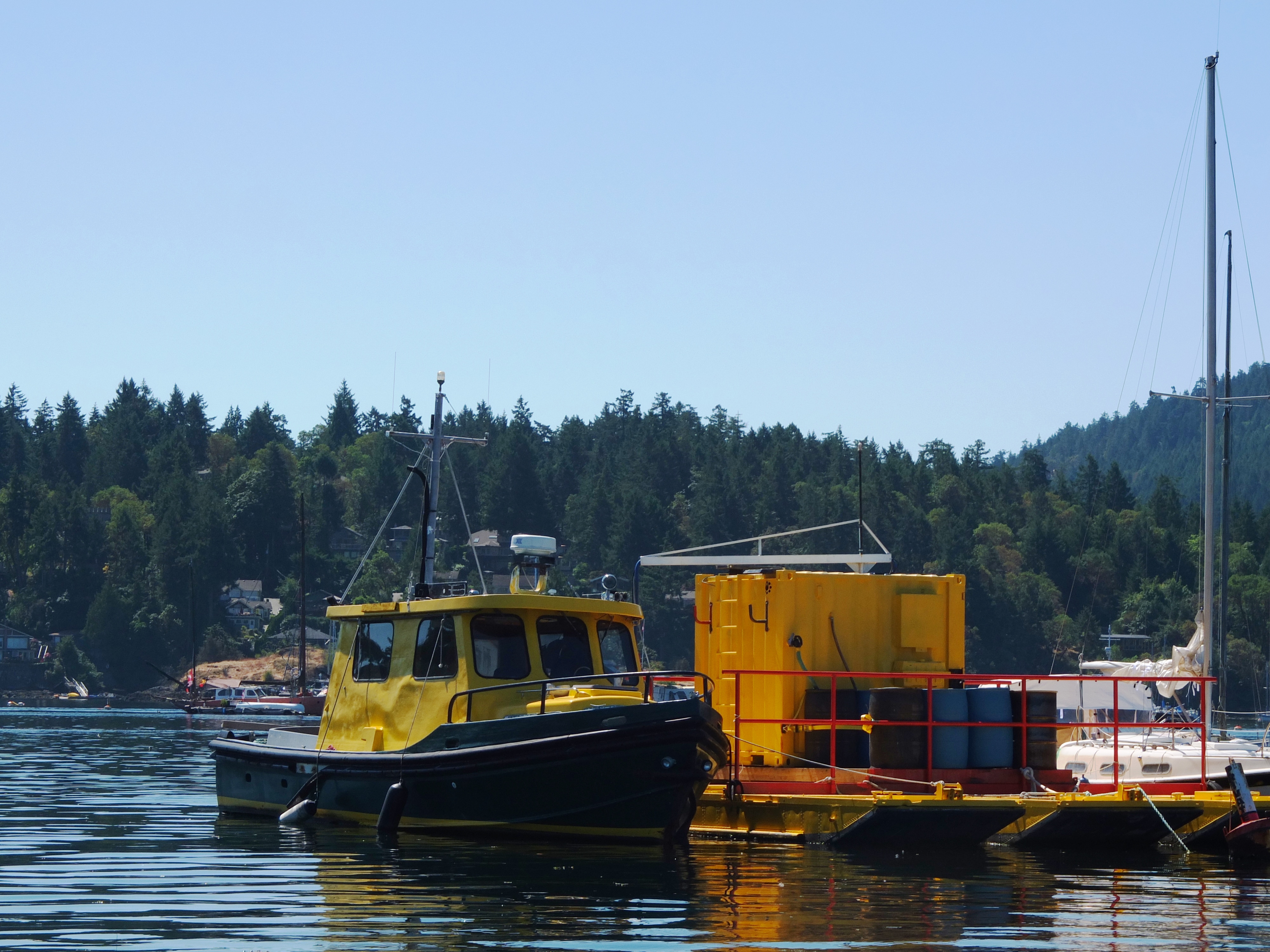
Photo by Andy Dawson ReidI feel sure that I should be able to tell you what the yellow thing on the pontoon is – but I really don’t know. It looks impressive so it must be important.

Someone will most likely volunteer the answer!

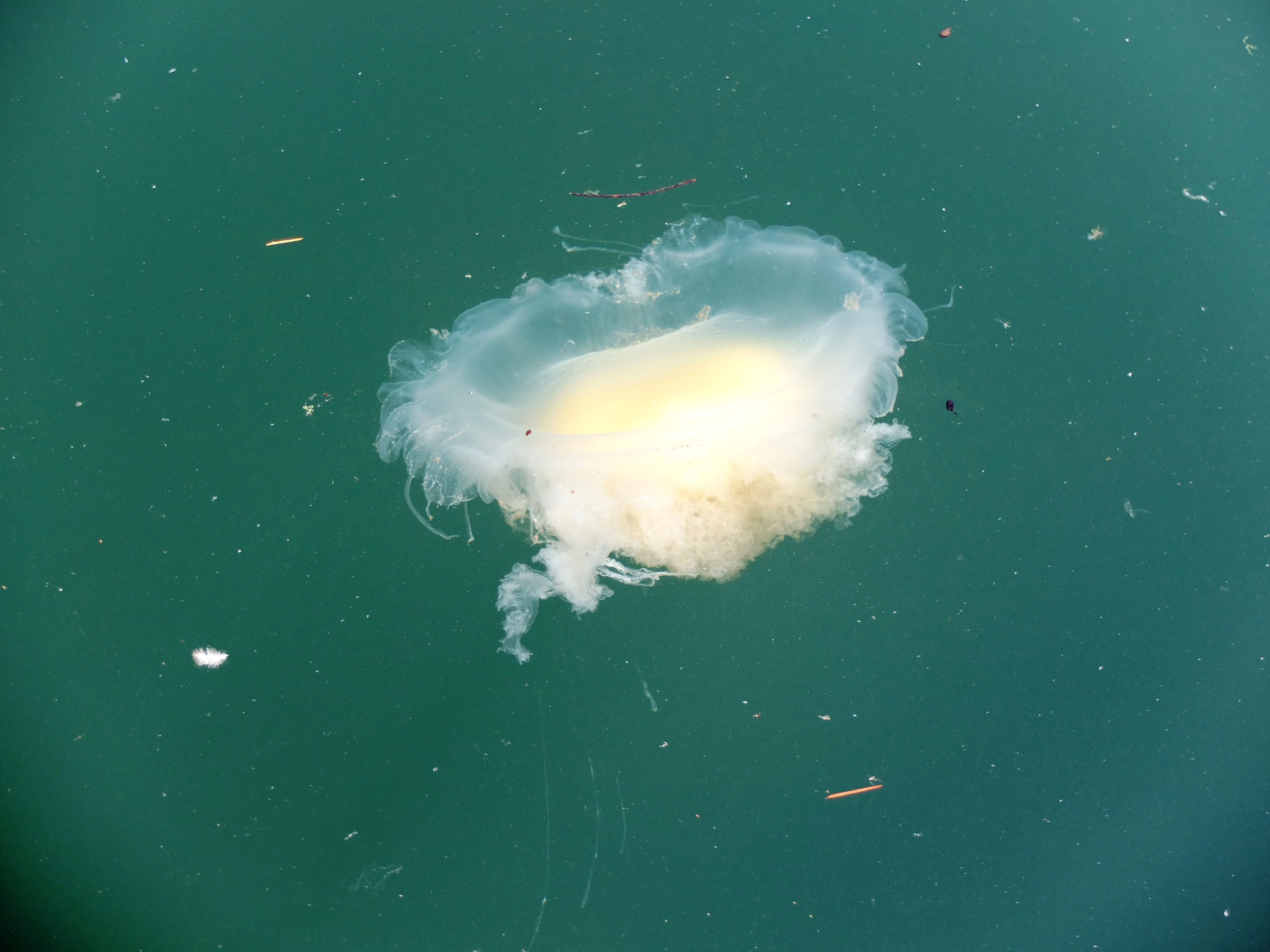
Photo by Andy Dawson ReidOne of the many reasons for not swimming off the boat in the marina!

Photo by Andy Dawson Reid

Bumper stickers

Spotted the other day on the rear bumper of a saloon car headed for downtown Victoria:

Not a new ‘meme’ – I discover – but one that I had not seen before and one which made me fall about laughing.

Should any gentle reader need me to clarify the reference (unlikely I know!) I will most happily so do…

Fnar, fnar!

Saltwater cure

The cure for anything is saltwater – sweat, tears, or the sea.

Isak Dinesen

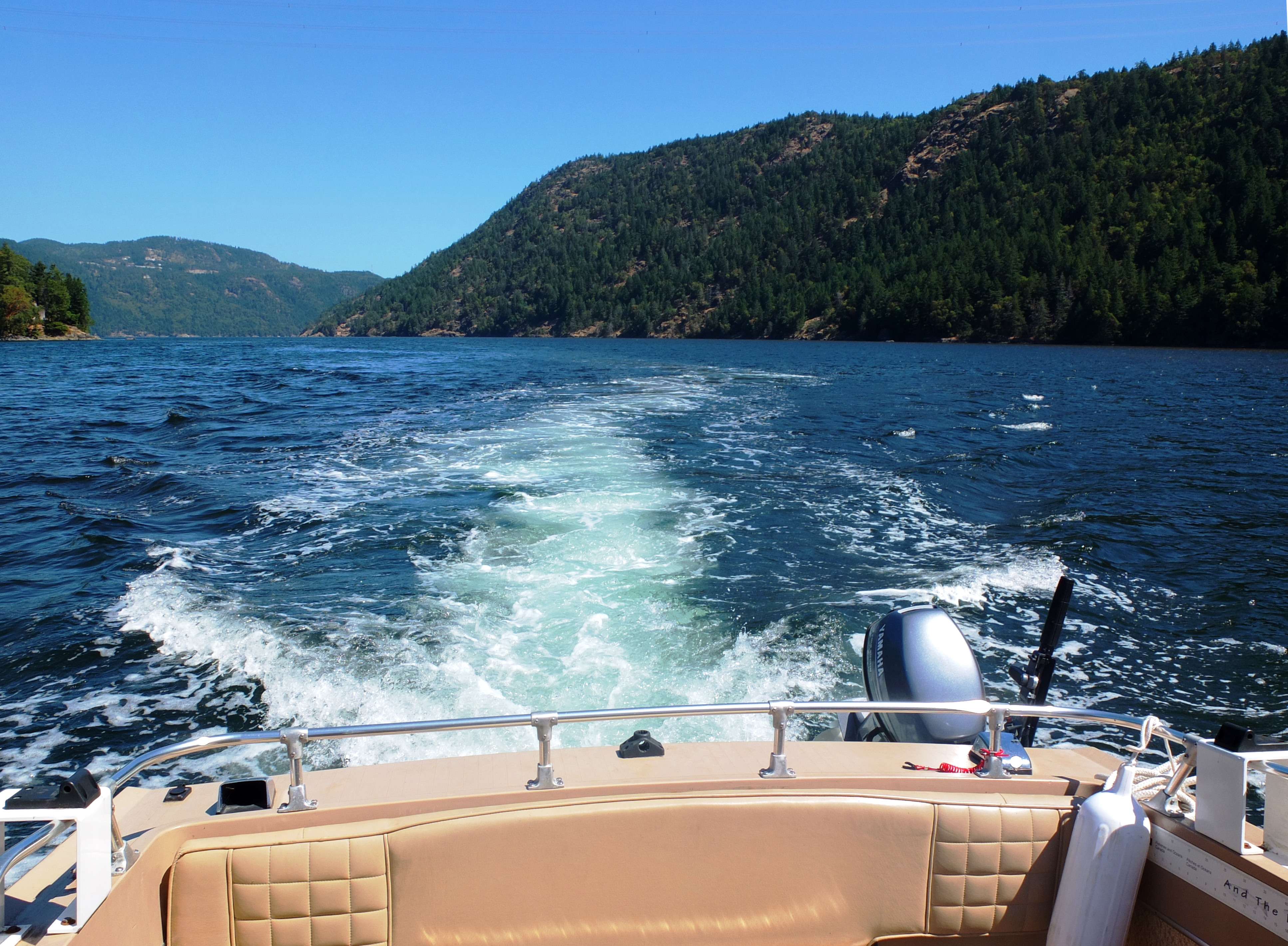
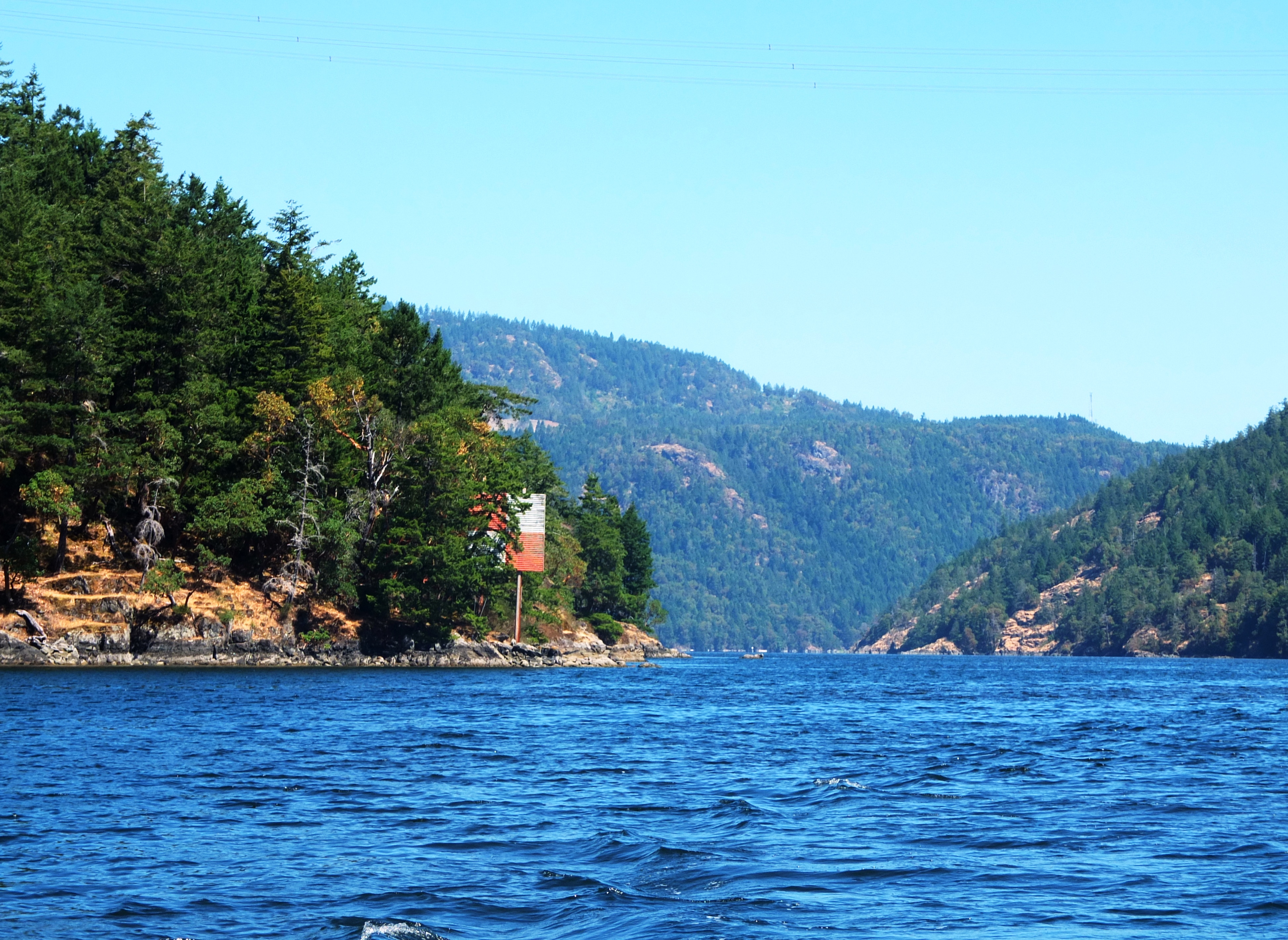
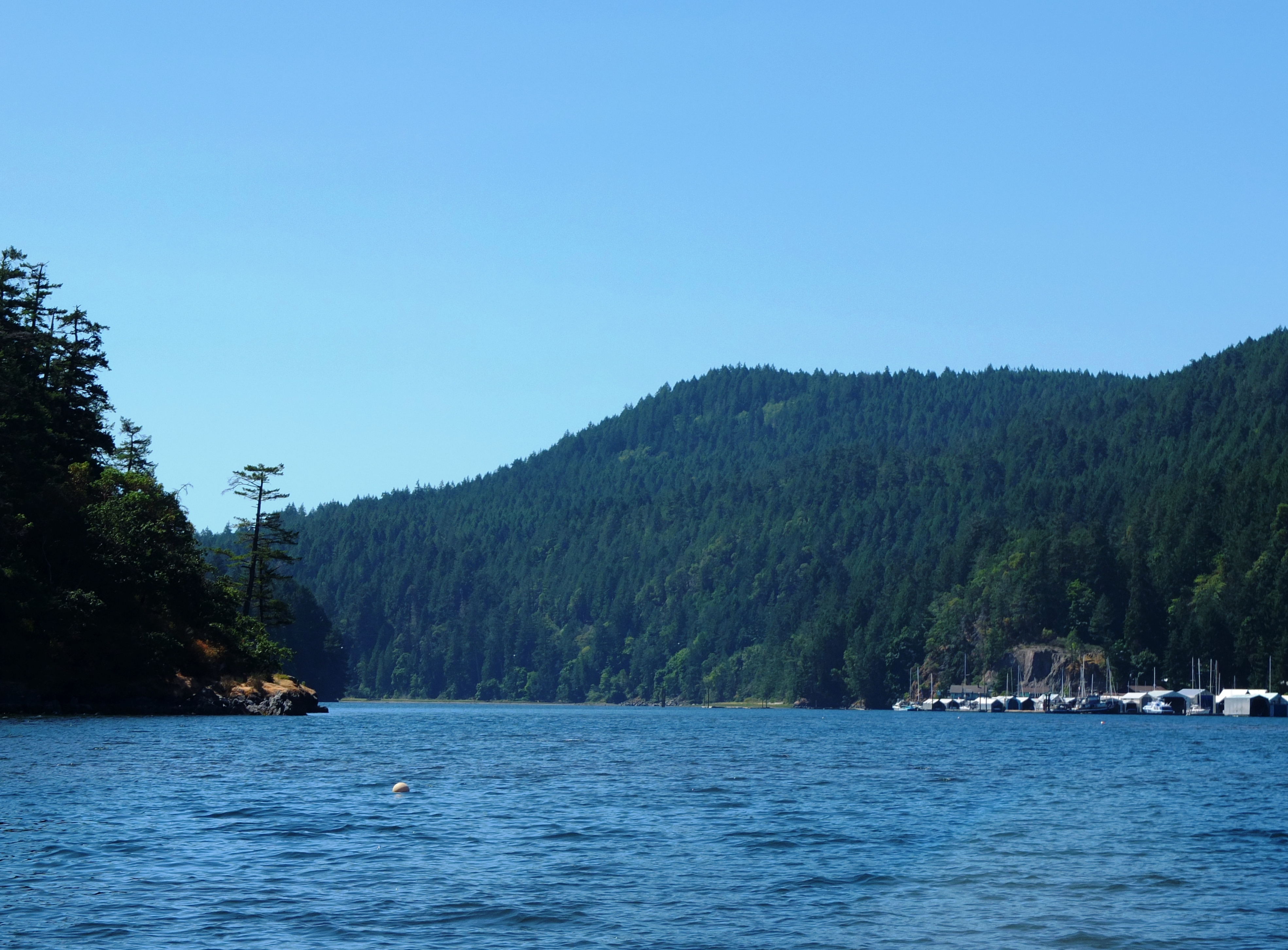
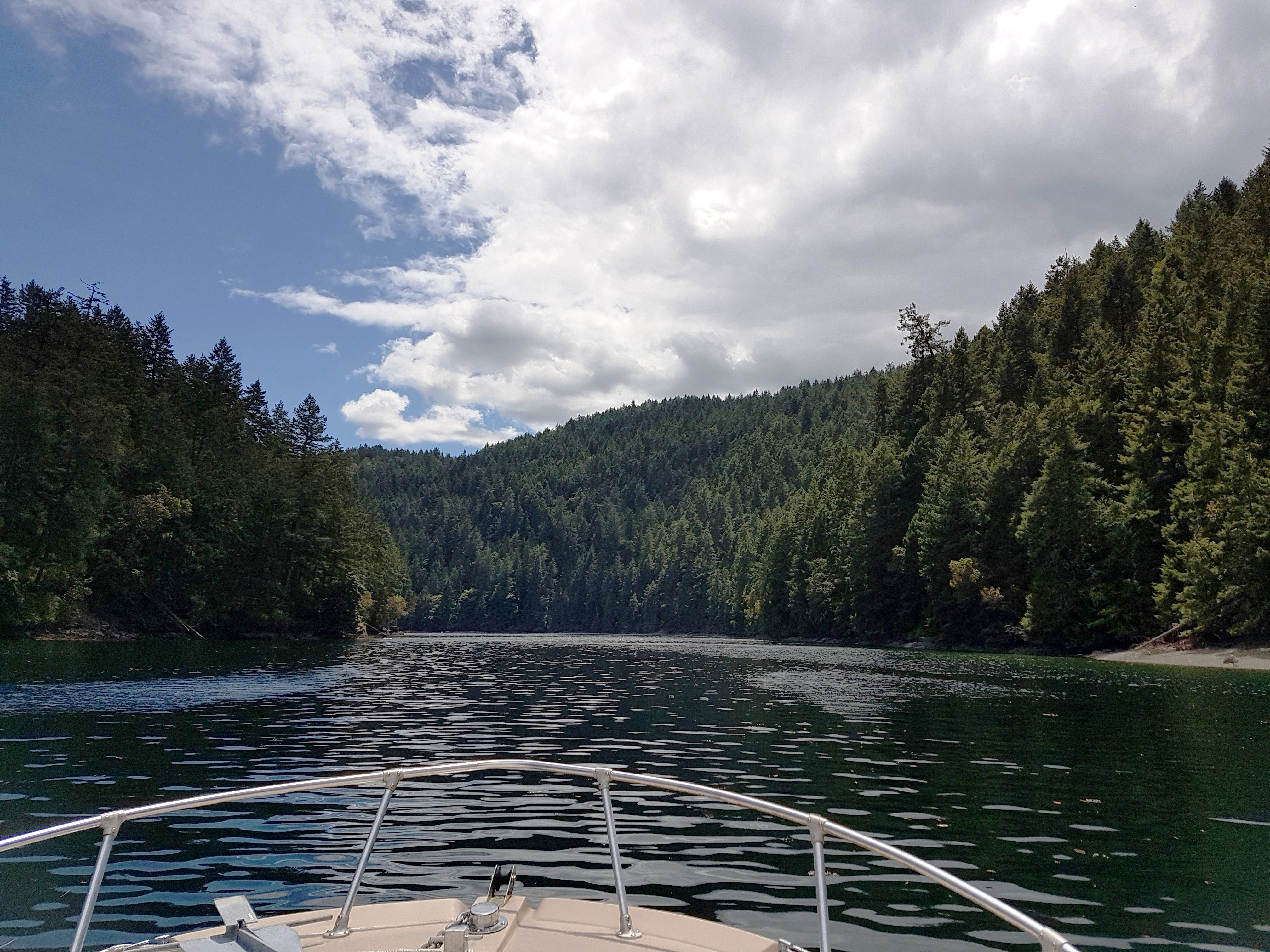
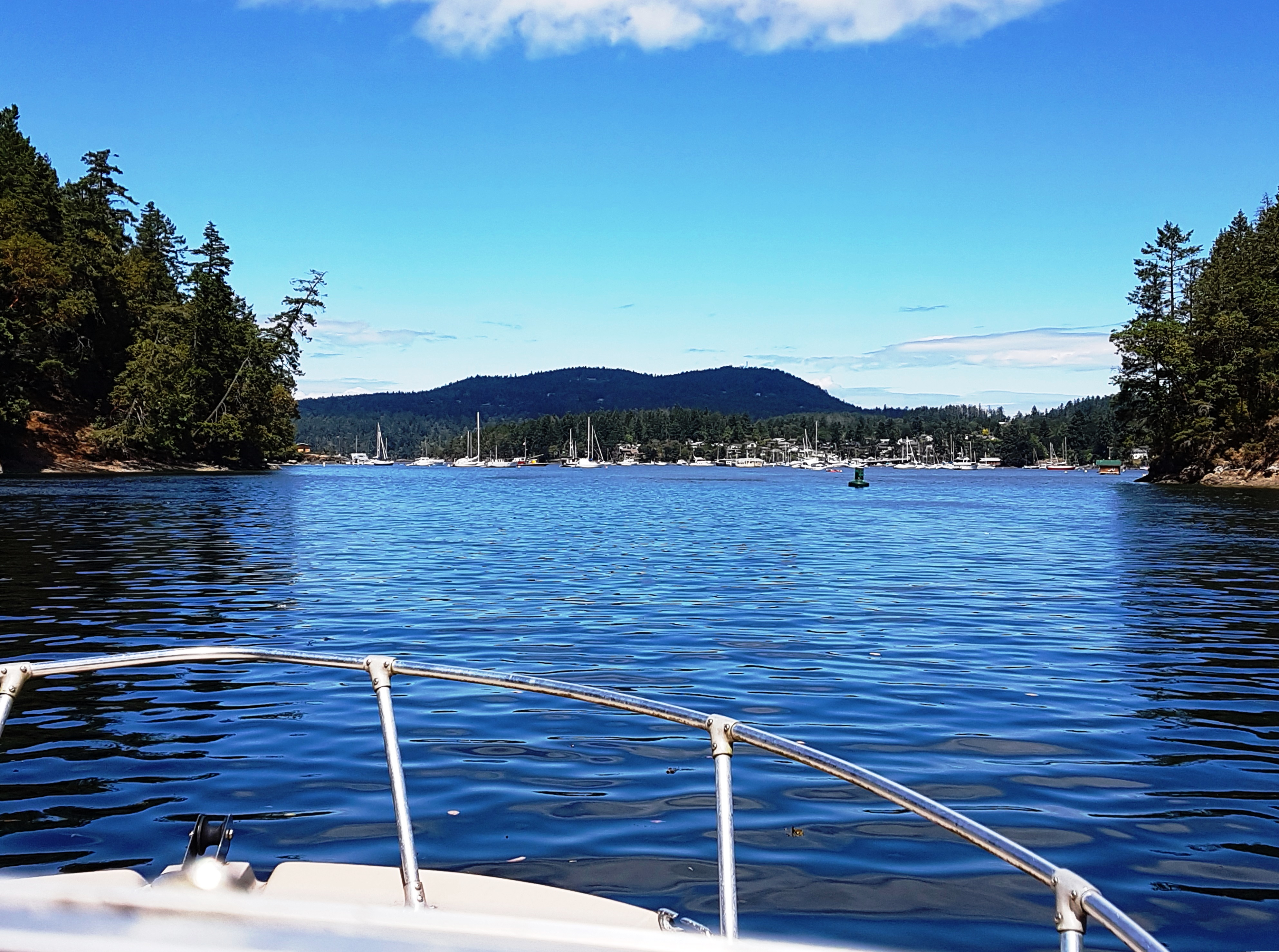
Some images from the last few weeks in the Saanich Inlet. Dignity and I have had a lot of fun poking around in all of the various and invariably beautiful nooks and crannies.

We would have accomplished more had her sonar transducer not started playing up. The Saanich Inlet itself is several hundred feet deep in most places, but I really don’t fancy trying to get in really close to the shore without being able to tell when we are about to encounter the shelf. Anyway – I think I am going to take the opportunity to upgrade Dignity’s navigation systems and to move them all on to the iThing. Never let it be said that I am immune to progress…

The inlet itself is a remarkable sixteen mile long fjord and one of the best studied marine basins in the world. The further in one goes the more impressive it gets.

Photo by Andy Dawson ReidPhoto by Andy Dawson ReidUp at the head of the fjord is Goldstream Provincial Park – along with Goldstream marina.

Photo by Andy Dawson ReidNearer to our home base in Brentwood Bay there is a smaller and even more gorgeous arm called Tod Inlet, which curls around the back of the Butchart Gardens and is – on summer Saturday evenings – packed with boats waiting to see the firework display. Indeed we did just that – with our dear friends – all those years ago on my very first night in Victoria.

Here we are on our way in…

Photo by Andy Dawson Reid…and here returning again to Brentwood Bay.

Photo by Andy Dawson ReidShould some of these photos appear a little – er – one-eyed… do please bear in mind that I have been out pretty much on my own thus far this year. Much as when driving a car it is not a really good idea for the helmsman to be concentrating on snapping pictures whilst supposedly focusing on the many other things happening around him (or her)!

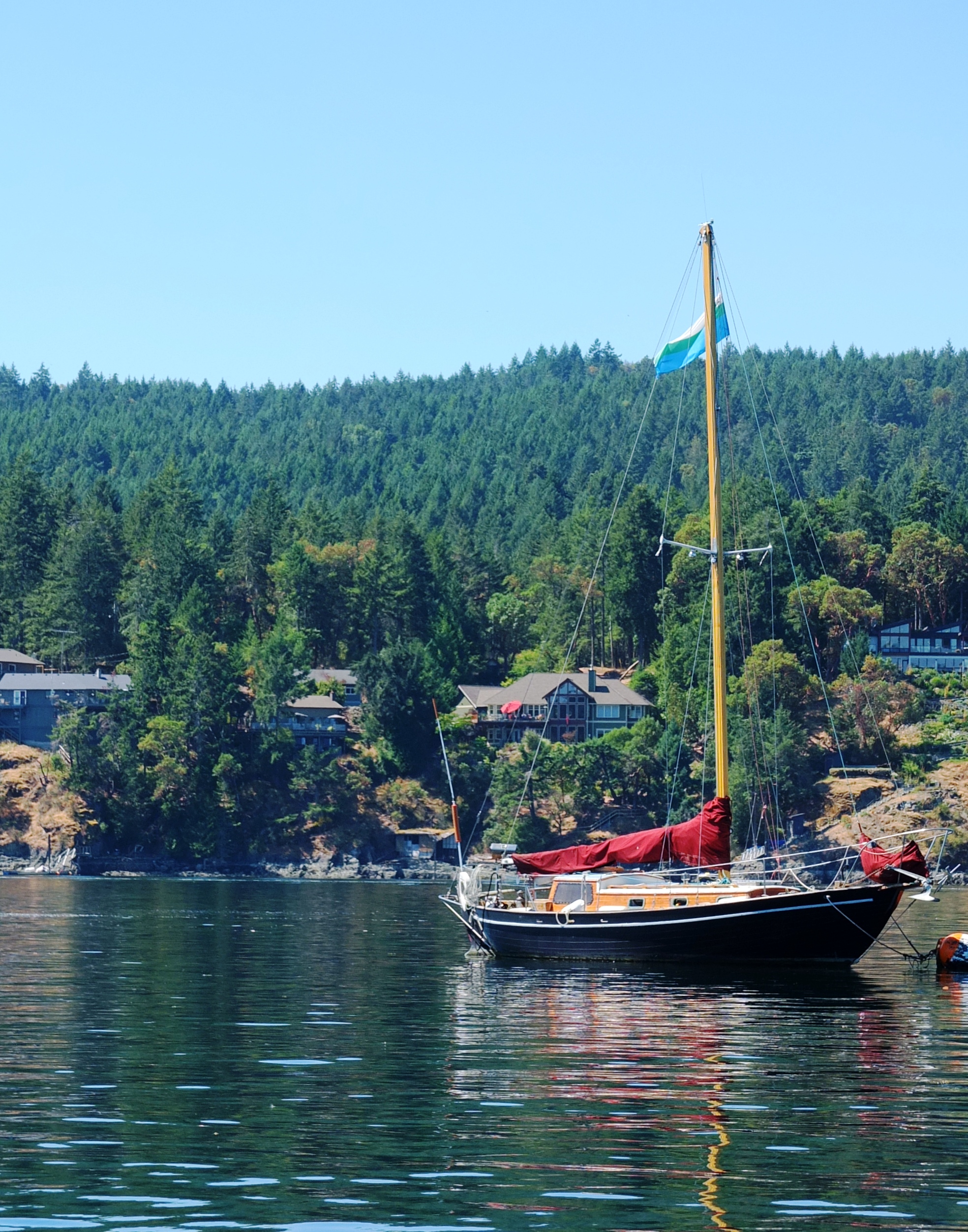
Nice boat though..

Photo by Andy Dawson Reid


Dignified…

Photo by Andy Dawson Reid…and whilst on the subject

Casual readers with curious natures (should there be any such) might have found themselves scratching their heads for a second or two trying to puzzle out just why our boat is called ‘Dignity‘.

The answer – naturally – can as ever be found within the very pages of this journal (references here and here). Got it? Good – no need for me to explain further…

Now – just the other day I was pottering around on the jolly old InterWebNet (as you do!) and found myself looking up Deacon Blue’s “A ship called Dignity” once again. In the process I discovered an article from a couple of years back the headline of which suggested that Ricky Ross – the estimable lead singer and main song-writer for the band – had become really rather fed up with people naming their boats after his hit song.

As is the way of such things when I read the article I found that the true story is actually somewhat different. Ricky was expressing ‘indignation’ at the number of people who contact him to tell him that they have used the name – but without inviting him to take a trip aboard the boat in question. This can – of course – be  particularly annoying should the vessel concerned be a big’ fuck-off’ boat!

Now – should Mr Ross ever find himself on the west coast of Canada (a tour would be nice… lots of Scots here!) he really would be most welcome aboard our ‘Dignity’ – and we would happily show him some of the beautiful spots that are to be found hereabouts.

I’m not sure – however – that that is quite what he had in mind…

Break on through…

…(to the other side)!

The Doors

Having for the last two years lodged the fair ship ‘Dignity‘ for a month in the summer at a marina near Sidney – on the eastern side of the Saanich Peninsula – we thought we would make a change this year and berth her on the west side – in Brentwood Bay. Regular readers will know that I am very fond of Brentwood Bay – positioned as it is on the Saanich Inlet which separates the peninsula from the main body of Vancouver Island. There are lots of interesting places to explore on this side and I look forward to visiting them.

I also very much like Portside Marina, which lies adjacent to the Mill Bay ferry terminal in Brentwood Bay. It has a slightly old-fashioned homely feel about it which works well for me.

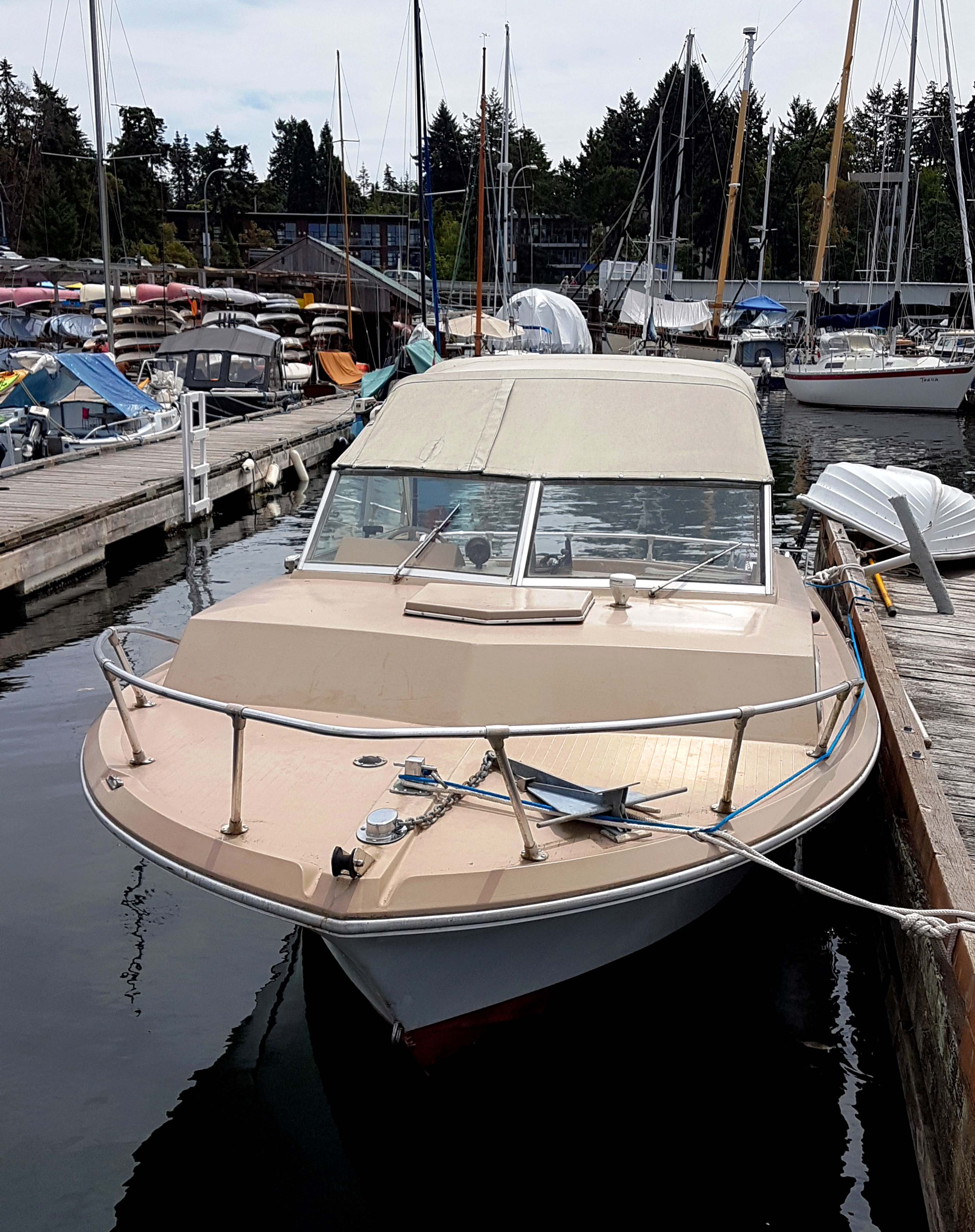
Photo by Andy Dawson ReidPhoto by Andy Dawson ReidHere is ‘Dignity’ in her berth for the summer:

Photo by Andy Dawson ReidPhoto by Andy Dawson ReidPortside Marina shares a location with my favourite boat-builder (in the sense that I love their name – and their wooden boats) – Abernethy & Gaudin.

Photo by Andy Dawson ReidPhoto by Andy Dawson Reid

Shipshape and Bristol fashion

Photo by Andy Dawson ReidShipshape and Bristol Fashion : in good order; efficiently arranged”

Collins English Dictionary

For those interested in the origin of this splendidly quaint phrase Wikipedia is helpful as ever:

“The saying in today’s form has been recorded as early as 1840 (“shipshape” alone being about 200 years older). The term developed most likely in view of the port of Bristol (in the UK) which had (before the Floating Harbour was constructed) a very high tidal range of 13 metres (43 ft), the second highest in the world. Ships moored in this area would be aground at low tide and, because of their keels, would fall to one side. If everything was not stowed away tidily or tied down, the results were chaotic and cargo could be spoiled.”

The phrase is most commonly used now to indicate that everything has been put well in order and I am, given the time of year, currently ensuring that such is the case with regard to the good ship Dignity before she heads for her summer moorage. As part of this preparatory effort I check that her batteries are charged, that all systems are working as they should be and that both main engine and kicker are in good shape. This last involves running them up and checking for any problems or issues.

Those familiar with marine engines and such-like may prefer to skip ahead, but for any ingenues and those otherwise interested here is a very brief guide to how such things work.

The marine engine in a planing powerboat (as opposed to a displacement vessel) of this size (20ft) could take a variety of forms, but is most usually a petrol (gas) engine either in the form of an outboard or an inboard/outboard (sterndrive). The latter features a fixed power unit within the boat and a steerable transmission ‘leg’ which transfers the drive through the hull to the prop. Neither of these types requires a separate rudder, since steering is effected by turning the whole drive unit.

Dignity has a sterndrive – a Volvo Penta Aquamatic with a 280 outboard drive. This lump is based on a big V8 Chrysler block which has found its way into many marine engines over an extended period. Though the basic internals of a marine petrol engine are similar to those of a car or truck engine, everything else is different. That starts with the cooling system.

In a car the coolant that circulates through the engine block to carry away the heat generated therein passes through a heat exchanger in the form of the radiator. This relies on air flow to take the heat out of the coolant. For a marine engine – often buried in the bowels of a boat – there is no equivalent air flow. There is – however – a  lot of cold water just outside the hull.

The simplest thing would surely be to pump water into the boat, pass it through the engine block and discharge it again overboard. This is not feasible, however, since the corrosion caused by water – and in particular salt water – would kill the engine block in short order. The sea or lake water is instead passed through another form of heat exchanger which is in turn part of a sealed coolant system similar to that used in a car engine. To make everything more self-contained the water is pumped in through vents in the outboard drive and returned to the sea (or lake) by similar means.

This complex system involves all manner of flexible pipes and tubes which must be maintained in good working order – for if it is not and one of the hoses fails the result will most likely be the ingress of a whole bunch of water into the boat itself. This sort of thing clearly couldn’t happen to a car on the M25, but even if it could it would not cause the vehicle to sink!

I trust that all is clear thus far?

Now – running the engine whilst the boat is on land naturally requires that a source of water be provided if it is not to overheat. In the image above you can see a hose feeding water through a device that looks like a pair of ear-muffs into the vents near the bottom of the sterndrive (which is in its raised position) and the spent water being ejected from higher up the leg. This mechanism also comes in very useful when taking the boat out of the salt-chuck, because it is essential to flush out as much salt water as possible before storing the boat – for the same corrosive reasons mentioned above.

OK – I think that is about enough boatery for the time being – though as my head is now firmly in nautical mode I can’t promise that it will be the last word on the matter.


Braking news! (sic)

It is that time of year when the good ship Dignity is being prepared for her summer sojourn in one of the local marinas, so that we may enjoy as much as possible the delights of being on the water during the dog days… though it has to be said that the weather has not yet quite made the grade (at least as far as those of us who are decidedly fair-weather sailors are concerned).

Now, Dignity is no spring chicken – having been built in 1978 – and thus inevitably usually requires a certain amount of TLC at the start of the season. Her trailer is of an indeterminate age, but has itself clearly been around the block more than once! I have tried very hard over the last couple of years not to look too closely at it; and in particular at the brakes. I had a sneaking suspicion – the which I did not want confirmed – that they were in a condition that rendered them fit only for show (and only just for that!).

The trailer does considerably less miles than does the boat, being limited to a trundle down to the nearby boat launch and back a couple of times a year. I take things very gently and – to be frank – the Lexus has more than enough brake-age for both vehicle and tow-load.

The trailer is however (or was!) fitted with surge brakes. These comprise a hydraulic master cylinder built into the coupling which feeds brake cylinders on two of the the wheel hubs. When the towing vehicle slows the forward momentum of the boat and trailer effectively apply the trailer brakes through this mechanism. One of the big drawbacks of surge brakes, of course, is that the same physics applies when one tries to reverse the trailer, which is less than helpful.

Anyway, I finally figured that it was time to bite the bullet and to make a closer inspection of the trailer brakes. A perfunctory examination revealed that they were indeed non-functional. The hydraulic lines had completely corroded and any remaining fluid therein had seeped away. The brake drums and hubs were also corroded to the point that I doubted the existing brakes could easily be made to function again.

Two possibilities came to mind. I could just strip the brakes out and manage without them. A furtive peak on the InterWebNet (though half-closed eyes and with fingers firmly crossed) sadly confirmed my worst fears. For a boat and trailer of Dignity’s weight brakes are a legal requirement… in BC at any rate. Hmmm!

The next best option – if Dignity was ever to be moved again – was to replace the dead hubs and brakes with shiny new electric brakes. The Lexus has a big advantage in this regard in that its tow-pack already has a controller built in to it and it is simply a case of picking up the necessary pin on the seven-way connector. The legislation – with the sort of overkill that probably does actually have its origins in common-sense – also requires that a breakaway mechanism be fitted. Frankly – if boat and trailer not only break free of the coupling but also destroy the required robust safety chains as well I doubt if a couple of drum brakes are going to stop it causing serious havoc – but the law is the law! A battery based mechanism with a safety strap and switch were duly also acquired.

The illustration above shows the new hubs, bearing, electric brakes and breakaway kit. I’m not saying that installation was straightforward; indeed a fair bit of cussing was involved – not to mention one seriously bruised finger on an occasion on which I was spectacularly careless with a club hammer – but all has been fitted and appears to be functioning.

Fingers crossed (including the damaged one) – all systems go!

Montreal melange

Photo by Andy Dawson ReidA few final thoughts on our rapidly receding trip to Montreal and Vancouver…

Ask anyone with what they most associate the city of Montreal and you will get a variety of answers – the French – the culture (jazz, comedy) – the Olympics – the Canadiens! One thing on which all would doubtless agree – however – is the food. One simply cannot go to Montreal and not take advantage of the city’s French heritage in matters of cuisine.

Montreal – of course – famously gave Canada (and thus the world) both Poutine and the Montreal Smoked Meat Sandwich… the which latter should (when in town) be purchased from the legendary ‘Schwartz’s Deli‘.

Well – we sampled neither – and nor did we make it to Schwartz’s. There is just too much good food to be had and – pining for the delights of a springtime visit to ‘Gay Paree’ – we determined to get our fill of fine French fare instead.

Photo by Andy Dawson ReidFor one particularly special evening out we chose a visit to ‘Le Club Chasse et Pêche‘ (for the non French-linguists out there that means “Huntin’ and Fishin‘”). The dinner entrées commence with the wonderfully titled ‘Oysters with Charisma‘ but one should eschew such delights and head straight for the epic ‘Braised Piglet Risotto with Fois Gras Shavings‘. I will describe no further the goodies on offer on this lavish menu to protect the gentle readers sensibilities and for fear of provoking extreme fits of jealousy.

I will – however – just mention how wonderful it was too find a truly extensive (not to mention expensive) French wine list this side of the pond – and to encounter a young Sommelier who knows his stuff. The Chambolle-Musigny was his recommendation and he was not wrong!

After dinner we strolled through the old town to the Champs de Mars. Much of Vieux Montreal is illuminated at night with projections illustrating the city’s history. This extended Son et Lumière is titledCité Mémoire’ and was established in 2016 as part of the city’s 375 anniversary celebrations. It will remain in place for a further couple of years and is worth seeing for the fascinating eventide atmosphere that it engenders.

Photo by Andy Dawson ReidPhoto by Andy Dawson ReidI just liked this chap. Seemed to capture Montreal quite well for me!

Photo by Andy Dawson ReidAll too soon it was time to head back to Vancouver Island. When one sees Mount Baker aglow on the port side when flying into Vancouver one knows one is nearly home. What a place we lucky souls inhabit…

Photo by Andy Dawson Reid

Angels in the architecture

“He looks around, around
He sees angels in the architecture
Spinning in infinity
He says, ‘Amen!’ and ‘Hallelujah!'”

Paul Simon – “You can call me Al”

The west coast of Canada – in ‘architectural’ terms – is jejune. The British settlement in Victoria – for example – dates only from 1843 and Victoria is one of the oldest cities in the Pacific Northwest. ‘Heritage’ houses are thus mostly (and appropriately) Victorian.

Montreal is considerably older – though still youthful in European terms – with buildings dating all the way back to 1671! The old town is a fascinating mixture of architectural styles. Wikipedia tells us:

“The architecture of Montreal is characterized by the juxtaposition of the old and the new and a wide variety of architectural styles, the legacy of two successive colonisations by the French and the British. Much like Quebec, the city of Montreal had fortifications but they were destroyed between 1804 and 1817.

For over a century and a half, Montreal was the industrial and financial centre of Canada. The variety of buildings included factories, warehouses, mills and refineries which today provide a legacy of historic and architectural interest, especially in the downtown area and in Old Montreal. Many historical buildings in Old Montreal retain their original form, notably the impressive 19th century headquarters of all of the major Canadian banks.”

Leaving aside for now the abundance of modern architecture on display, these images give a good idea of the variety of styles – ranging from nineteenth century European to early twentieth century North American – that may be found in Vieux-Montréal:

Photo by Andy Dawson ReidPhoto by Andy Dawson ReidPhoto by Andy Dawson ReidPhoto by Andy Dawson ReidPhoto by Andy Dawson ReidPhoto by Andy Dawson ReidPhoto by Andy Dawson Reid