web analytics

Reasons to be cheerful

“A bit of grin and bear it, a bit of come and share it
You’re welcome, we can spare it – yellow socks
Too short to be haughty, too nutty to be naughty
Going on 40 – no electric shocks

Reasons to be cheerful – part 3″

Ian Dury

The weekend just gone was the Mayday Bank Holiday in the UK. Normally, not having to go to work on a Monday – and consequently not needing to commute into London – would be cause for unalloyed joy. In this particular instance, however, it meant another day of staring gloomily out of the window at the rain. There was, apparently, a small tornado in Oxfordshire – but we didn’t even see that much excitement!

I did feel rather sorry – paying yesterday, as I did, a brief visit to our local market town – for the good burghers of that community. Considerable work had clearly gone into the setting up of the annual May Fayre, with stalls, stands and fun and games throughout the town. Nothing is quite so sad as the merry English fayre under inclement weather. Being English we don’t have the good sense simply to abandon the event altogether and neither is there a Plan B. Everybody turns out regardless, hip flasks full of Dunkerque spirit, and has a thoroughly miserable time tramping around the sorry-looking amusements, wishing that they were somewhere – anywhere – else.

Kickass Canada Girl informs me that the next public holiday in Canada is in another couple of weeks time, when Victoria Day is celebrated – in honour of Queen Victoria’s birthday. This is so splendidly bizarre a notion that it could almost have been designed purely to make the British feel more at home… which maybe it was. Wikipedia has this:

Following the death of Queen Victoria in 1901, May 24 was by imperial decree made Empire Day throughout the British Empire, while, in Canada, it became officially known as Victoria Day, a date to remember the late queen, who was deemed the “Mother of Confederation”. Over the ensuing decades, the official date in Canada of the reigning sovereign’s birthday changed through various royal proclamations until the haphazard format was abandoned in 1952. That year, the Governor-General-in-Council moved Empire Day and an amendment to the law moved Victoria Day both to the Monday before May 25, and the monarch’s official birthday in Canada was by regular vice-regal proclamations made to fall on this same date every year between 1953 and January 31, 1957, when the link was made permanent by royal proclamation. The following year, Empire Day was renamed Commonwealth Day and in 1977 it was moved to the second Monday in March, leaving the Monday before May 25 only as both Victoria Day and the Queen’s Birthday.

Got that?

This all reminds me somewhat of my previous school which celebrates, as its major open day each year, King George III’s birthday – the 4th of June. For a variety of (doubtless) very good reasons – mostly to do with public examinations – this day never actually falls on June 4th, but is usually several weeks earlier in late May. It is still – needless to say – called ‘The 4th of June’, which can be confusing to the general public since street signs are put up advising of traffic restrictions for… ‘The 4th of June’!


Now – all this rain, grey cloud and the current miserable climate are no doubt responsible for us all suffering from SAD. This apparently genuine condition was defined and named by Norman E. Rosenthal and his colleagues at the National Institute of Mental Health in the US in 1984. They must have been tickled to bits when they came up with that particular acronym. Nice one chaps!

I, however, have good reason right now not to be sad (see what I did there?). In a few weeks time the Girl is going to be paying an unexpected visit to the UK, for reasons that I will expand on later. Whoopie! She will be here just in time for our next public holiday at the start of June which, this year, coincides with the Queen’s Jubilee – for which we get an extra day off! Celebrations all round – but let’s hope that the weather has also perked up by that point.

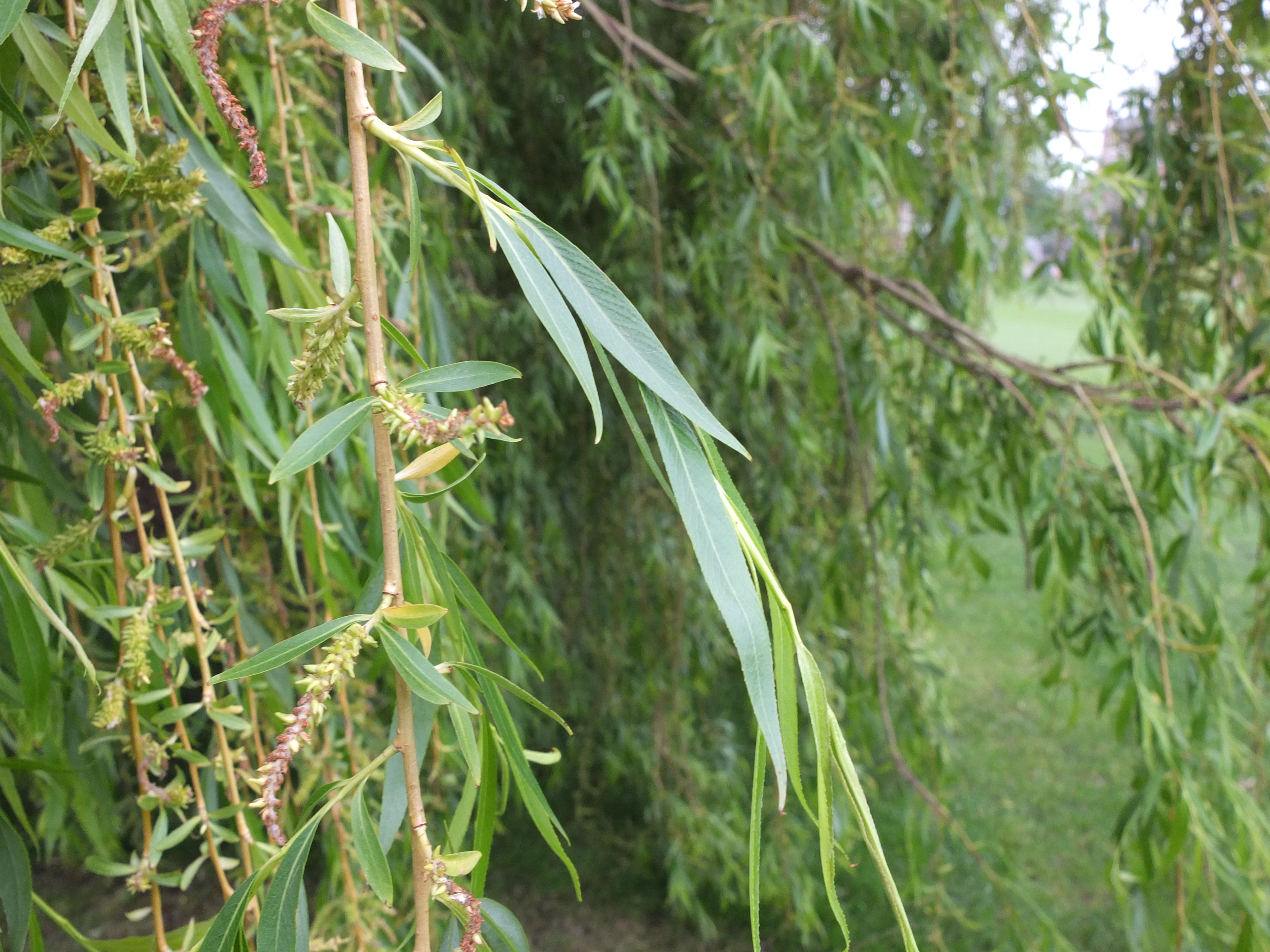
The Piper at the Gates of Dawn

A few evenings ago I watched a fascinating TV documentary about Kenneth Grahame and the creation of ‘The Wind in the Willows’. The story is an interesting one, but I was somewhat disappointed that the program made little reference to what seems to me one of the key elements of the book, and to the strange fate that has befallen it.

I have, in a previous post, recommended Jackie Wullschlager’s excellent book ‘Inventing Wonderland’, which is a study of a small group of contemporaneous authors – J. M. Barrie, Lewis Carroll, Kenneth Grahame, A. A. Milne and Edward Lear. The common thread uniting these writers – if you accept Ms Wullschlager’s premise (which I do!) – is that they each contrived to create a classic work of ‘supposed’ children’s fiction whilst themselves exhibiting traits indicative of an inability to fully realise the transition from childhood to adulthood. I say ‘supposed’, of course, because in spite of this exigency these works speak as much (if not more) to adults as they do to children – which may well go a long way to explaining their enduring appeal.

I have a little knowledge of the subject because – half a decade ago and more – I studied in some detail the life of J. M. Barrie. I was writing a play at the time about Barrie and the creation of ‘Peter Pan’ and in the course of my research I happened upon Ms Wullschlager’s book. The play was completed about six months before the frankly inaccurate and overly simplistic Johnny Depp film hit the multiplexes, and you can probably imagine how ‘thrilled’ I was at that particular turn of events!

When it comes to ‘The Wind in the Willows’, however, the background to the book’s creation interests me less than some of the content therein – in particular the seventh chapter – ‘The Piper at the Gates of Dawn’. When I first read the book as a youngster (probably about the same time as first heard an adaptation on the Home Service) it was this section that affected me most. Years later – when shopping for classic children’s books as a gift for the progeny of a friend – I found myself browsing through a lavishly illustrated hardback edition (sadly the illustrations were neither the wonderful originals by E. H. Shepard nor the later Arthur Rackham variants). I scanned the book idly, looking for the familiar prose of my favourite chapter…

…only to find that it was not there!

I looked again – and again! The chapter was missing…

Now – I am aware of only one or two instances in which elements of children’s books have been selectively edited out. I can just about imagine circumstances in which something that was once thought acceptable is no longer deemed to be so – but what on earth could possibly offend in ‘The Wind in the Willows’?

For those not familiar with the book, chapter 7 describes how – one hot, breathless summer night on which no-one can sleep – Ratty and Mole help Otter to search for his missing son, Portly. As dawn nears – after a fruitless night of searching – Ratty is suddenly captivated by the distant sound of ethereal music. Entranced they follow the mystical cadences to their source, where they encounter – on an island in the middle of the stream – a vision of the great god, Pan. The missing Portly is discovered fast asleep between the god’s hooves.

Rosemary Hill – writing in the Guardian in June 2009 – decribes this mysterious chapter thus:

“Those of them who went on searching for the divine often found it enveloped in clouds of pantheism and neo-paganism, spiritualism and theosophy, the faiths of the doubtful. It is this diffuse but potent supernaturalism that appears in The Wind in the Willows in one strange, unsettling chapter, “The Piper at the Gates of Dawn”. It is a section that abridgers of the book have always been quick to drop, though Grahame himself thought it essential” … “Whether it is the latent homo-eroticism of the vision or simply the sudden change of tone that makes the scene so uncomfortable, it is certainly a failure. But while artistically it is the weakest part of the book, it is at the same time the key to it.

There is much to dispute in Ms Hill’s reading, not least the assertion about the ‘faiths of the doubtful’, which – by her tone – I gather she intends pejoratively. I would prefer to substitute ‘sceptical’ – the definitions of which include: “a person who habitually doubts the authenticity of accepted beliefs” and “a person who doubts the truth of religion, esp Christianity”. The InterWebNet offers a plethora of examples of those of established faiths – in particular Christianity – attempting to appropriate the text in support of their own beliefs. This is actually quite offensive. Grahame is far too good a writer: had he intended this interpretation he would have written it.

It is strange that the chapter that Ms Hill describes as a “failure” and “the weakest part of the book” should have had such an effect on me as a child that I habitually look for it first whenever I pick up the book. Grahame is right to consider it essential, and it is indeed – for me – the key to the book. Grahame comes as close as anyone ever has to capturing the essence of the numinous experience. Here Ratty first hears the magical music:

“Rat, who was in the stern of the boat, while Mole sculled, sat up suddenly and listened with a passionate intentness. Mole, who with gentle strokes was just keeping the boat moving while he scanned the banks with care, looked at him with curiosity.

`It’s gone!’ sighed the Rat, sinking back in his seat again. `So beautiful and strange and new. Since it was to end so soon, I almost wish I had never heard it. For it has roused a longing in me that is pain, and nothing seems worth while but just to hear that sound once more and go on listening to it for ever. No! There it is again!’ he cried, alert once more. Entranced, he was silent for a long space, spellbound.

`Now it passes on and I begin to lose it,’ he said presently. `O Mole! the beauty of it! The merry bubble and joy, the thin, clear, happy call of the distant piping! Such music I never dreamed of, and the call in it is stronger even than the music is sweet! Row on, Mole, row! For the music and the call must be for us.'”

…and after their encounter with the god…

“Sudden and magnificent, the sun’s broad golden disc showed itself over the horizon facing them; and the first rays, shooting across the level water-meadows, took the animals full in the eyes and dazzled them. When they were able to look once more, the Vision had vanished, and the air was full of the carol of birds that hailed the dawn.

As they stared blankly. in dumb misery deepening as they slowly realised all they had seen and all they had lost, a capricious little breeze, dancing up from the surface of the water, tossed the aspens, shook the dewy roses and blew lightly and caressingly in their faces; and with its soft touch came instant oblivion. For this is the last best gift that the kindly demi- god is careful to bestow on those to whom he has revealed himself in their helping: the gift of forgetfulness. Lest the awful remembrance should remain and grow, and overshadow mirth and pleasure, and the great haunting memory should spoil all the after-lives of little animals helped out of difficulties, in order that they should be happy and lighthearted as before.”

This is not merely Edwardian whimsy, nor some failed attempt at a search for the supernatural. ‘The Wind in The Willows’ is about Longing and Loss (which – along with Love – are the three great subjects of all art) written during a golden summer in which everything seemed possible, but at the zenith of which everything might also be lost – as indeed proved to be the case as the world spiralled into the maelstrom of the new century.

…what we get!

“Climate is what we expect, weather is what we get.” – Mark Twain

I added to this blog – some short while ago – a ‘Today’s Image’ feature. The intention was that I would regularly upload and display images captured day by day with the Fuji x10, which I now carry with me as a matter of course.

Those reading this post in real time will observe that the current image is of a rather splendid clock. Residents of Victoria will recognise it as being one of the predominant features of the atrium of the Bay Centre in that fair city. Now – clearly this must have been taken some weeks ago, before I returned to the UK.

The reason for the image not being more up to date is that the weather in the UK since I returned can only be described as ‘shocking’, and I have not felt moved to go out looking for photo opportunites. This has been the wettest April for a hundred years – indeed the wettest since records began. We have now moved into May and are all deeply disappointed to discover that the weather is no better. I struggle to recall the last day on which it did not rain, or indeed on which we were not overshadowed by the regulation thick blanket of grey cloud. Depressing!

So bad are things that the cricket season – which should by now be well under way – has seen virtually no play throughout the first three weeks. The only positive – from the reader’s point of view – is that you have thus far been spared my ramblings on the subject of that great game.

So much rain has fallen in the past week that some areas in the west of England are in serious danger of flooding, and the papers have been full of images of rising water levels as rivers burst their banks.

And yet…!

England is in the grip of a drought! Though April was washed out, March was one of the driest on record – as have been, in fact, the last two winters. The aquifers are at an extremely low level and it will take many months of rain for them to be fully replenished. The papers are carrying – alongside the photos of flooded fields – headlines warning that we may, by the end of the year, see standpipes in towns and villages as the water supply is cut off.

Only in England!

When referring to the weather in Victoria, Kickass Canada Girl is partial to the familiar quotation – “If you don’t like the weather, wait a minute”. This saying apparently originates in New England and – contrary to some popular belief – was not actually said by Mark Twain. I do myself like the variable Victorian climate (which is clearly a good thing) as it seems to me to elude the dreary inevitability inherent in much English weather.

…a straight line!

Those who write, post or comment on Long Distance Relationships (LDRs) – be they academics, altruists, cynics, sympathisers or those who are currently (or have been previously) themselves embroiled in such a situation – all concur that communication is vital, and that the nature thereof should be agreed in advance by negotiation between the parties concerned.

As you may have noted from previous posts, Kickass Canada Girl and I belong to the school of believers in frequent communication, however trivial or brief it may be. We are – for this and other reasons – immensely grateful that we did not have to endure this experience even five or ten years ago. Skype, email, SMS messaging and mobile devices such as the iTablet and smartphones have enabled global communication in a manner that would have been unimaginable to those who went before us. The idea of embarking on such a relationship with only landline telephony and airmail – let alone in the days when the only communication was handwritten and went by sea – just doesn’t bear thinking about. In this way – as in so many others – we are very lucky.

So important is communication considered to be to the health of an LDR that scientists and developers dedicate considerable effort and resource to enhancing it. Mary E. Morrison’s 2006 article – “How To Make Long-Distance Love Work” contains the following example:

“Cornell University scientists, for example, have started researching “minimal intimate objects” as a supplementary means of communication. Imagine both you and your partner spending your days at a computer. In the taskbar of your computer screen, you see a small box with a little circle. When you click on your circle, the corresponding circle on your partner’s screen lights up: a quick, one-bit message that’s nonintrusive but establishes an ambient awareness of you. As you work, you’re right there with each other.”

That’s not all. A UK company called Little Riot are about to launch a product called ‘Pillow Talk‘. Their publicity blurb claims:

“Pillow Talk is a project aiming to connect long distance lovers. Each person has a ring sensor they wear to bed at night, and a flat fabric panel which slots inside their pillowcase. The ring wirelessly communicates with the other person’s pillow; when one person goes to bed, their lover’s pillow begins to glow softly to indicate their presence. Placing your head on the pillow allows you to hear the real-time heartbeat of your loved one. The result is an intimate interaction between two lovers, regardless of the distance between them.”

The eight hour time difference between the UK and BC rather rules this one out, of course – quite apart from any other consideration!

Finally, for those who really can’t keep their hands off each other, Mara Siegler of Blackbook Magazine offers this weirdness:

“Before conquering us in a global revolution and turning the human race into fuel, robots may actually grow to love us, or at least make our romances better. Hooman Samani, a researcher at the National University of Singapore, has been experimenting with what he calls “Lovotics.” He’s given the metal beings the equivalent of human hormones so they can react to love and also created two totally creepy bots to help couples in long distance relationships. 

The “Kissenger,” which sort of looks like a Pokemon reject, can be plugged into the computer while Skyping and supposedly feels like a real kiss.  Don’t have a significant other to use this with? No worries, you can go solo.

Take a look. Either put the video on mute or jam out. Your choice.”

…and at this point I stop looking – before things get even more bizarre.


In response to my last post on the subject of LDRs the Girl sent me a one line comment expressing her view. It reads:

“Hmm, nobody seems to sum it up the way I do – it sucks!”

I totally agree. One result of our recent cogitation on the nature of our long distance relationship is that we really don’t want to have to keep it up for two years. We are, therefore, reworking our schedule based on my ‘retirement’ being moved forward to the summer of 2013.

More of this anon!


…is not necessarily…

The sheer quantity of material available online – and elsewhere – concerning Long Distance Relationships is quite staggering. Much of it will naturally not be relevant to any given situation and some of it is, frankly, a little creepy. This post contains a selection of items pertinant to those in a similar position to Kickass Canada Girl and me.

Statistics on LRPs are revealing. These are from America, but as is the way of such things they doubtless echo reasonably closely the situation in Canada and the UK.

  • According to the American Census Beaureau more than 3% of married couples live apart.
  • A 2009 study from UCLA suggests that those couples who do choose to live apart:
    • frequently live in urban areas,
    • tend to be among the better educated,
    • tend to be younger.

However:

  • The American Association of Retired Peoples (AARP) estimates that the number of married couples – of which the partners are 50 years old or more – who live apart, tripled between 2001 and 2005.

Laura Stafford, University of Kentucky professor and author of “Maintaining Long-Distance and Cross-Residential Relationships writes:

“The older you are when you do a long-distance relationship, the less it seems to matter because you’re not changing as much.”

I’m not sure how true this is, though I guess we may find out. The young are probably more accustomed to change and may thus be more resilient. We ‘oldies’ are may be getting more set in our ways, but are hopefully also imbued with wisdom. We have – after all –  been around the block (a few times!) now.

I must admit to only having glanced at Laura Stafford’s book. Indeed what becomes rapidly apparent when browsing the online book stores is that the range of published material available is extensive. Some of it is pretty academic in nature, but the majority would fit more comfortably into the ‘self-help’ category. The sheer volume (groan!) of these publications makes it impossible to make particular recommendations, but does reinforce a long held view of mine that in such circumstances the traditional bookshop wins out any day over the online variant. I much prefer to spend an hour or so browsing physical volumes, to seek out the ones that speak to me – the ones that chime most with my own instincts.

Most of the sources I have studied do seem to agree on basic principles. Here are a few useful tips for those contemplating embarking on an LDR – gleaned in this instance from around the InterWebNet:

  • Establish the ground rules from the start. Do not assume anything – leave nothing up in the air. This should be a no-brainer. Avoiding unecessary friction is key in a situation in which finding resolutions will probably be hampered by restricted communication.
  • Agreed on an end goal for the LDR. A painful time will pass much more quickly if there is a definite end date. It will also help tremendously if the LDR is in itself of benefit to the relationship in some way.
  • Agree on a level of communication. This will vary, but for many people frequent contact – however brief and prosaic – seems preferable to occasional longer conversations. This is certainly the case for us.
  • Alternate visits to each other’s base. A sense of balance and fairness will make things a little easier. Sharing the burden reinforces the relationship.
  • Trust each other. Nothing is as corrosive as jealousy or mistrust in a vacuum. You should not – it hardly need be said – do anything to breach the other’s trust.
  • Make your own life – but be sure to share each other’s vicariously.
  • Take every opportunity for intimacy. Of course! Goes without saying…

…between two points…

One of the better pieces I have read on Long Distance Relationships (LDRs) is this 2006 article by Mary E. Morrison entitled “How To Make Long-Distance Love Work“. You will undoubtedly – if you are interested – eagerly devour said piece in its entirety yourself, but for those with little time to spare (most of us these days it seems!) here are some selected extracts.

With reference to her own LDR Ms Morrison writes:

‘Instead, we spent three months communicating through emails, text messages, and, yes, quick phone calls, usually about the most prosaic of things. As it turns out, that’s one of the surest ways to a successful LDR.

Here’s why: When psychologists talk about intimacy, they’re generally referring to two components. The first is the ability to verbalize fairly deep vulnerabilities—for instance, to say “Do you love me?” and “I miss you.” The trickier, almost subconscious part is maintaining the feeling of being intermingled in your partner’s life, a state the experts often refer to as “interrelatedness.” Couples that are geographically close establish this by discussing the mundane details of daily life, whether it’s the fact that you had to take a different route to work because of road construction, or that you have a 2 p.m. meeting with a new client, or that you had a turkey sandwich for lunch.’

Now – this seems to me to be most important. It is widely accepted that – when living apart – it is necessary for each partner to establish their own independent life, rather than just to live vicariously on the absence of the other. I have no argument with this, but it seems to me equally important that these new separate existences are not fostered by a diminution of communication – as though contact would somehow taint or inhibit the new life – but rather by sharing its creation through a multiplicity of small contacts, much as would be second nature if actually living together. My fear is that to do otherwise could lead to growing apart.

Ms Morrison quotes Ben Le, an assistant professor of psychology at Haverford College in Pennsylvania who studies romantic relationships:

“The absence of a partner could, in the short term, result in a loss of part of the self. As the long-distance relationship persists, it’s likely that the self-concept would shift to account for that LDR — being a ‘person in a relationship’ would shift to being a ‘person in a long-distance relationship.”

Ms Morrison adds:

‘Missing a loved one actually involves something much deeper than wanting to be around them. Whether you know it or not, your relationship is an important part of your self-concept; when your partner leaves, you might—at least initially—have to redefine your sense of self.’

This is undeniable. I know that I am half the man when I am not with Kickass Canada Girl. My sense of myself is seriously diminished. I am less confident and, indeed, less capable.

Ms Morrison refers to the work of Greg Guldner, director of the Center for the Study of Long Distance Relationships in the US.

‘Guldner’s research shows that most couples tend to go through three phases of separation: protest, depression, and detachment. The “protest” phase can range from mild and playful—”Please stay”—to significant anger. Once an individual has accepted the separation, he or she might experience low-level depression, mostly characterized by slight difficulty concentrating, trouble sleeping, and the feeling of being a little down. “Unfortunately, that seems to be a reflex,” Guldner explains. “In other words, it persists. It continues with each separation and, in fact, sometimes worsens with each separation. There is very little one can do to prevent it.” Some people experience this in a more pronounced way than others. In the detachment phase, each person begins to compartmentalize his or her life, breaking it down into the sections with a partner and the ones without. It’s an effective coping mechanism that allows the individual to be in a relationship while doing what has to be done—until the occasional moment of weakness, that is.’

This captures – for me – the very real danger inherent in an extended separation. We can only hope that – by maintaining full awareness of what is happening to us – that the danger of the relationship suffering permanent change – or indeed damage – is minimised.

We are certainly working on that.


The shortest distance…

When Kickass Canada Girl disappeared in the direction of Victoria nearly two months ago – accompanied by the greater part of her wardrobe and personal effects – I promised that I would write something about Long Distance Relationships. At the time I carried out some initial research on the InterWebNet – largely for my own peace of mind it must be said –  and found a plethora of information. Almost too much information! Clearly this is a topic that affects a great many people, in many different ways. In the end I refrained from posting anything until I had had a chance to see how things actually went in practice.

The term – Long Distance Relationship – is pretty clinical and not a little cumbersome. Its acronym – LDR – is invidious, but I will no doubt find myself using it simply for brevity. Perhaps the use of a more emotive term would be considered antithetical to the intent – that being to provide a dispassionate label for something that is itself most unlikely to be lacking in passion, in much the same way that medical or psychological terminology can obfuscate the trauma it describes.

There are, of course, many reasons why lovers voluntarily enter into these strange relationships, or partners choose to test an existing liaison beyond its originally negotiated bounds. Many of the cases referenced online concern those of university or college age who find themselves separated from their inamorata for academic reasons. Some of these relationships survive – many do not. Those of more mature years may be drawn apart for family reasons, or to further their careers. For some relationships are predicated on the understanding that for professional reasons they will have to endure separation. Those who work on offshore oil rigs, for example, or who drive trucks long-distance come to mind.

It is the case, though, that in most instances the decision to live on different parts of the globe is – in the final analysis – a matter of choice. It may be that that choice is limited, or that there is great pressure one way or the other, but there is usually an alternative – however onerous or unappealing it may be. For this reason it would be inappropriate for those of us who choose such a lifestyle to try to elicit the sympathies of others – and I certainly won’t be doing so. Only in the case of the armed forces would I make exception. Yes – their trade is also a matter of choice, but I do feel for those whose loved ones are not only parted from them but also in danger of their lives.

But that’s quite enough in the way of generalisations – on with the factual stuff. The next post will be laden with deep psychological insight and hard-gained wisdom…

…or a bunch of stuff gleaned from the web!

Skinny dipping

“Only when the tide goes out do you discover who’s been swimming naked” – Warren Buffet

As this post goes to press (ok – just a tiny bit pretentious!) our property in Buckinghamshire goes back on the market (the full background can be found here). Though the UK market is still pretty flat properties are being sold – just as they are in BC – so fingers (…legs, eyes and anything else available) crossed that Mr and/or Mrs Right rapidly puts in an appearance and snaps up this undoubted bargain.

When I spoke to our estate agent (Canadian – realtor) about putting the apartment back on the market I was advised that we would probably first need to give our tenant the agreed two month’s notice, thus risking both losing him and possibly still not finding a buyer. Fortunately our letting agent came up with a better suggestion. He felt that if we offered our tenant a discount on the rent he might agree to the property being marketed for a trial period – say three months – and co-operate with the process. As our tenant seems to be pretty houseproud it was felt this would probably not be a major inconvenience to him. This has indeed turned out to be the case and we currently have the best of all worlds.

Buying and selling property is a very different proposition in the UK to that extant in Canada. For a start, estate agents operate in a very different manner to the Canadian realtor. An estate agent acts solely on behalf of the vendor. This has two effects. First, to explore the market in any location fully the prospective purchaser must visit many estate agents. Though this has been somewhat mitigated by the spread of the InterWebNet – since all agencies now advertise on the main property listing sites (there is no UK equivalent to the MLS) – it is still necessary to visit the agent once a suitable property has been located. This exposes the second effect – namely that the agent’s motivation is founded solely on the interests of – and, of course, the fee from – the vendor. No-one actually acts in the interests of the purchaser at all.

The Canadian realtor both buys and sells properties. A prospective purchaser finds a suitable realtor and the latter henceforth works on their behalf, regardless of who is actually selling the property. As a result, for most sales two realtors are involved, one acting for each party.

The process by which property is sold in BC is also significantly simpler and fairer. Once an offer has been made and accepted – which transaction is accompanied by a significant amount of legal paperwork – the deal is effectively done. Having an offer accepted on a property in England (though not in Scotland, where property law is significantly different) seems merely to be an invitation to haggle, gazump, bully and cheat on either or both sides. The sale is not secure until contracts have been exchanged – which can be weeks later – and those with experience still won’t fully trust the deal until completion and the transfer of funds. We all know someone who has been bullied into selling at a reduced price (or purchasing at a increased price) at the very last minute because the other party knows that the success of another transaction in the chain depends on this sale.

Buying and selling real estate is not for the faint-hearted at the best of times. It is no surprise that moving has long been considered one of the more stressful life events, with much of the pressure concerned arising from the transaction itself. Well – buying and selling internationally – on different continents – adds whole new layers of imponderability. It is hard enough trying to sell a property in a flat market, with little idea as to how long we might have to wait for an interest. Keeping, in addition, a nervous eye on the market in Victoria – hoping that it too will remain friendly until we actually have ‘brass in pocket’, and seeing properties that we like come and go at (notionally) affordable prices – requires strong nerves. As does monitoring the sterling/Canadian dollar exchange rate! It is quite conceivable that we could sell at a reasonable price and find our dream house on the Saanich peninsula only to find that a weakening pound has wiped out a percentage of our capital.

Nerves of steel, baby! Nerves of steel!


A different drum

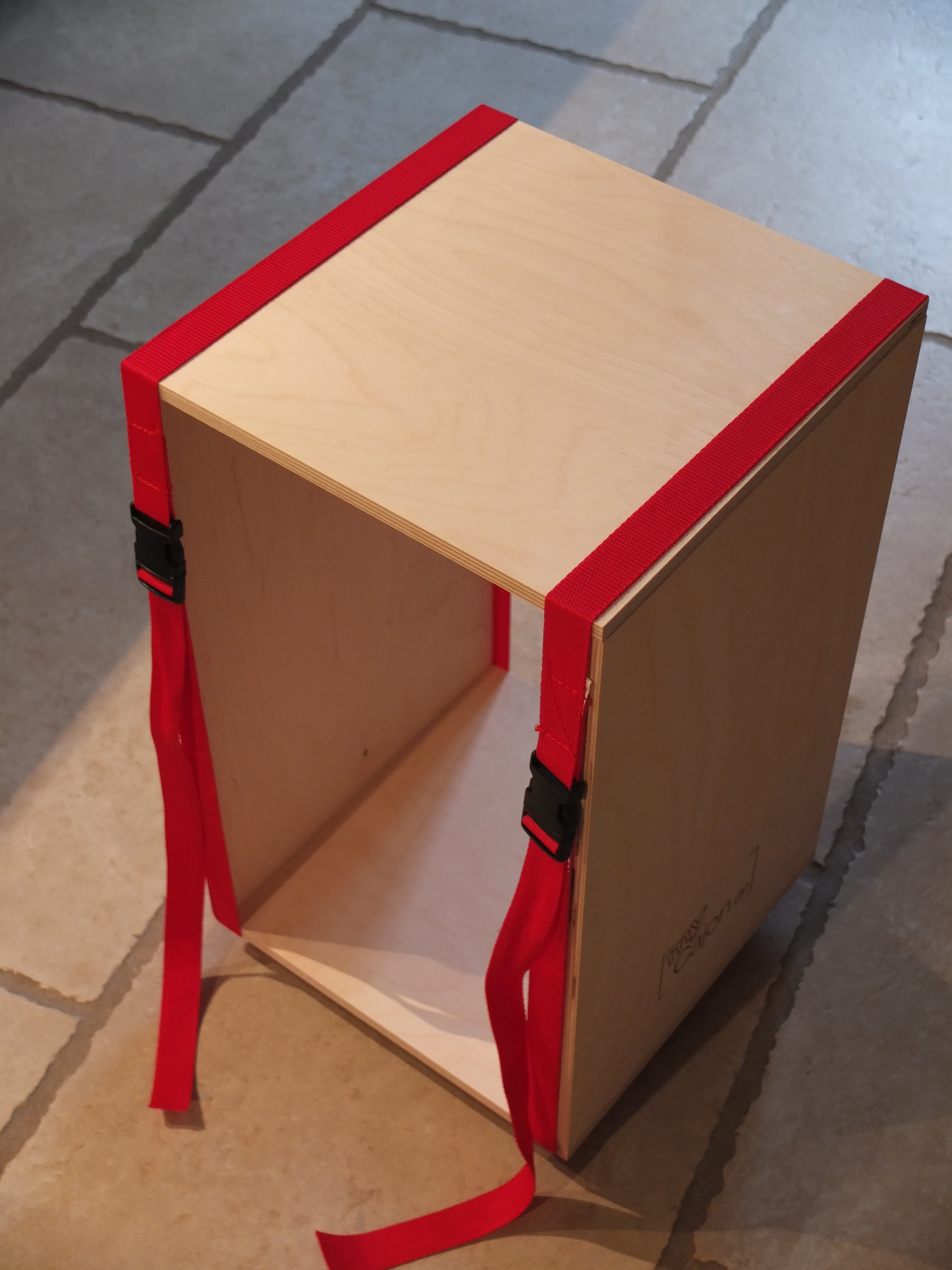
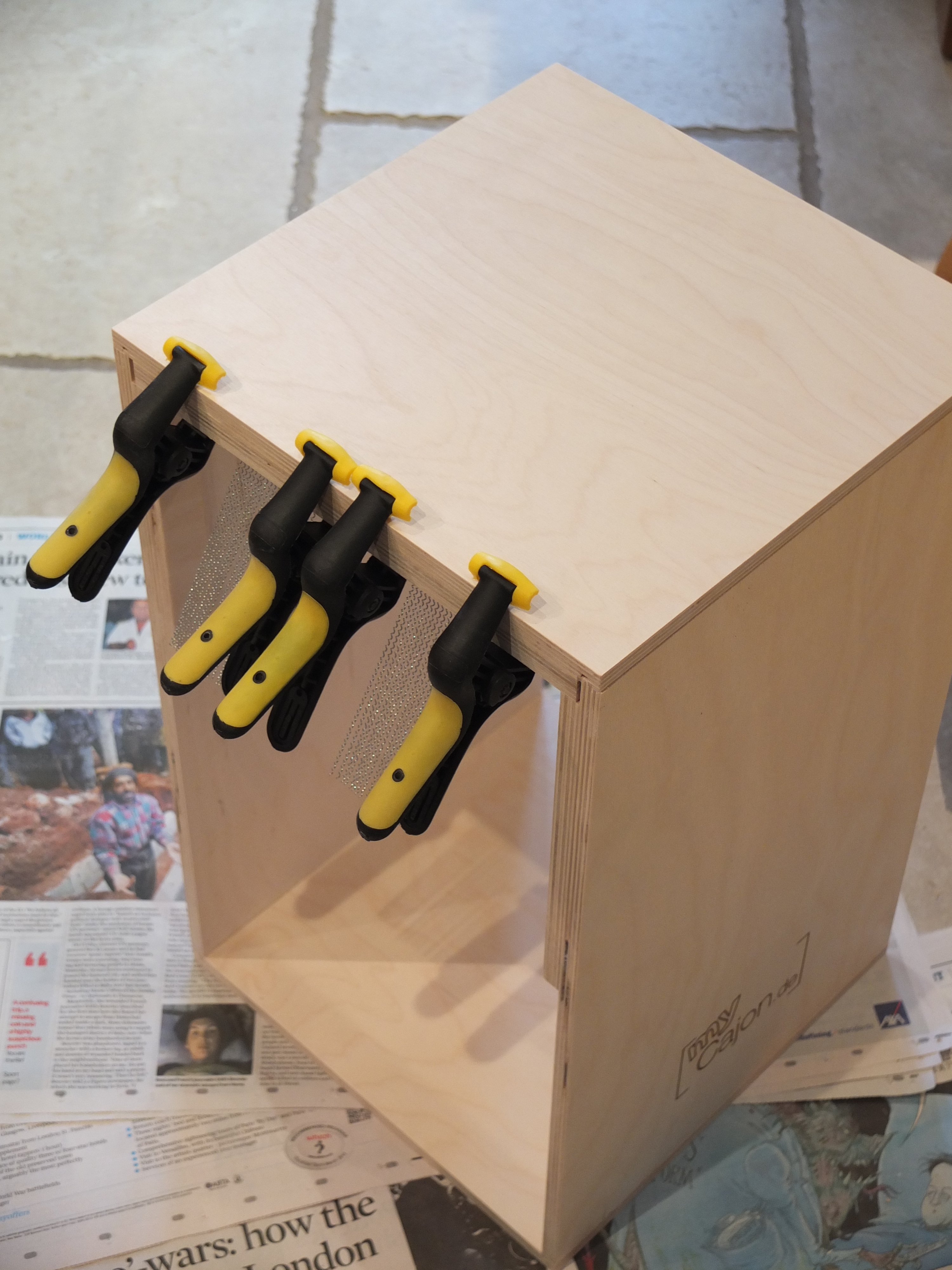
I realise that in all the excitement of my recent visit to BC I neglected to finish the story of my Cajon. I thought you might like to see how it was put together. The main body is glued. The straps are required to allow the glue to set thoroughly to make the joints as strong as possible.
An internal brace is glued to the front of the top of the Cajon. This will carry the snares and support to screwed top of the playing surface.
Side braces are required for the parts of the playing surface that are screwed rather than glued.
The snares are attached.
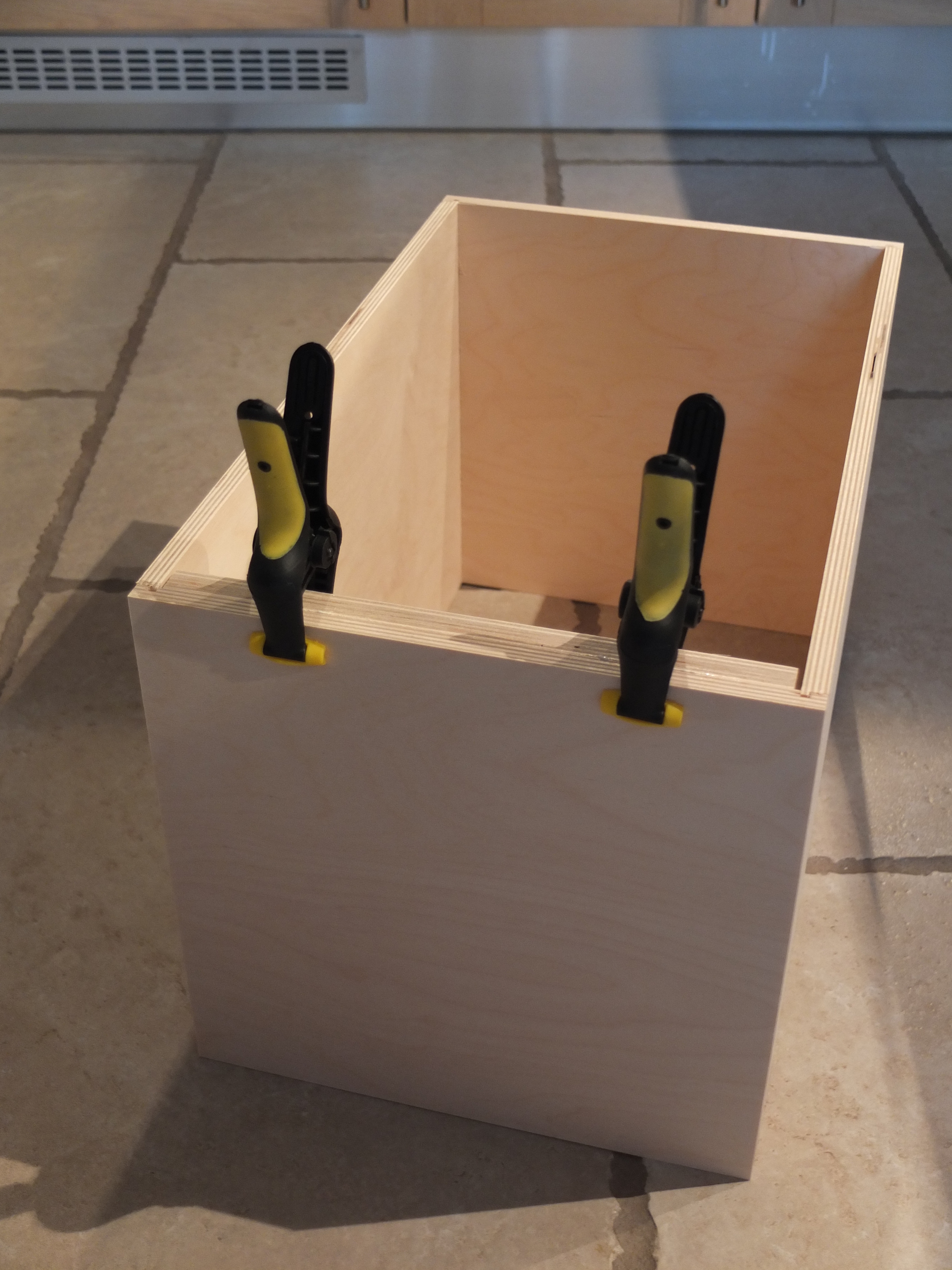
The playing surface and the back of the cajon are now glued in place, though no glue is applied to the top part of the playing surface which is screwed later. This enables it to vibrate freely and to be tuned by tensioning the screws.
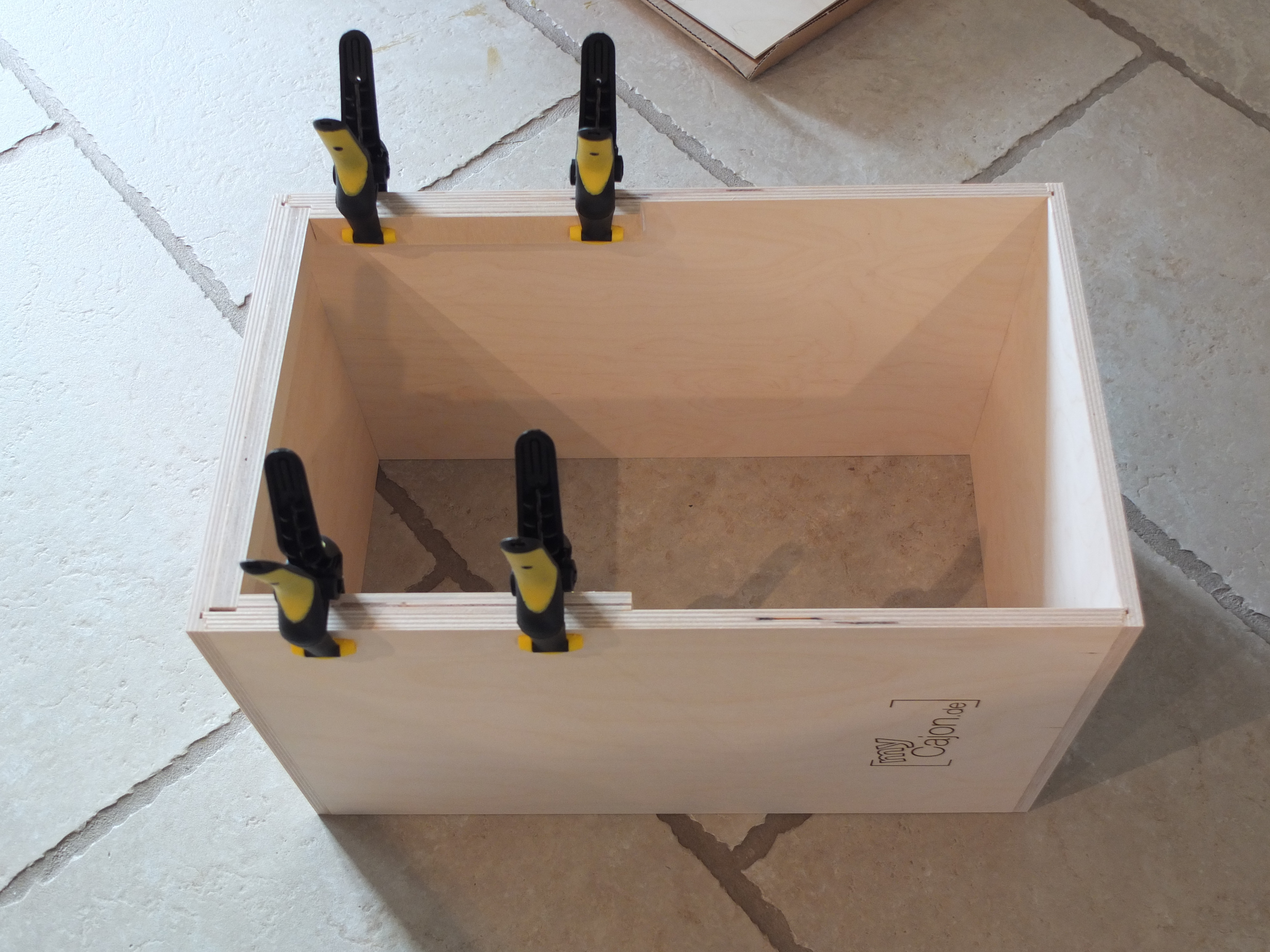
Here is the cajon ready for finishing. The sound hole at the back was cut previously in School on our laser cutter! Very fancy!!
Trimmed, sanded, screwed and given two coats of wax – the cajon is finished and ready for action…

On hold…

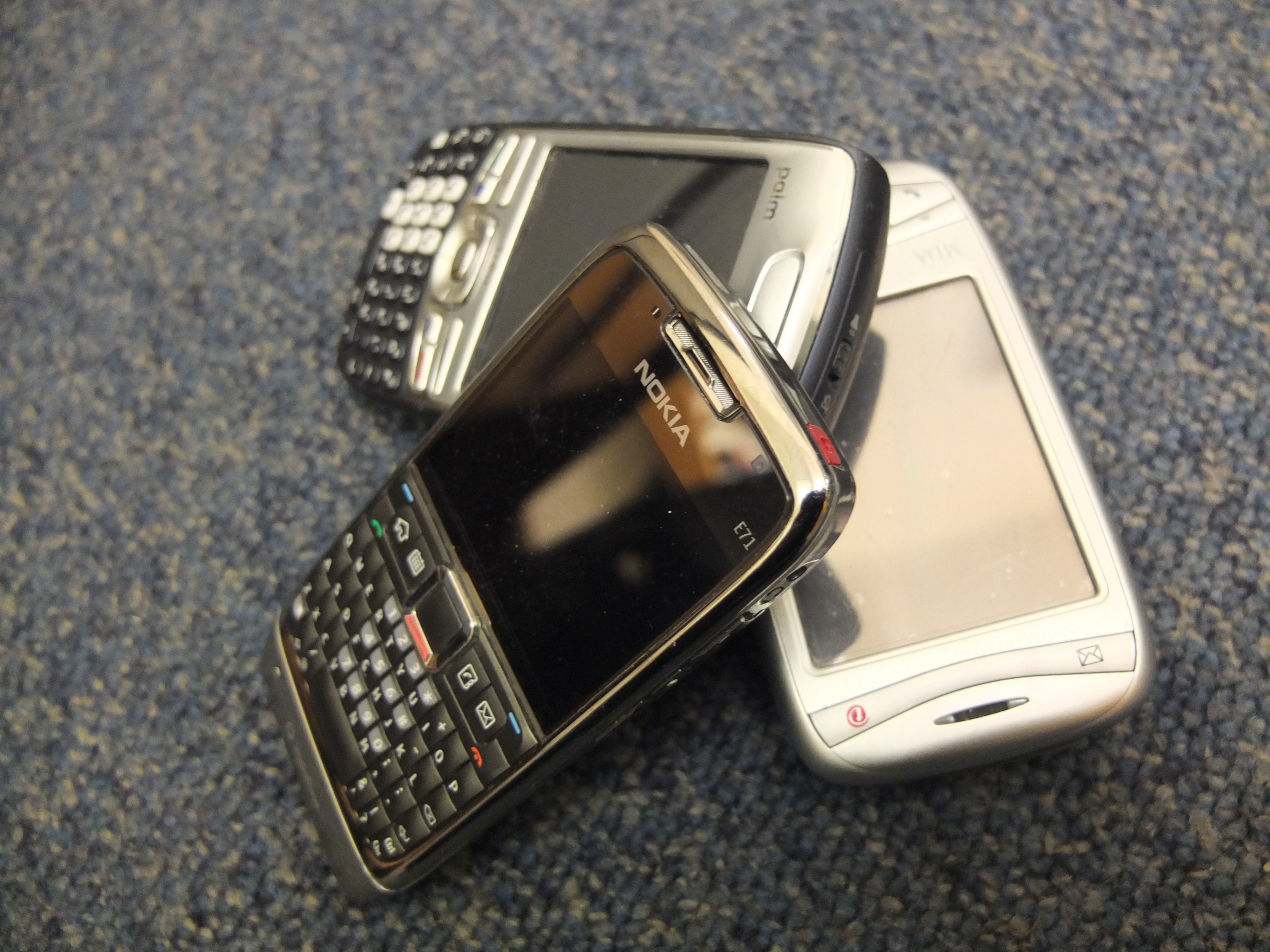
Kickass Canada Girl is the proud owner of a mobile phone of the ‘i’ variety – more specifically a version with a ‘4’ in it. She acquired this in the UK some time ago on a contract – indirectly – with one of the major mobile telecom providers here. I say ‘indirectly’ because she actually purchased it through one of the UK’s largest retail outlets – formerly just a food store but these days – like everyone else it seems – dabbling in all manner of services.

When she realised that she would be re-locating to Victoria the Girl took steps to ensure that the handset would be appropriately transportable – a process apparently known as ‘jailbreaking’, though one which is – I am reassured by Wikipedia – not actually illegal. She had no clear picture at the time as to what exact use she might make of the phone in Canada, but wanted to leave her options open.

On taking up her new post (if you need to get up to speed on all this please do start here) the Girl found herself the proud possessor of a company Blackberry. (Cue stirring rendition of ‘O Canada’!… Incidentally, I had always been slightly sceptical of the Girl’s claim that very few Canadians actually know more than the first line of of this rousing roundelay, but she and I recently attended a rugby match in Victoria and it has to be said… she’s not wrong! Still, Wikipedia reveals the following: “There are no regulations governing the performance of “O Canada”, leaving citizens to exercise their best judgment”… so that’s alright!).

Where was I? Oh yes…

I am sure that there are some very good Blackberry handsets – in fact I know that there are. This one, unfortunately, was not one of them. Put frankly, this one was a crock of… well – I am sure you get the idea. Let’s just say that after the iHandset this left something to be desired – or so the Girl forcefully informed me.

We dug out the iJailbreak and visited the charity’s telecom provider. ‘No problem’, they said, and happily sold us the required microSIM. They also informed us that we would need to activate this SIM – online or by phone – but that we would have to wait for three days because their network management was ‘undergoing annual maintenance’ over the Easter weekend (huh?!). Wait we duly did, however, and I subsequently found myself endeavoring to activate the new SIM the day before I headed back to the UK. That’s where things became tricky.

The online activation appeared to work, but the phone could not find the network. I called the helpdesk. They were closed for the night! I called the next morning. I was taken through an extensive diagnostic process, at the end of which the (most helpful) techie informed me that though the phone was jailbroken it was still actually locked to the previous network. They could see the SIM across the network, but the handset itself could not.

Two possible courses of action became apparent. We could try to find someone in Victoria to ‘unlock’ the phone or we could wait until I returned to the UK, where I could contact the carrier there to ask for the unlock code. Not being willing to leave the iPrecious in the hands of the type of uber-geek with which I am (sadly) all too familiar we opted for the latter course. The only problem, of course, was that now that the microSIM had been activated and the old SIM terminated we could not use either handset.

Back in England I called the network operator. ‘Yes’, they said – ‘because you have had the phone for more than a certain time we can arrange for the unlock code to be sent to you’. Naturally they made it sound as though they were doing us a huge favour. ‘But’, they continued – ‘it may take up to 28 days’. Twenty eight days?! This was not going to go down well with the Girl, who is pretty fiesty at the best of times!

One of my bright young things at work suggested that we should – in the meantime – purchase an adapter for the microSIM so that it would fit the Blackberry. At least then the Girl would have a working mobile. As I could see samples online for only a few pounds (dollars… much the same!) I suggested this to the Girl and she went hunting in Victoria. After being bumped from one store to another and back again she was on the point of giving up when the incredibly helpful assistant at the Fido store on Yates Street (name check for going above and beyond) pointed out that the adapter – merely a small piece of plastic designed to make the microSIM bigger than is really is – was strictly unnecessary, and that by judicious insertion and a bit of jiggling the microsSIM would actually work just as well in the Blackberry!

Kudos to Fido for being massively helpful for no real gain (other than attracting a potential future customer) – boos and hisses to Apple for adopting the microSIM in the first place (sheer bloody-mindedness I reckon) – to the UK carrier for taking 28 days to send a few digits by email (what on earth do they do all the time!) and also to all carriers who do not automatically unlock handsets once the initial contract has expired, thereby indulging in what I consider to be absurd and restrictive practices.

Phew! Time to lie down in a darkened room…