web analytics

Life as we know it

You are currently browsing the archive for the Life as we know it category.

Liberty_Bell_06
Afternoon in School – The Last Lesson

When will the bell ring, and end this weariness?
How long have they tugged the leash, and strained apart
My pack of unruly hounds: I cannot start
Them again on a quarry of knowledge they hate to hunt,
I can haul them and urge them no more.
No more can I endure to bear the brunt
Of the books that lie out on the desks: a full three score
Of several insults of blotted pages and scrawl
Of slovenly work that they have offered me.
I am sick, and tired more than any thrall
Upon the woodstacks working weariedly.

And shall I take
The last dear fuel and heap it on my soul
Till I rouse my will like a fire to consume
Their dross of indifference, and burn the scroll
Of their insults in punishment? – I will not!
I will not waste myself to embers for them,
Not all for them shall the fires of my life be hot,
For myself a heap of ashes of weariness, till sleep
Shall have raked the embers clear: I will keep
Some of my strength for myself, for if I should sell
It all for them, I should hate them –
– I will sit and wait for the bell.

D.H.Lawrence

Tags: ,

Image from Wikimedia CommonsThe hardest job kids face today is learning good manners without seeing any.

Fred Astaire

WARNING! – Grumpy old git whinge alert…

I am – of course – by no means the first upper-middle aged cosmopolite to cavil at the seemingly neoteric indifference to the desirability – nay, necessity – of good manners… and I am pretty dashed certain that I won’t be the last!

As the strapline above attests – however – I am not one of those who complains of a lack of politeness solely in the younger generation. Indeed I am in accord with the twinkle-toed hoofer in believing that if we want our progeny to behave appropriately we had jolly well better set them a decent example…

…which does seem to be beyond some of our number!

OK – I promise this brief post will not simply comprise an irritable catalog of perceived slights and causeless contumely. That really would take me into Mr Grumpy Pants territory (again)…

Instead, a slightly disconsolate appeal – made more in sadness than in anger – for at least some form of acknowledgement when I – or indeed anyone else – perform some little act of courtesy or politeness. How many times do we step aside for someone – hold a door ajar for someone – let someone out into traffic – smile a greeting at someone… only to be completely blanked in return! It is almost as though the person for whom this tiny act of kindness has been committed so resents the fact that it has been done that they can’t bring themselves even to look us in the face. Perhaps the subtext is that the man (or woman) who does something – anything – for his fellow is in some way demonstrated thereby to be weak… to be a ‘loser’!

Bizarre!

I have a distant memory of reading somewhere – many years ago – an article or book concerning the importance of human contact. Sadly I can no longer remember the title or provenance of this goodly tome, but the central tenet was – as I recall – that acknowledging others when we come into contact with them is the equivalent of giving – and getting – ‘strokes’, and that we need this affirmation – this contact – to build our self-esteem and to make us feel good about ourselves. If we acknowledge someone as we pass – even if only by a nod of the head – we give their ego a ‘stroke’… we effectively say “you are important enough in my world that I recognise your presence”.

Of course – if we do this and are blanked in return the opposite message is also heavily reinforced.

Now – it is one thing for our mere presence to go unacknowledged – quite another for any act of generosity – however minor – to be effectively thrown back in our faces.

Extremely unlikely as it may be, should you – dear reader – recognise in yourself even the possibility of being guilty of such behaviour – all I can say is – “get a grip!”.

Tags: ,

Image by Geni on WikipediaA recent and somewhat vexatious – though in truth fairly mild – infection at the root of one of my molars has caused me to enter into my much dreaded decennial engagement with the amalgam of dentists. This suitably apposite collective noun, incidentally, (see what I did there?) comes courtesy of a rather wonderful website called ‘All Sorts‘, whose splendid ‘mission statement’ reads thus:

“All Sorts is a collection of collective nouns that may or may not have found their way into the Oxford English Dictionary. If you think that a charismatic collective is far superior to a dullard ‘bunch’ or ‘flock’ then this is the place for you.”

I digress!

Now – I know that those of you who are of North American origin will have a totally different outlook to us Brits when it comes to oral maintenance. I know this because the Kickass Canada Girl is at pains to point out the fact. Frequently! To understand the loathing that my generation has of all things carnassial one must revisit a little post-war English dental history. To quote from the online ‘Dentist Forum’ – in response to an item in the tabloid press concerning the perceived neglect of dental hygiene in the UK:

“What he fails to mention is the over treatment by dentists to anyone who is now aged around 50 or 60 will have suffered in their younger years. Many of this age group had the drill, drill and more drilling treatment. It wasn’t unusual as a child to visit the dentist for a check up in the 1960s and be told “that’s 10 fillings you need”. If many of this age group had only visited a dentist occasionally in their childhood, perhaps only when in pain, they would have had less unnecessary treatment and their teeth might be in better shape now.”

I was one such child. My memories of those two decades are of almost constant toothache – subsequent to each visit to the dentist. By the time the pain had subsided it was time for another checkup. What with the endless fillings (not in truth helped by the lack of fluoridation in drinking water in England at that point, nor by the sweet tooth that I inherited from my mother!) and the impacted wisdom teeth, I had a pretty rough time of it.

To cap it all I had a gap between my two front teeth. It was not a massive gap and nor was it unsightly. In truth was rather fond of it. The dentist – however – persuaded my parents that it should be fixed and I was reluctantly forced to wear a hideous and uncomfortable brace. I hated the thing so much that I avoided wearing it whenever I could get away with it. Eventually the dentist started to smell a rat – suspicious of the lack of progress. Finally my brother resolved the issue inadvertently on the cricket green by breaking one of my front teeth with a particularly vicious short-pitched delivery. The resulting cap removed the gap once and for all.


Dentistry has changed – of course – out of all recognition. Such barbarism as we knew in the 60s is a thing of the distant past. My practice now even calls me up the day following treatment to check that there has been no resultant discomfort. The surgery has more technology than NASA and can engineer a perfect set of teeth with laser like precision whilst rotating 3D animations of my molars on a large flat screen for my education and edification.

I was fitted – the other day – with a temporary crown; the which involves quite a lengthy procedure. There was at no stage – either during the treatment or at any point thereafter – any pain at all (unless one counts the cost of the procedure – which is eye-watering in much the same way as is a boot to the testicles!).

There remains but one complaint. The drill! It is not that it causes any discomfort these days – but the sound of the thing is exactly as I remember it from my youth. As a result my visits to the dentist these days cause me to suffer grim psychological flashbacks to my childhood some five decades ago.

Now – if they could only fix that…

Tags: , ,

Photo by Andy Dawson ReidFor the first time since since I joined the School not far short of a decade ago, the whole community gathered as one in the Founders’ Court just before 11:00am yesterday morning to participate in a simple but effective ceremony of remembrance.

It is – I suppose – little surprise that this particular Armistice Day should be accorded such significance though, of course, 2014 is the centenary of the commencement of the Great War rather than of its close. That it has acquired this importance may be determined from – amongst other like signifiers – the public response to ceramic artist Paul Cummins’ installation at the Tower of London. This extraordinarily moving presentation – entitled “Blood-Swept Lands and Seas of Red” – has clearly caught the public imagination far beyond the expectation of those who commissioned the work.

That we stand in silence and remember those who gave their lives is entirely apposite. Given even that the images of modern warfare are these days beamed into our homes like some obscene computer game, we still cannot begin to imagine the true nature of the ordeal experienced by those who find themselves in the combat zone. The utter horror of warfare – the mechanisation of destruction – the unimaginable cruelty of the carnage that men are persuaded to inflict upon one another – the impossibility of ever truly ‘coming back’ from war…

Those of us fortunate enough to have avoided any need to undergo such a baptism can only marvel at the fortitude, the courage, the sacrifice of those that have done so. There but for the grace of god – go each of us…

What should not be forgotten – especially at this time of remembrance – is the part played by those powers and potentates at whose behest and command our young men head for the battlefield. We would – of course – love to imagine that the wise heads and stout hearts of our leaders direct them to strain every sinew to ensure that any such conflict be avoided if at all possible. War should only ever be a last desperate act of self-defence. It is sadly all too clear that in many conflicts this is simply not the case.

I was moved to tears by an article in Saturday’s Independent newspaper that drew attention to the scarcely believable fact that – since 1945 – there has been but a single year (1968) in which no member of the UK armed forces was killed in action. This is a truly shocking statistic!

When we as a nation ask the ultimate sacrifice of our young men – the most precious gift that is life itself – do we not bear the immense responsibility of ensuring that we do so only when there is absolutely no alternative?

The Great War – as so many others – should never have happened. Europe’s rulers and political leaders – by their mendacity, their naivety, their ignorance, their incompetence… their fragile egotism… allowed the continent to slide into a cataclysmic conflict that wiped out a generation and changed the world utterly!

This also we must remember.

Tags: , , ,

Image from WikipediaNo sooner had I posted my previous epistle lamenting the cynical manipulation of statistics by those with political ambitions (whatever might be their particular persuasion) than the UK Chancellor of the Exchequer – George Osborne – obligingly provided a perfect illustration of this dark art.

The background is thus:

Just over a week ago Prime Minister Cameron embarrassed all concerned with an ill-judged, table-thumping tantrum when informed of a bill for £1.7 billion – for payment by December 3rd – that had been presented to the government by the European Union (EU). The fact that the figure was the product of the standard annual re-calculation of EU contributions based on GDP that applies to all EU member countries – in this case covering years back as far as 1995 – and that those involved had all known well in advance that it was coming up, apparently counted for little. Cameron chose to throw a hissy fit, claiming that the UK would not be paying what was owed – and certainly not by Dec 3rd!

The reasons for this unseemly display are – of course – entirely to do with the pressure that Cameron is under both from the anti-Europe UK Independence Party (currently busily engaged chipping away at tory support) and from the Eurosceptics within his own party.

On Friday Osborne met with European finance ministers to try to brow-beat them into making a deal. Such was indeed achieved – in that the EU ministers were persuaded to let the UK pay in two installments rather than one and – crucially as it turned out – with the initial tranche delayed until next year. This only marginally impressive concession gave Osborne the opening he had been looking for. Since the UK stands to get a rebate from the EU next year in any case, Osborne – by dint of a little devious ‘creative’ accounting – was able to claim that the amount to be paid had actually been halved! It has not – of course. He has simply subtracted from the total the rebate that we will be receiving anyway.

Osborne was immediately called out on this chicanery – not only by the opposition parties (as well as their own coalition partners!) in the UK, but also by the assembled EU finance ministers – leaving him looking decidedly foolish.

Now – it is no secret that I dislike Osborne intensely. He displays all of the very worst traits of the modern career politico and must surely bear a considerable measure of the the blame for the ongoing decline in trust of the political classes in the UK and the resulting disengagement from the political process.

I heard Osborne being interviewed on the BBC. As is usual with him:

  1. he simply refused to answer directly any question that was put to him by the interviewer, choosing instead to make tangential pre-prepared pronouncements instead. Apart from anything else this is downright insulting both to the interviewer and to the listening public.
  2. he wasted no opportunity – as ever – to place the blame for all of the country’s woes on policies that the previous administration enacted more than half a decade ago, regardless of the relevance to the topic at hand. Osborne appears to believe that the making of political arguments is akin to advertising soap powder or suchlike –  and that the simple and endless repetition of crude mantras will result in the gullible consumer eventually accepting the message as gospel.
  3. he constantly talks down to others in a condescending and patrician manner – the implication being that we are all insignificant nothings who should be jolly grateful to have such and intelligent and noble figure to whom we can look up.

The worst thing from my perspective is that Osborne is an old boy of the School. The notion that he might have picked up any of his Machiavellian trickery from his schooling does not bear thinking about.

Tags: , ,

Image from Wikimedia Commons This week’s depressing mid-term poll results from the US of A – as a result of which the Republicans have been (distressingly) able to declare possession of a mandate that all the evidence suggests the American people had no real wish to hand to them – reminds me that it is but a matter of months before we in the UK will also be subjected to an interminable period of electioneering by our own oleaginous political pretenders.

We face the prospect yet again of having to pick the bones out of the endless reams of misinformation, half truths and evasions that are the stock in trade of the office-seeking hustler. Each of the political parties has – of course – its own agenda and its own target demographic – and can inevitably be expected to distort the same basic facts in an effort to make its case. As the saying goes there are – “lies, damned lies and even bigger damned lies“… or something to that effect.

The rise both of the nationalist parties in Scotland and Wales and of the newer groupings of the extreme right (the extreme left being no-where to be seen these days!) has predictably thrown all into a state of panic and confusion. The battleground will – as ever – comprise the usual fertile conflation of the economy and the size of the State – the two being inextricably bound together, particular in times of austerity.

All of those even slightly to the right of centre will once again bang the drum for further swinging cutbacks to the welfare state – and their half (or even less) truths will as usual play upon the basest emotions of the masses… anger over benefit cheats, scroungers and feckless wastrels – and fears about the over-running of this fair land by hoards of illegal asylum seekers, eager to sup deep at the well of our state largesse.

In search of some balance I found this most useful article on the BBC’s website:

The truth about welfare spending: Facts or propaganda?

…by Brian Milligan, the BBC ‘s personal finance correspondent.

The Treasury is apparently sending to all 24 million UK taxpayers a document purporting to show the breakdown of the government’s tax spend – with particular emphasis on the welfare spend. The gist of Mr Milligan’s article is that the easy-to-digest pie charts that are clearly intended to strike a chord with disgruntled tax payers are in fact highly misleading. As ever with statistics it all depends on how the counting is done and on which criteria are used to categorise the outcome. By tweaking the methodology it is possible to demonstrate that the areas of welfare spending that might be the subject of cutbacks could comprise anything from 14% to 56% of public spending. Naturally the figures chosen – highly selectively – by those from each political camp will ‘prove’ exactly what those concerned most desire.

I have myself printed out a copy of the article to keep to hand throughout the campaign, as a prophylactic against the seductive siren voices of our would-be masters.

Tags: , ,

Image from Wikimedia CommonsEroding solidarity paradoxically makes a society more susceptible to the construction of substitute collectives and fascisms of all kinds.

Elfriede Jelinek

I am sure that I am not alone on this side of the pond in feeling the deepest sympathy for the family and friends of the member of the Canadian armed forces who was murdered whilst on duty in Ottowa on Wednesday last. Many of us in the UK would doubtless also like to take this opportunity to express our solidarity with our Canadian cousins.

On a number of occasions during the coverage from Ottowa on Wednesday Canadian commentators described the capital as a ‘sleepy’ city in a ‘sleepy’ country – the inference being that such sudden and brutal exposure to international terrorism had come as a rude shock.

The Kickass Canada Girl was in London on July 7th 2005 and was trying to get to the High Court when the bombs on the underground and the bus were detonated. She found herself with hundreds of thousands of others struggling to get out of the city with all public transport – as well as the mobile phone networks – having been closed down. One of her first observations to me on finally reaching home was how impressed she had been by the calm composure of all of those in whose company she had found herself. This was borne out the following day when the great majority of London commuters simply got back onto the underground and carried on as before. I had to point out that London does have an extensive history of such episodes – a good number having occurred in my life time.

Let me be blunt about this and re-state a truism. Terrorism does not work! The intent – to strike such fear into a civilian population that it will pressure its political leaders to follow a particular course of action – has been demonstrated time and time again throughout history to be a hopeless one. I hardly need detail here the tragic history of groups, sects and organisations that have – even over the last hundred years – failed to achieve their aims whilst creating carnage in the name of some misguided belief.

In the case of London it is hard to believe that a small group of deluded fundamentalist youths ever imagined they might succeed where the the entire might of the Luftwaffe and thirty years of dedicated campaigning by the IRA had failed. It is – of course – not just in Britain that the habitual response to the efforts of tyrants and murderers is a defiant refusal to let such vile actions affect – to the slightest degree – the normal course of life.

I would be most surprised if the response in Canada were significantly different.


Tags: ,

Photo by Andy Dawson ReidThat great national favourite amongst English hymns – Sir Cecil Spring Rice and Gustav Holst’s “I Vow to Thee my Country” – is apparently no less popular at funerals than it is at weddings, having been intoned during the solemnities for no lesser luminaries than Winston Churchill, Princess Diana and – no surprise – Margaret Thatcher.

The hymn itself is – however – the subject of considerable controversy.

These attacks emanate from more than one quarter. There are those to the left of the political spectrum who are perturbed by the jingoistic overtones of the piece – the thinking being perhaps that such patriotic sentiments are but a short step from something considerably more akin to imperialism.

This nationalistic tenor also seems particularly offensive to some members of the Anglican congregation who perhaps deem it impious to make such vows to earthly powers rather than to god. Some amongst this ecumenical number further point to the fact that the ‘hymn’ actually makes no reference to god at all. In 2004 the Anglican Bishop of Hulme called for the canticle to be banned as being heretical – a view that I find – frankly – itself more hysterical!

In an article in the Church Times in 2013 the Reverend Gordon Giles – Anglican vicar of St Mary Magdalene’s Church in Enfield in the UK – suggested that Spring Rice’s poem should be re-written to make it more acceptable. His doctrinally ‘correct’ version replaces – for example – the original’s opening couplet:

I vow to thee, my country, all earthly things above,
Entire and whole and perfect, the service of my love

…with this – er – improved variant:

I vow to thee, my country, the service of my love,
in full and free devotion, all lesser claims above

Oh dear!

What these strangely earth-bound zealots seem to have missed is that what Spring Rice originally wrote was a poem! To insist upon a literal interpretation is to completely misunderstand the purpose and meaning of art. Ambiguity is essential – the pursuant intention being that each of us should discover our own meaning in the work.

This truism is made manifest by the variety of views that are to be found on the InterWebNet. The first stanza of the hymn may be read as a peon to militaristic imperialism, but just as readily as a lament for the fallen of the Great War. Those with an axe to grind might detect in the second verse either proof positive that ‘another country‘ – ‘most great to them that know‘ refers to the kingdom of god, or conversely evidence that the poem is nothing more than a puff of secular doggerel – in decidedly dubious taste.

I would like to proffer another interpretation…

Unlike that other great patriotic chorale – “Jerusalem” – “I Vow to Thee my Country” actually makes no explicit reference to England or to Britain at all. If the ‘other country’ of the second stanza can be taken as a metaphor for heaven, then why should the ‘country’ of the first verse be interpreted literally? It could – of course – refer to any country, but taking it further – it might not refer to a country at all. The metaphor could stand for a race – a community – a faith – an ideology…

What this first verse surely alludes to is the notion of tying one’s colours to the mast – to making the ultimate sacrifice for something – anything – that one believes in.

The second verse then adds to this – with a glance back over its shoulder to regard again the lessons of history – a terrible warning of the costs of misguided beliefs – be they patriotic, spiritual or ideological. Spring Rice must have been acutely aware when he re-wrote his original verse in 1918 of the paradoxical nature of the war that was shortly to end – caught between the fervour of patriotic support for his country and the knowledge that the powers of Europe had sleep-walked senselessly into an unforgivable and avoidable calamity that had resulted in the tragic and pointless loss of a generation of young men.

In this centennial year of the start of the Great War it is perhaps no surprise that I was overcome by emotion the other day in St Paul’s Cathedral, when attempting to sing this most moving of compositions. This is – after all – what good art does.

And if you should doubt that Spring Rice’s verse and Holst’s powerful melody – accidental partners though they may be – do in fact represent the highest forms of their respective crafts, then you need only look at the suggestions that others have made to ‘correct’ what they see as the hymn’s shortcomings.

If you have no understanding of the power of poetry this might not be a bad place to start.

Tags: , ,

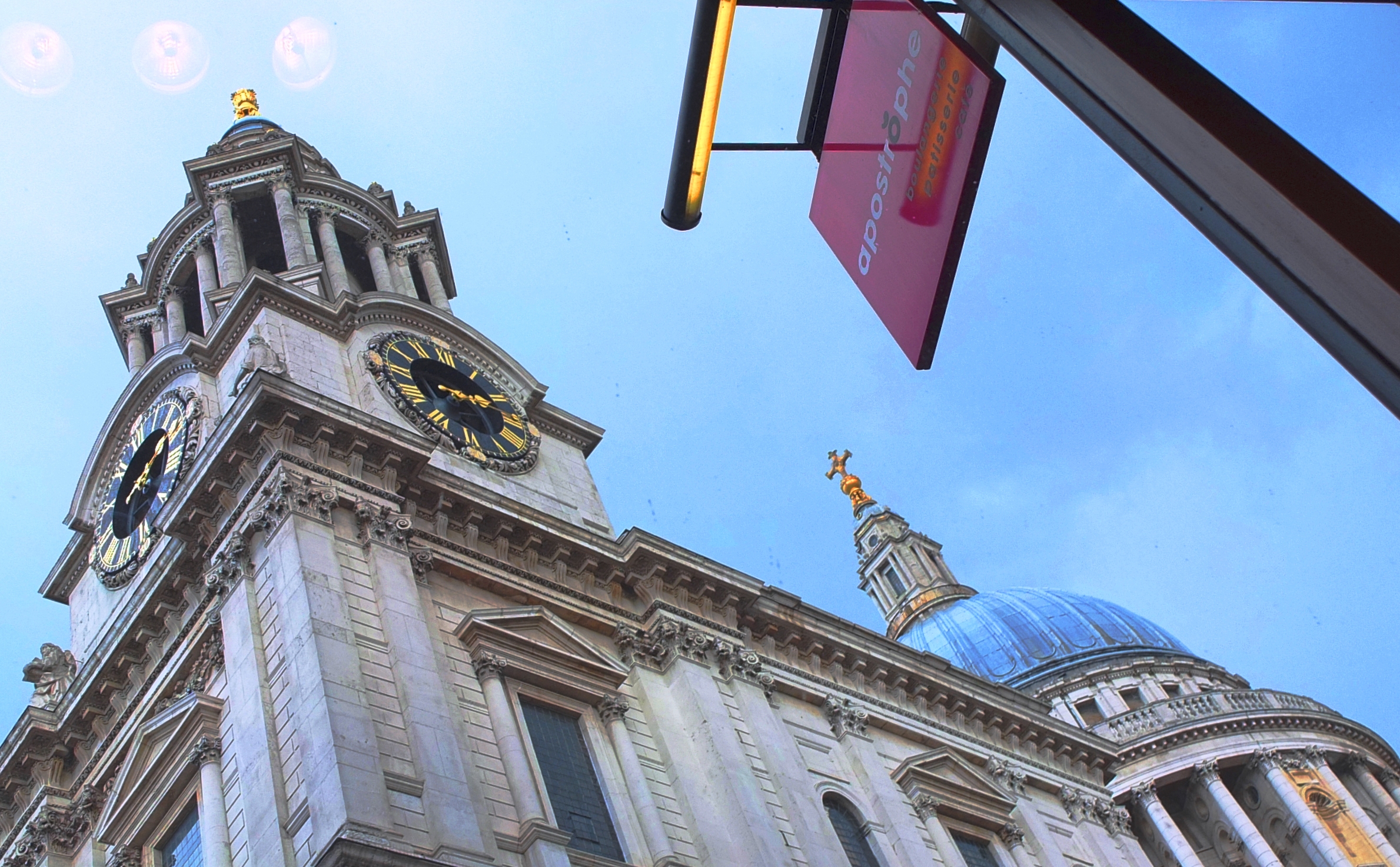
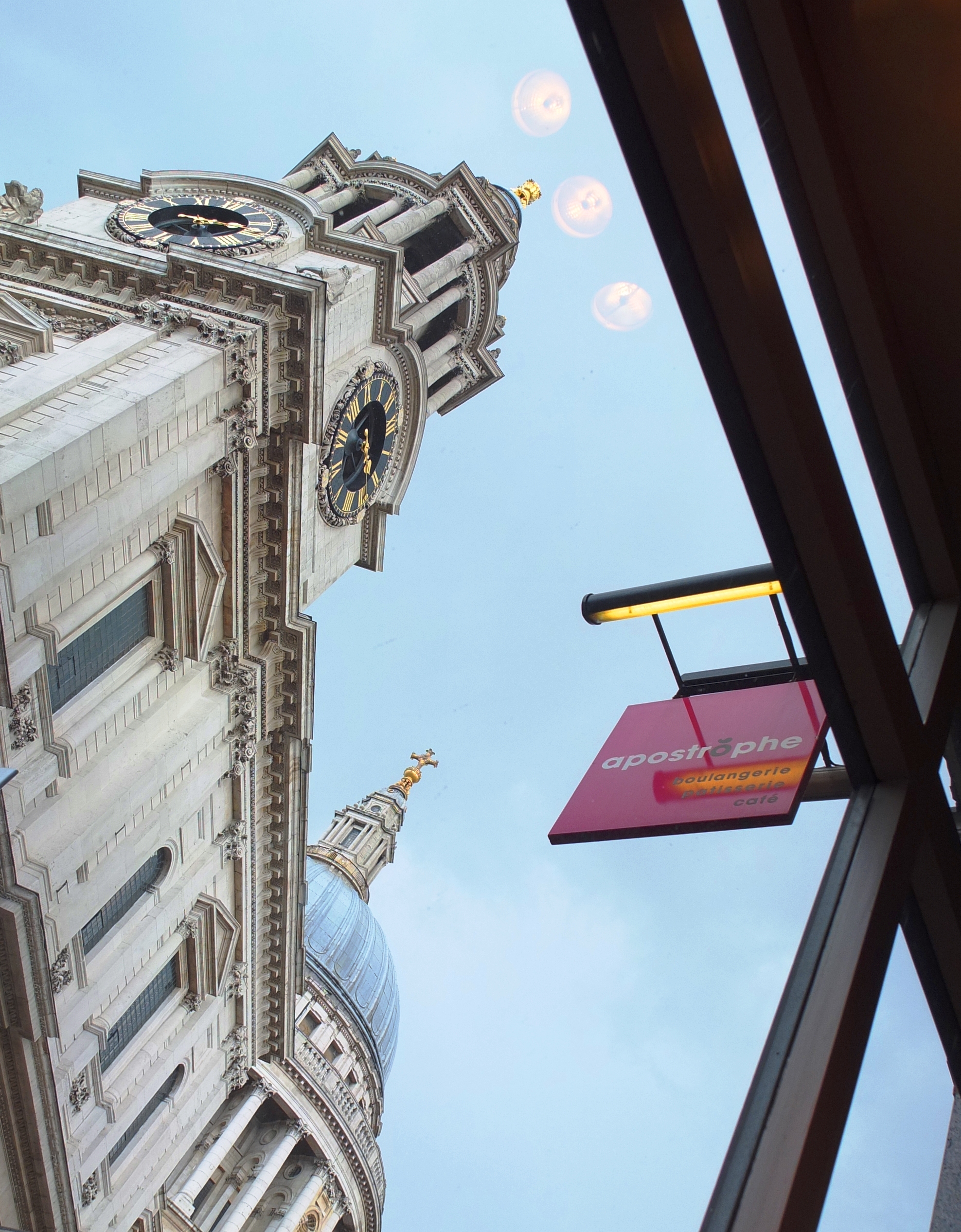
Photo by Andy Dawson ReidThe School’s annual outing to St Paul’s Cathedral to celebrate its foundation took place late last week. I was – as ever – an eager participant in this expedition.

My pleasure at being able to re-visit what has become such a significant symbol in my own personal mythology (a grateful prayer of thanks was once again offered on the spot directly under the centre of the dome) is always augmented by the slightly perverse delight that I take from the absurdity of transporting the entire population of two schools (our sister school joins us for the day) across the breadth of London in a fleet of coaches for a fifty minute ceremony. The logistics are a nightmare and the journey takes at least three times as long as the service itself.

Apparently in days of yore the pupils were simply instructed to make their own way to the cathedral – being given no more than a time to be outside the west door and a strict admonition not to be late. I find it rather sad that such a practical course is – in these health and safety obsessed times – no longer viable.

The form that the service itself takes barely varies from year to year. Having in my pre-pubescent existence played the part of the boy chorister, I do still enjoy the chance to belt out some of the hymns with which I fell in love and which were largely responsible for my later and lasting involvement with music.

One such much-loved chorale is the setting of Sir Cecil Spring Rice’s 1908 poem – “I Vow to Thee my Country” – to the music of Gustav Holst – specifically to an extract from his “Jupiter” movement from “The Planets” suite. This stirring hymn makes frequent appearance at our Founder’s Day ceremonies largely because Holst was for an extended period employed as the Musical Director at our sister school.

Spring Rice’s poem – written whilst he was serving at the British embassy in Stockholm and originally entitled “Urbs Dei” (“City of God”) – was at first quite unlike the version that we know today. In 1912 Spring Rice was appointed Ambassador to the United States of America and in that role played an instrumental part in persuading the US to abandon its neutrality in the Great War. Shortly before returning to the UK in January 1918, Spring Rice re-wrote and renamed the poem, significantly altering the first verse to reflect the huge losses suffered by British soldiers during the intervening years. What had been the first verse morphed to become a second verse that is now widely disregarded.

In 1921 Holst was commissioned to set the poem to music. He was, at the time, extremely busy and was relieved to discover that – with only minor modification – the grand theme from “Jupiter” fitted the lyric well enough. Upon such small ‘accidents’ great moments of genius do often seem to hang.

Finding myself in harmony with a two thousand voice impromptu choir for  “I Vow to Thee my Country” in the sublime setting of St Paul’s Cathedral last week proved such an unexpectedly emotional experience that I found myself struggling to give voice at all to the second verse. I was sufficiently moved that I find I must needs say more on the subject…

…but that can wait for a second post…


Tags: , , ,

BreathAnd when I breathed, my breath was lightning.

Black Elk

Amazing! Here I am in my seventh decade and I am still discovering absolute fundamentals about the business of living that I would have expected to have learned long, long ago.

The Kickass Canada Girl and I have colds. Fairly minor colds it must be said – and they didn’t disturb our trip to Bath (of which more anon!) so we mustn’t complain. The first cold of the season is – however – always somehow more annoying than any other – particularly if the sun is still shining – which it has been…

My cold came out last week and I had a couple of uncomfortable days at work as a result. At lunchtime on one of those days I was browsing stuffily on the InterWebNet trying to discover if there was any truth in the dictum that one should feed a cold – in other words, wondering if I should force myself to have some lunch. The advice I uncovered – that one should eat if one were hungry – was not exactly earth-shattering, nor particularly helpful.

I did – however – discover from one of the articles consulted something else entirely – which stunning piece of advice was simply to breath deeply!

Now – I expect that all of you already know this, but if that’s the case then how come no-one has mentioned it to me before?

The premise is this: when you have a cold and your nose is blocked and your throat is sore, then you are also most likely to have a thick head and to feel all-round miserable as a result. The feeling miserable actually inhibits recovery, since the resultant dejected slump does nothing to haste its progress.

The thick head is caused by a lack of oxygen to the brain, which is in turn the result of the shallow and ragged breathing by means of which one tends to try to mitigate the discomfort in nostrils and throat. The answer – stunningly – is to make an effort to breathe more deeply and, in particular, to do so outside in the fresh air. After a short course of such treatment – the argument goes – your head will clear, you will feel considerably better, and the rest of your body will more rapidly follow suit.

Well – I tried it – and you know what? It worked – at least, it did for me!

Now – how many colds have I had over the last sixty years for which this simple trick might have helped?

Tags: ,

« Older entries § Newer entries »