web analytics

Playing the odds

We are – it would seem – fascinated by coincidence. When we read of – or better still, experience for ourselves – some remarkable or unexpected occurrence that seems to defy all the odds, a tingle of excitement runs up the spine – the pulse quickens – the cosmos shifts…

Might this be because we are drawn to the unusual – because we like to see patterns or meanings in the very heart of chaos – or just because the idea of beating the odds appeals to those of us who instinctively support the underdog?

In truth many coincidences – happenings that seem to defy the odds – turn out to be far from unlikely after all. The work colleague whom you encounter unexpectedly on holiday in a foreign land probably comes from a similar background and has similar predilections to you. You have both doubtless studied much the same marketing materials from the tour companies and have reached similar conclusions as to where to take your break.

Consider the well know ‘birthday problem’ from probability theory. This states that, though a gathering would need to comprise 367 people to guarantee that 2 of them share a birthday, only 23 need be present for there to be a 50-50 chance of this happening. To put this another way, in a school with many classrooms each of which contains 23 pupils, approximately half of the rooms would incorporate 2 pupils who share a birthday.

Attempts to ascribe meaning to these or other coincidences are futile. There is no meaning. These things just happen. In this 2007 article from Psychology Today, John Allen Paulos (Professor of Mathematics at Temple University in Philadelphia and best-selling author of Innumeracy: Mathematical Illiteracy and Its Consequences) is quoted thus:

“In reality, the most astonishingly incredible coincidence imaginable would be the complete absence of all coincidence. Believing in the significance of oddities is self-aggrandizing. It says, ‘Look how important I am.’ People find it dispiriting to hear, ‘It just happened, and it doesn’t mean anything.'”


But of course, you don’t really want to read all of this psychological guff – you just want to hear my coincidence story!


The building in which I work includes a good sized atrium which is used on occasion for functions. Just the other day I was returning to my office through the atrium at the first floor level (the second floor if you are Canadian!) and saw that it was being set up for a dinner, with six or seven large round tables each seating 10 diners.

Wondering as to the nature of the event I descended to the floor of the atrium to speak to one of the organisers (whom I know well) who was helping to lay the tables for the dinner. I stopped by the table that she was working on, on the opposite side to where she was. As we chatted she was working her way round the table, putting out place cards at the head of each setting. Reaching the seat immediately in front of me – and without looking at it – she took from her pile and placed on the table a card with my name on it!

As I was definitely not attending the dinner this meant that one of the guests and I share a name – and I don’t just mean a Christian name! The odds on that must be reasonably slim, but those on me standing quite by chance in front of the seat which my namesake would later occupy must be even slimmer.

What might this mean?

I guess it means I should buy a lottery ticket!

New toy!

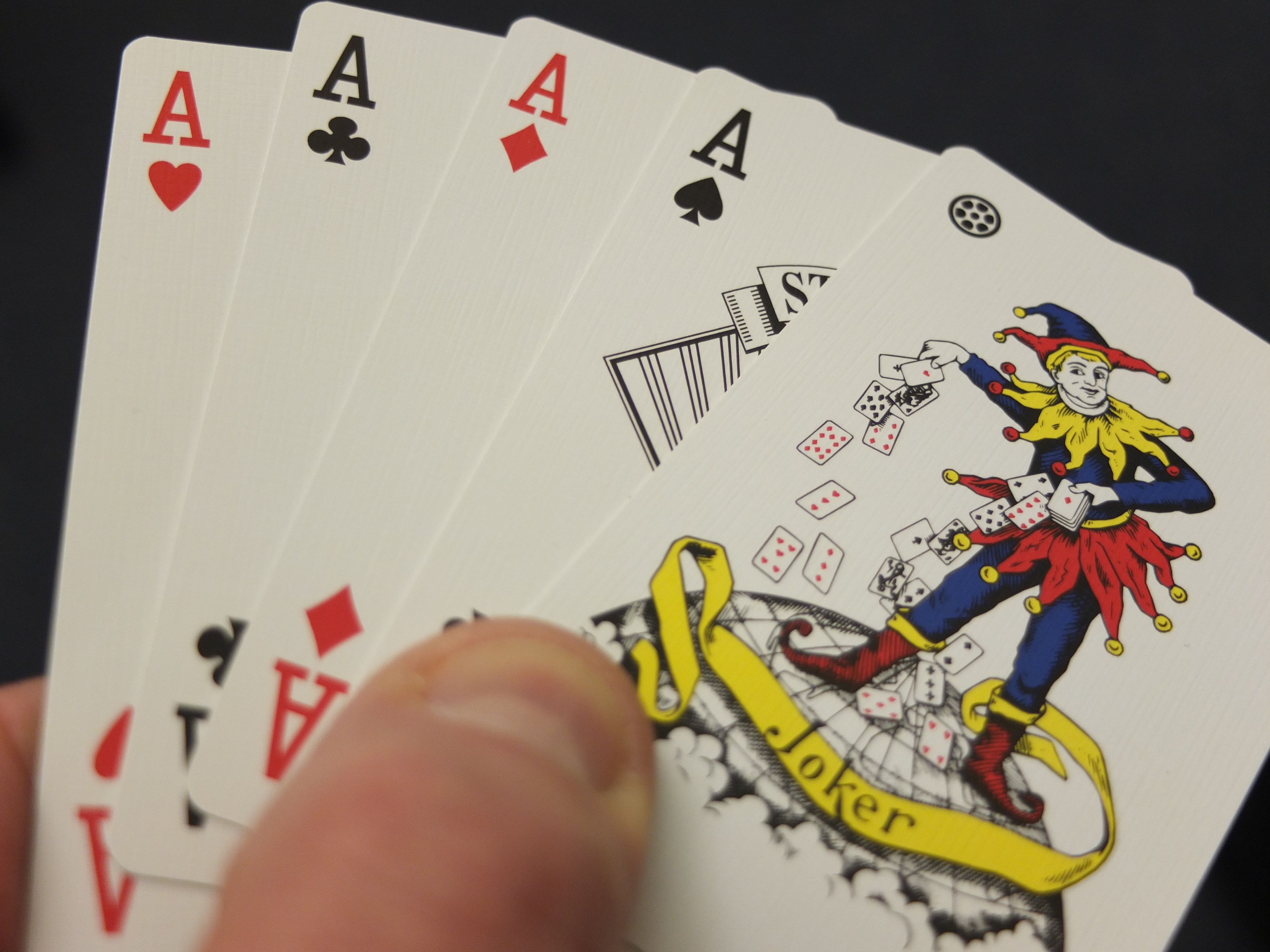
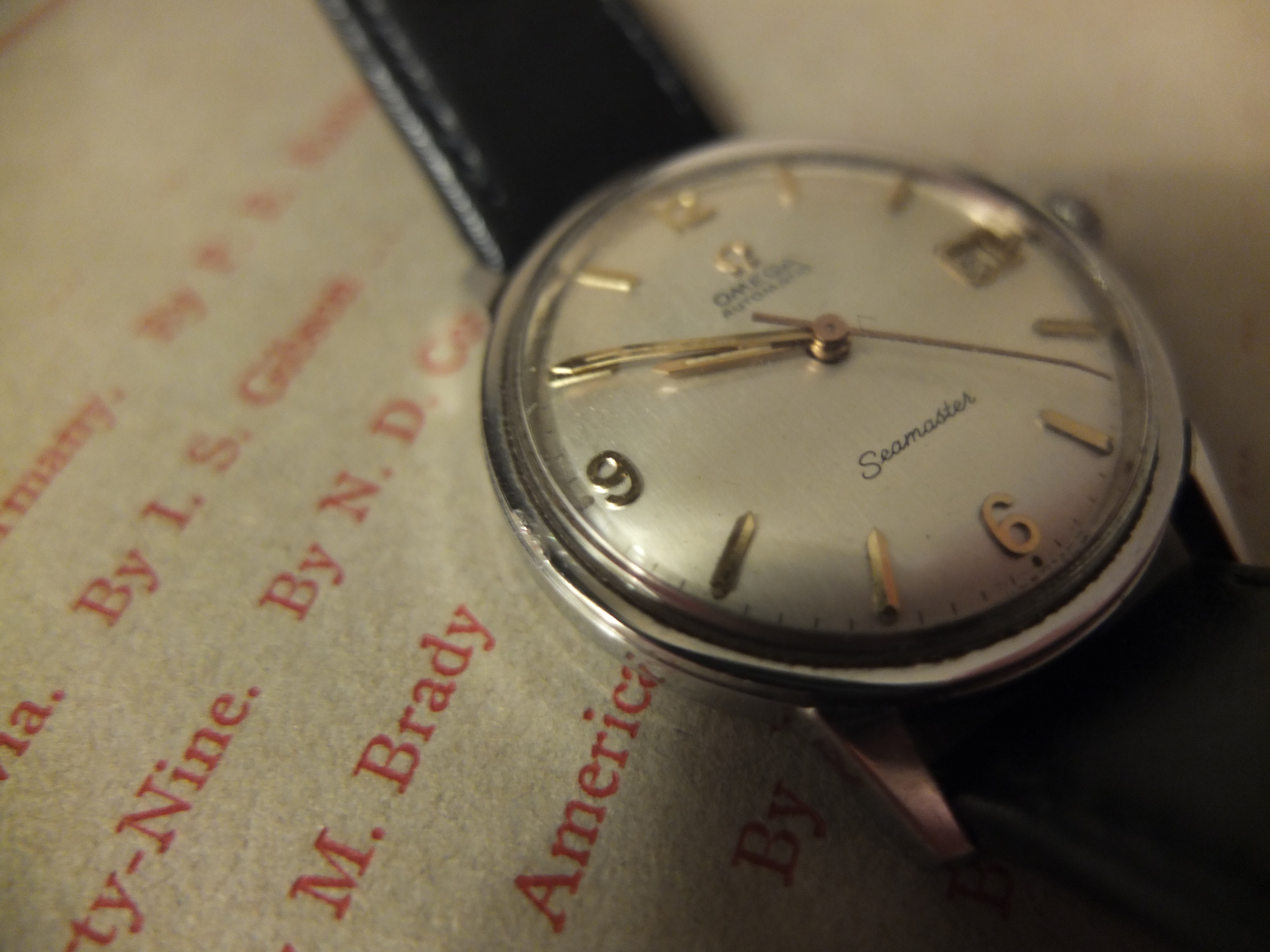
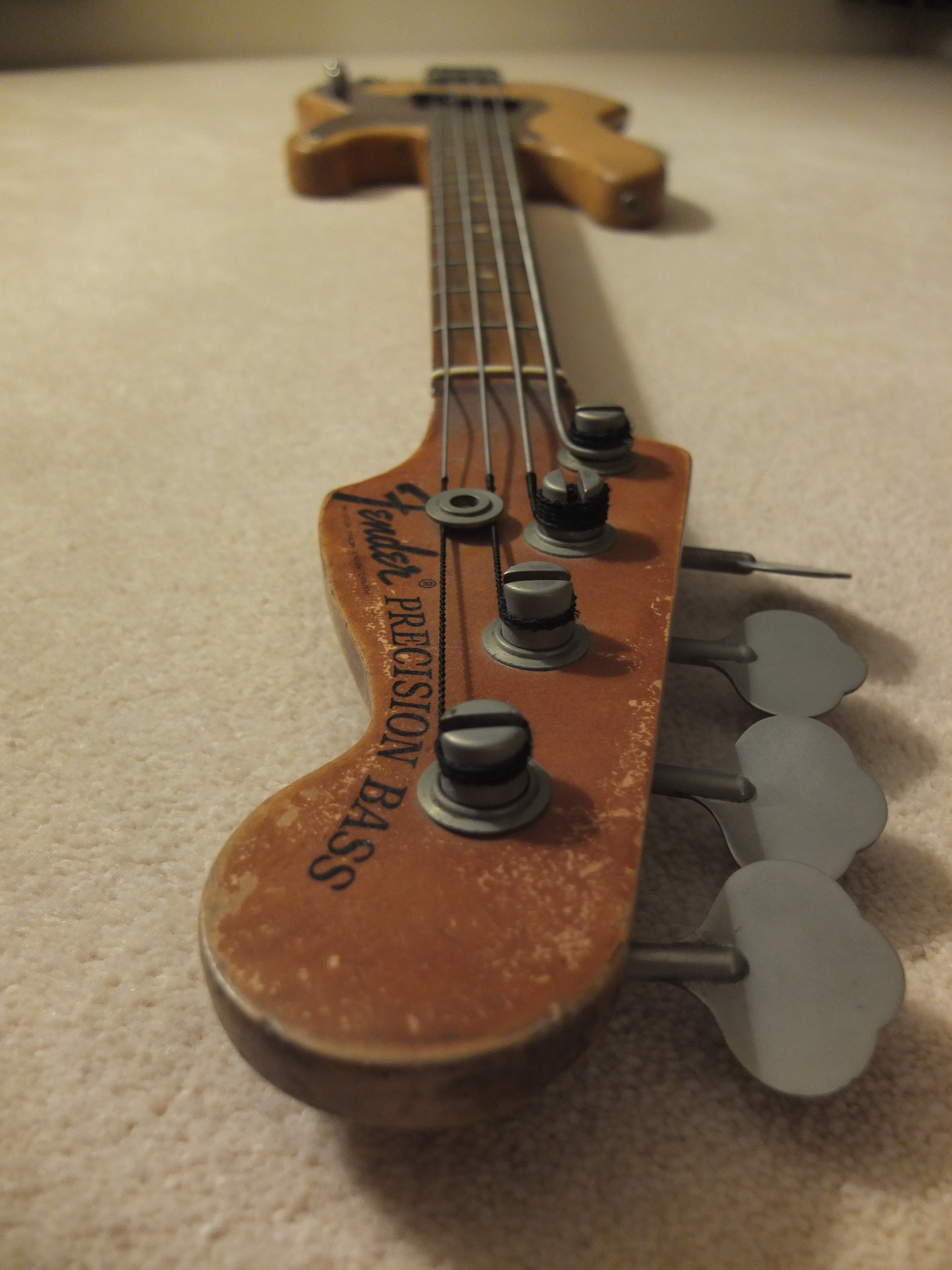
The working week – coupled with my mammoth commute and with the need to eat and to sleep – does not really leave much time for exploration. I had half an hour last night to play with the x10 and took the chance to experiment a little with some macro shots. Here are a couple of examples.

This is a most treasured possession of mine – the 1966 Omega Seamaster that Kickass Canada Girl gave me as a wedding gift. It could do with a new crystal, but it is a thing of beauty and a timeless classic…

… as is this – my lovely 1976 Fender Precision. Clearly I have a love of things classical!

Once I have had a chance to really get to grips with the camera I am hoping to be able to produce some pretty decent images.

“The time has come…”

the Walrus said,
“To talk of many things:
Of shoes–and ships–and sealing-wax–
Of cabbages–and kings–
And why the sea is boiling hot–
And whether pigs have wings.”

Through the Looking Glass – Lewis Carroll


I am aware of having turned a corner – of having reached a milestone – of having crossed the Rubicon… and – quite possibly – of other ‘travel’ related metaphors! Kickass Canada Girl is in Victoria and life has changed. It is time to emerge, blinking, into the light of a new day, to sniff the air and to take a first look around – though perhaps mixing Lewis Carroll and Kenneth Grahame is a step too far (on second thoughts, maybe not – I recommend to you Jackie Wullschlager’s excellent ‘Inventing Wonderland’).

It is six weeks now since I started this blog with no clear idea as to where it might lead or as to what it might include. The experience thus far has – for me at any rate – been most interesting and instructive. I thought it might be a good idea at this point to sit back and consider some of the topics that I intend to cover in the near future.

The Girl and I are currently having to jump through all of the usual administrative hoops associated with moving from one continent to another. The InterWebNet is a hugely valuable resource and I really do wonder how these things were done before its existence. I am currently watching Jeremy Paxman’s excellent (note: there are critics who disagree!) BBC documentary study of the age of Empire and I am struck by just how difficult it must then have been to perigrinate the globe the way we do now. It is quite extraordinary how much could be achieved with such rudimentary tools, and I can’t help thinking that we have lost vital skills whilst at the same time gaining much that is ephemeral. I sometimes wonder if the torrent of information through which we now wade is in fact more of a hindrance than a help. That might seem unlikely, but it has taken considerable effort on occasion to find answers relevant to my own questions. Having said that, if anything that I write should ever prove to be the slightest use to anyone following a similar path then I will be reassured that I am not simply adding to some gargantuan information landfill.

The Girl and I will be henceforth be engaged in what I believe is dysphemistically called a ‘long distance relationship’, the TLA for which is, of course, LDR. I have been reading up on LDRs (the InterWebNet is particularly fruitful on the subject, though much of it seems to be aimed at students who are separated academically) and I intend to pass on some of what I have gleaned. More pertinently I hope to discover whether any of the received wisdom actually works in practice.

I shall certainly at some point touch on retirement since I am aware that this too represents a major sea change and that there is much to be learned. My gut feeling is that retiring and moving continent at the same time will actually prove somewhat easier than doing so separately, but this of course remains to be seen.

I shall doubtless also engage in – and subsequently discourse upon – various displacement activities. Kickass Canada Girl – who is endlessly thoughtful and wise – gave me a Cajon kit before she departed. This – along with the new camera – will doubtless keep me out of trouble for a while at least.

Here she comes…

“Good night, good night! Parting is such sweet sorrow,
That I shall say good night till it be morrow.” – Romeo and Juliet – William Shakespeare

“No words. No words to describe it… They should’ve sent a poet.” – Jodie Foster as Ellie Arroway in Contact.


We turn to the poets when our own words are inadequate to express or elucidate our feelings.


As I write, Kickass Canada Girl is in the air, on her way to Victoria…


In Camera

Trying to choose a suitable play on words for the title of this post – with the intention of taking the theme about cameras that commenced here and was extended here to its (quite probably il)logical conclusion… it occurred to me to wonder for the first time in my 58 years as to the origin of the phrase ‘in camera’ – and how it came to mean what it does.

Thank goodness for the InterWebNet! I found this on a most useful site titled Daily Writing Tips:

“The word we use for a “picture-taking device” comes from Latin ‘camera’, “an arched or vaulted roof or room.” The English word chamber, “room,” comes from the same Latin word.”

The link from the domed room to the clever digital device that we now take for granted is the camera obscura – again from the Latin. The Oxford English Dictionary gives the following definition:

camera obscura [L.; lit. ‘dark chamber’].   a. Optics. An instrument consisting of a darkened chamber or box, into which light is admitted through a double convex lens, forming an image of external objects on a surface of paper, glass, etc., placed at the focus of the lens.

There are still a good number of Camera Obscuras in the UK, possibly the best known of which is on the Royal Mile in Edinburgh. I have no idea if there are any in Canada but I would love to hear of such.

The expression ‘in camera’ thus literally means “in the room” – the inference being “privately” or “secretly”. When – for example – a judge calls opposing barristers (attorneys) to meet him “in chambers,” they are meeting ‘in camera’.


Oh yes – I decided to order the Fuji X10. It should be here early next week!


Shipping News

As you would expect of a lady, Kickass Canada Girl does not undertake major travel lightly… nor indeed does she travel light! At the risk of offending it has to be said that this is true of many ladies; I myself have known of only one exception, and in that case I suspect that there was witchcraft involved…

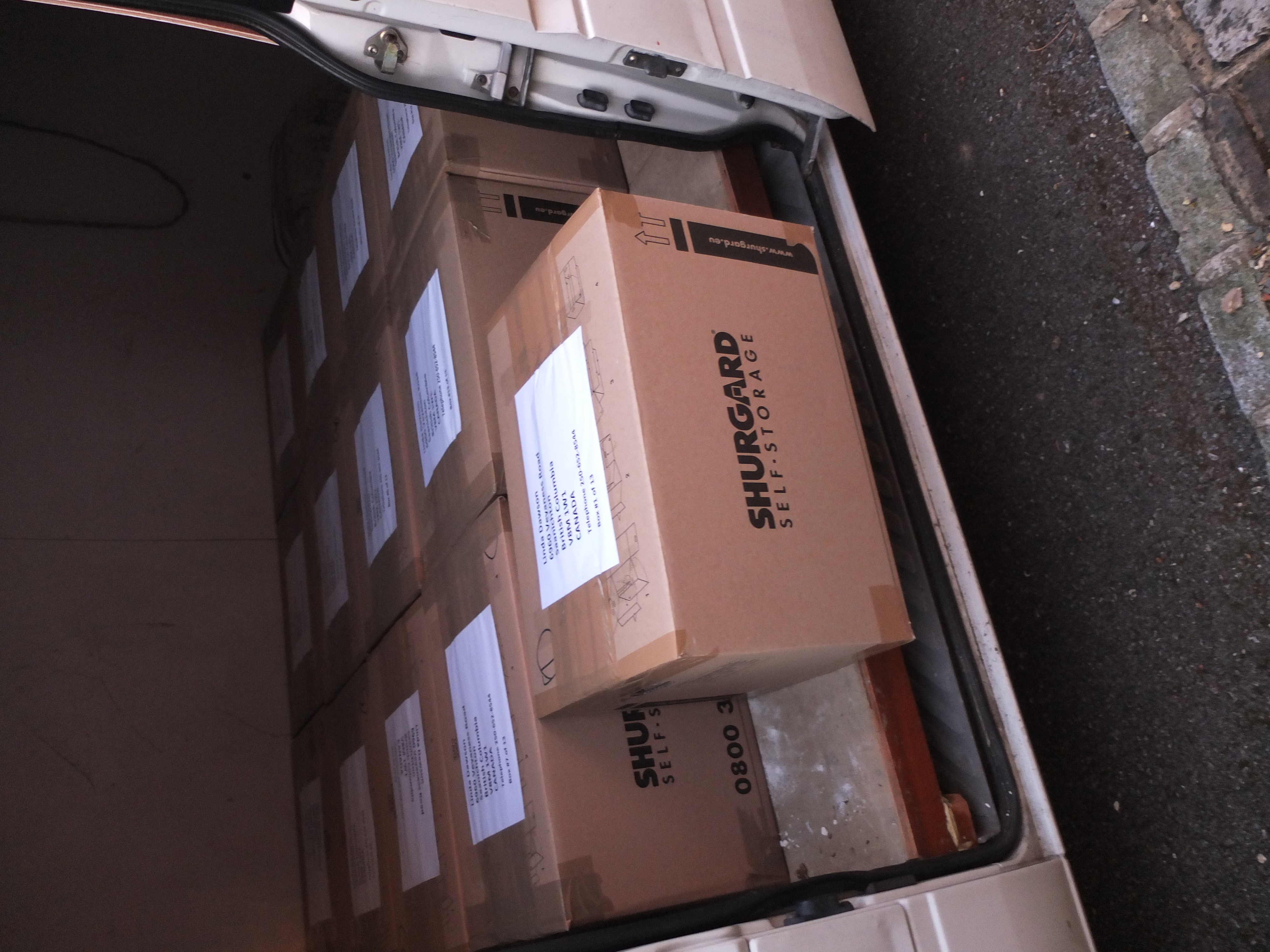
When the Girl leaves for Victoria on Sunday she will be accompanied by three large suitcases (in addition to her hand luggage) and will be followed to BC after a week or so by thirteen good sized boxes. She is moving home of course so this is eminently reasonable, but the logistics of it all take some planning.

As an Air Canada Premier customer the Girl can take two cases under her baggage allowance and thus has only to pay an additional charge for the third item. The boxes – which weigh a total of around 180Kg – are more of a problem. Searching the web for helpful suggestions as to economical and effective methods of transportation merely confuses, revealing a plethora of shipping options. Obtaining quotations for many of these requires submission of rather more information than I care to divulge and then waiting for someone to make contact. Whilst doing so I followed up some personal recommendations but in each case the costs seemed to me to be on the high side.

In the end we decided that the best option would be simply to ship the boxes by Air Canada Cargo. As there is no middle man – and because they don’t pick up or deliver – their costs are quite reasonable. Our friends in Saanichton live within 10/15 minutes of Victoria airport and as there is always a pickup to hand (naturally!) the collection part of the operation should be quite straightforward. Getting the boxes to Heathrow will be trickier. We live reasonably close – about half an hour away – but I don’t have a vehicle that will take that many boxes in one go, so it looks as though I will have to hire.

The complication comes – you will not be surprised to hear – in the matter of Customs and Excise. Putting together a manifest for each box is straightforward enough – given the usual difficulty of ascribing a sensible value to personal effects that one may have had for years – but ensuring that the list is comprehensive is not so easy. Everything that the Girl takes back into Canada must be detailed on Canadian Border Services Agency form B4 and handed in to Border Control on her arrival. My understanding is that this list must also cover anything else that she may subsequently want to take back to Canada (remembering that many of her chattels may well stay in the UK until I move there myself in a couple of year’s time) otherwise she will be liable to pay tax on them. This means planning ahead for the next two years to ensure that she doesn’t forget something that she might need. The odds on this part of the operation going entirely smoothly are, I would hazard, slender.

Fortunately there is a wealth of information available online for Canadian nationals who are returning to Canada. This site (Moving Back to Canada) is particularly useful. Hats off to Paul Kurucz for the work that clearly went into it.


Auld Lang Syne

Everybody knows ‘Auld Lang Syne’. Most people will have sung it at some point or another – probably on a New Year’s Eve, and most likely whilst crossing arms and linking hands in a circle with a lot of other people that they don’t really know.

In common with a number of other things that ‘everybody knows’, however, most of us probably don’t really know ‘Auld Lang Syne’ that well at all. How many of us can do more than mumble our way through the first verse and chorus? How many know that, though the incomparable Rabbie Burns published it in 1788, he actually based it on a much older ballad – “Old Long Syne” – by one James Watson, printed in 1711 and of which the first verse and the chorus bear a remarkable resemblance to Burns’ later version. Watson himself very probably ‘borrowed’ the ballad from an even earlier – and unrecorded – source.

It may seem that the end of February is an odd time to be pontificating on the origins of the traditional New Year ballad. It might perhaps make more sense if we associate it with Hogmanay, the Scottish equivalent – for Hogmanay is more properly the name given to the last day of the Old Year, and the underlying ethos of the festival is to do with clearing out the vestiges of the year that has gone, to allow a clean break and to welcome in a young, New Year on a happy note.

‘Auld Lang Syne’ is thus more than anything a song of farewell and remembrance. As a result, in addition to its appearance at Hogmanay, it is also frequently sung at funerals, graduations and as a farewell or ending to other occasions.


Thus it was that a disparate group of friends and colleagues, sitting round a large wooden table in a pub on Richmond Hill (called – delightfully – ‘The Lass O’ Richmond Hill’) one Sunday lunchtime at the end of February… crossed arms, linked hands in a circle, and mumbled their way through the first verse and chorus of ‘Auld Lang Syne’. We may not have won any prizes or many talent show votes, but we were saying ‘goodbye’ – or rather ‘au revoir’ – to the Kickass Canada Girl, and we mumbled from the heart. BCs gain is, in this case, very much England’s loss – though I will naturally do my best to drag her back at every possible opportunity.

The fourth verse of the ballad is germane (with a translation for the Sassenachs):

“We twa hae paidl’d i’ the burn,
Frae mornin’ sun till dine;
But seas between us braid hae roar’d
Sin auld lang syne”

“We two have paddled in the stream,
From morning sun till dine;
But seas between us broad have roared
Since long, long ago.”

This time next week – the Girl will be back in Victoria…

Cajones!

OMG!!

I have been an enthusiastic amateur musician for more than 40 years, and throughout that time I always believed that I was keeping reasonably well abreast of developments on the music scene.

The other night I was at a school production – a contemporary dance re-interpretation of Purcell’s ‘Dido and Aeneas’, with an updated score in a style which I can only describe as a jazz/blues/classical crossover. This particular production was largely the brainchild of a young man who is the son of a best-selling novelist and journalist, and who led the five piece onstage band on acoustic guitar.

Alongside him was a pianist, a bassist, a violinist and a percussionist. This latter was seated upon – and was hitting with his bare hands – what looked like a small wooden crate. The great surprise was that the sound produced was not that of a man slapping a wooden box, but rather a pretty good facsimile of a drummer playing a decent sized  kit. The bass was rich and punchy, the snare crisp and tight, and there was a full range of sounds and colours in between.

Amazing!

For those of you who – like me – have never even heard of a Cajon, let alone seen one in action, this video gives some idea of the possibilities, as does this one – though there really is no substitute for actually hearing one live.

Awesome – and not just in the Canadian usage!

As a compulsive tapper of rhythms on anything handy I think I just might need to acquire one…

Crossing the Bar… (3)

My mother died two years ago, on February 24th, 2010. She had been slipping slowly into dementia for much of the previous year and – just at the point in October 2009 at which my sister, brother and I had decided that she could probably no longer take care of herself – she contracted an infection and was taken into hospital. Within a few weeks she had declined to such an extent that she no longer recognised any of us, nor was she aware of where she was or what was happening to her. The four months of hospital visits that followed were amongst the hardest things I have yet had to do.

Had she survived a couple of months longer my Mother would have lived in the same house in Surrey (in the UK) for 50 years. We moved there when I was 6 and it was the house that I grew up in. As well as my mother and father – and the three of us children – my grandmother (on my mother’s side) lived with us in a two roomed ‘suite’ on the first floor. It was not a terribly grand villa, but it was clearly a good size.

My father died some seven years before my mother, after which she lived in the house on her own. She spoke many times about moving into a warden-assisted apartment – which would have made a great deal of sense – but when it came to it she couldn’t face the task of moving. What made this particularly onerous was that both she and my father were great hoarders. She collected books, pictures, calendars and knick-knacks… he never threw away any paperwork.

When my father retired from his job in the City he converted one of the bedrooms at home into an office, so that he could pretty much carry on as before – but without the commuting. His keen sense of duty had led him to volunteer as treasurer or secretary to a number of organisations and he produced mountains of paperwork for each. He steadfastly refused to countenance the purchase of a computer – rejecting all arguments to the effect that such would actually be of great benefit to him – and instead insisting on persevering with his manual typewriter on which he produced multiple copies using carbon paper.

It took 3 months after my mother’s death for the three of us to sort through all of the paperwork and personal effects, before we were in a position to get the house cleared. We found receipts and tickets and copies of letters (Father was a great letter writer – particularly of the complaining variety) dating back to the early 60s.

One particular correspondence tickled me. When Father bought the house in 1960 there was a small easement to be agreed concerning drainage rights for an adjacent property. This correspondence – between Father and a solicitor in one of the City law firms – ran for over two years and the two became sufficiently friendly that much of the substance of what was written concerned personal and family matters. When the issue was finally resolved – sometime in 1962, I believe – Father was paid the outstanding sum of around £3 0s 0p – this being of course in pre-decimal times.

As another example, Mother and Father – who never did really cultivate close friends but rather had a large circle of acquaintances, with many of whom father had struck up conversations on some train journey (neither of them drove!) – met a Dutch couple on a holiday. After this brief encounter the two couples exchanged postcards at regular intervals for the next several decades. We must have found over 1000 postcards stacked away in a bureau!

Why Mother and Father kept these correspondences and artifacts I have no idea. In a way it seemed a terrible shame to break up what would probably have appeared to the social historian as a fascinating snapshot of late twentieth century life, but – practically – there was little else that we could do.

All this makes me very glad that Kickass Canada Girl and I decided to move apartments last year – a process that involved a fair degree of rationalisation and clearing out. We now have less baggage and – however much we like where we are now – less of an emotional attachment to our current home. This should make things considerably easier for us as we make our way- imperceptibly – across the Atlantic.

Crossing the Bar… (2)

Sunset and evening star,
And one clear call for me!
And may there be no moaning of the bar,
When I put out to sea,
But such a tide as moving seems asleep,
Too full for sound and foam,
When that which drew from out the boundless deep
Turns again home.

Twilight and evening bell,
And after that the dark!
And may there be no sadness of farewell,
When I embark;
For tho’ from out our bourne of Time and Place
The flood may bear me far,
I hope to see my Pilot face to face
When I have crost the bar.

Alfred Lord Tennyson