web analytics

Stock exchange

There are days when I feel particularly like the grumpy old man that I fear I am rapidly evolving into. Dour grey November mornings don’t help much with this, even at the weekend when what lies ahead are a pleasant few days of relaxing with the Kickass Canada Girl, eating and drinking well, going for brisk – if damp – walks, and watching the TV coverage of the home nations being beaten to a pulp on the rugger field by the strapping demi-gods of the southern hemisphere.

At my previous school – with just such grim days in mind – they practiced a rather splendid custom. A former member of the teaching staff had left a bequest to the common room with particular instructions for its use. On one grey miserable Monday morning each November – to be chosen on the hoof by the common room secretary – the bequest would pay for Madiera and Bath Oliver biscuits to be served at the daily mid-morning staff meeting held in the school hall. The date was never revealed in advance so each year on one dank Monday morning at least there would be a pleasant surprise.

However, I digress…

My mood this morning was not ameliorated by my running up against one of those irritations that the InterWebNet provides as a counterbalance to the many benefits it extends. Let me be uncharacteristically direct:

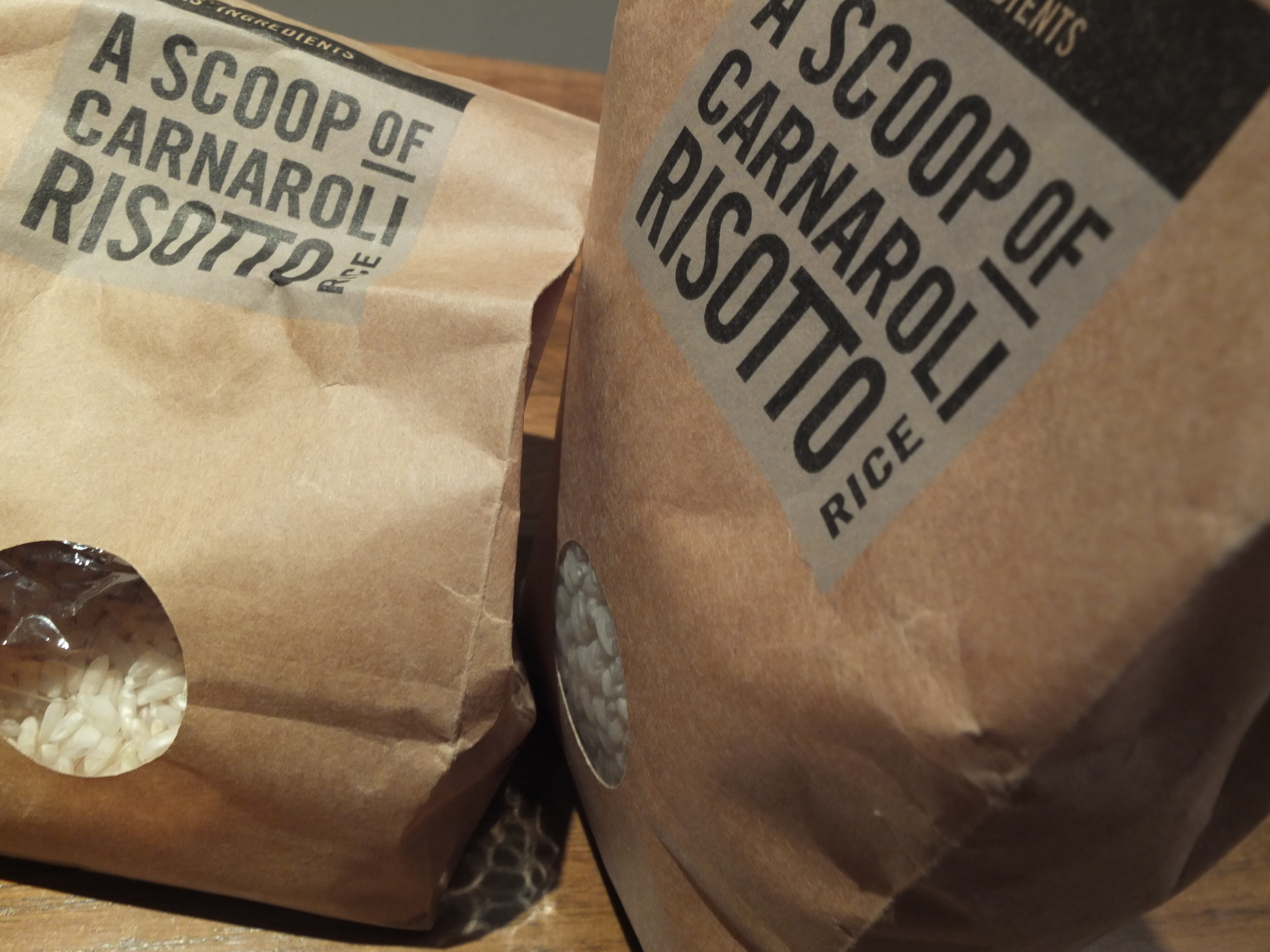
I wished to make a risotto. This is something that I do frequently and at which I have acquired a certain skill. However, the last few times that I have done so I have been disappointed with the chicken stock that I have used.

Now – let’s get this straight. I have at the moment neither the time nor the inclination to make stock from scratch. I know that to do so would yield better results, but on this occasion I intended to use a store-bought product. It quickly occured to me that the InterWebNet might be able to assist me in tracking down a superior comestible, so I fired up the Girl’s iThing and Googled (which is clearly now a verb!) “best store-bought chicken stock”.

You can probably imagine the results. Eleventy-gazillion items all advising me that there is no conceivable alternative to doing the job the hard way – that I am somehow lacking as a man if I do not already have to hand a considerable quantity of chicken detritus and that if I think I stand even the remotest chance of making a decent stock with less than two days hard sweat and toil – then I had jolly well better think again!

It is at such times – when the doubtless worthy denizens of the InterWebNet take it upon themselves to decide that I actually needed an answer to a completely different question to the one that I had asked – that I begin to doubt the efficacy of the entire enterprise, and the unconnected world seems like an increasingly good idea after all.

See what I mean? Grumpy old man!


It was a very good risotto – even though I did not make the stock…

In limbo

Limbo (noun)

1 – the supposed abode of the souls of unbaptized infants, and of the just who died before Christ’s coming.

2 – an uncertain period of awaiting a decision or resolution; an intermediate state or condition.

Origin: late Middle English: from the medieval Latin phrase in limbo, from limbus ‘hem, border, limbo’


‘Limbo’ has of course an alternative meaning, not – naturally – from the same Latin root but probably derived from ‘limber’ and dating only to the 1950s.

The older usage first appears in the 14th century and, as suggested above, takes two common forms – the ‘Limbo of the Patriarchs’ and the ‘Limbo of Infants’. Both commonly associated with the Catholic Church the former refers to the temporary state of those who, regardless of any sins they may have committed, have died in the sight of god but cannot enter Heaven until redeemed by Jesus Christ – whilst the latter concerns the permanent status of the unbaptized who, dying in infancy, are too young to have committed personal sins but are still tainted by original sin.

In common with a number of other religious terms the word limbo does not itself actually appear in the bible. Neither is the concept of limbo directly spelled out in the scriptures, though some argue that it is implicit in a number of references therein. Though widely used from the middle ages onward the Catholic Church has in recent times rather distanced itself from the conceit – the current Pope being amongst those who have raised questions as to the efficacy of the concept.

Let us not, however, get bogged down here on the subject of pensile lost souls lurking on the border between this life and… whatever may (or may not) follow. Let us in this instance hold fast to the here and now and concentrate instead on the second definition above.

The astute reader will by this point have deduced that I have allowed myself to get sidetracked into this somewhat arcane rumination because I cannot yet – for legal reasons (and I have always wanted to find an opportunity to utilise that particular idiom!) – write about what I really want to write about.

Soon, however… Soon!

The most private of pleasures

Travel is the most private of pleasures. There is no greater bore than the travel bore. We do not in the least want to hear what he has seen in Hong Kong. 

Vita Sackville-West

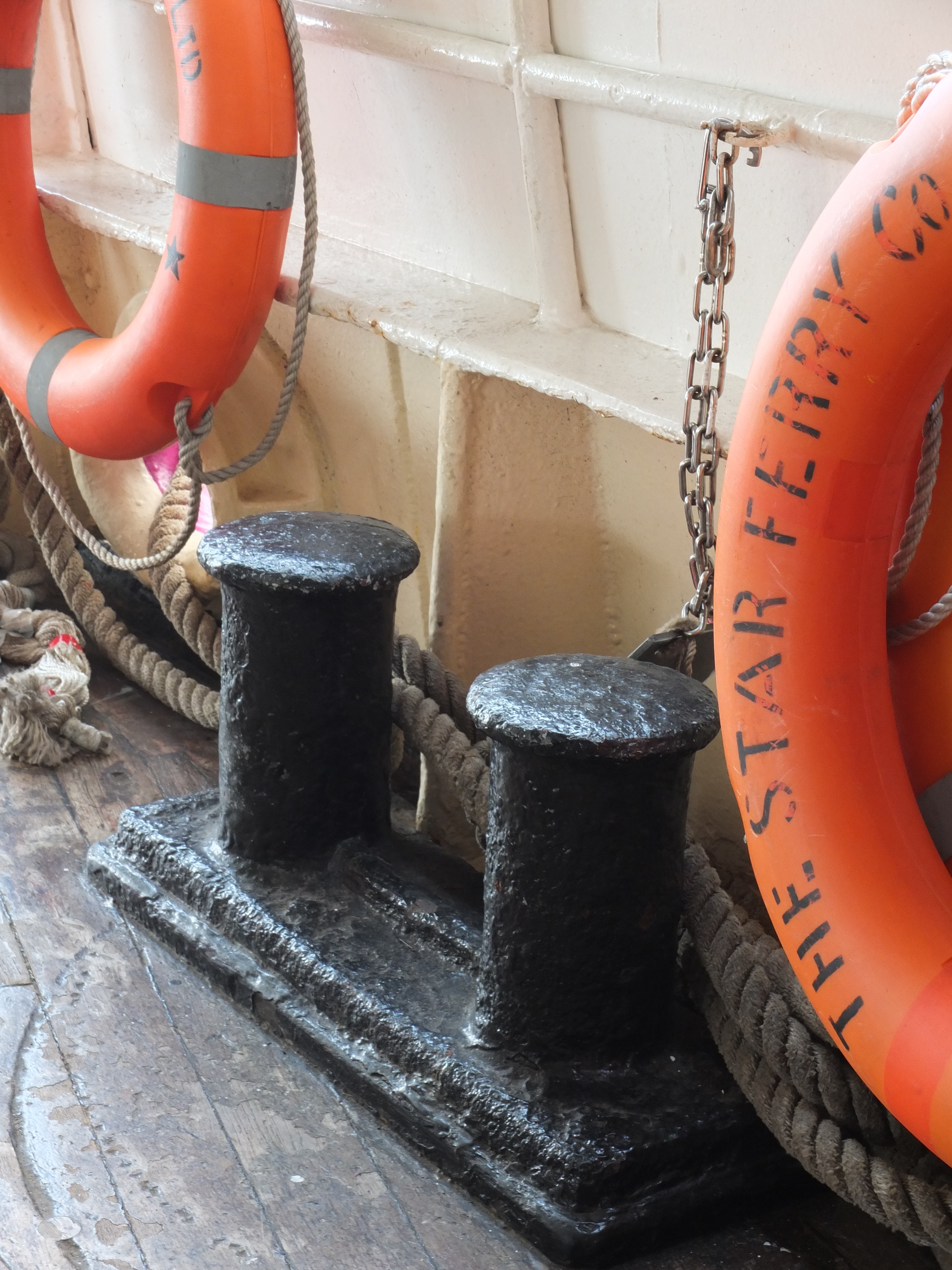
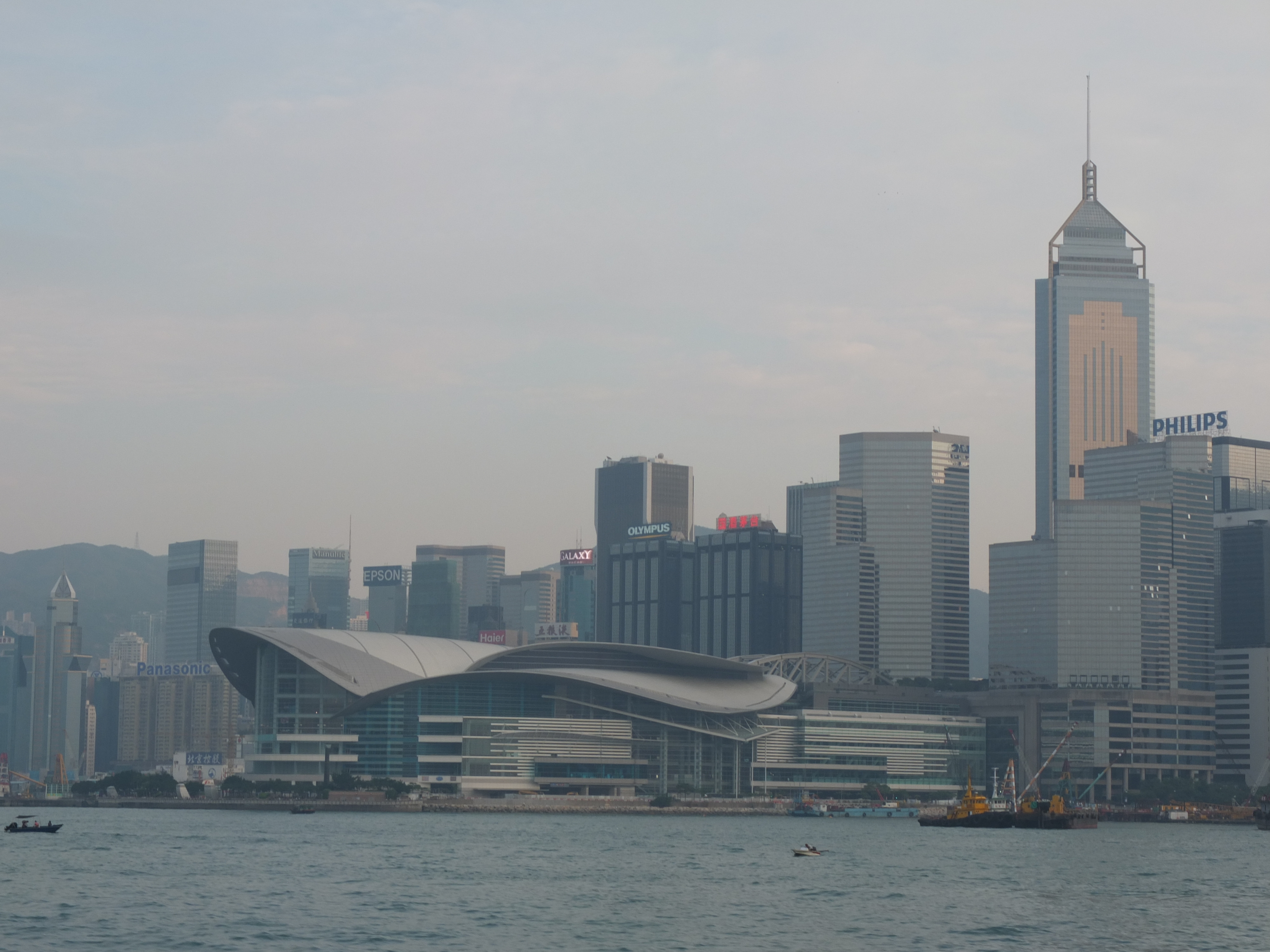
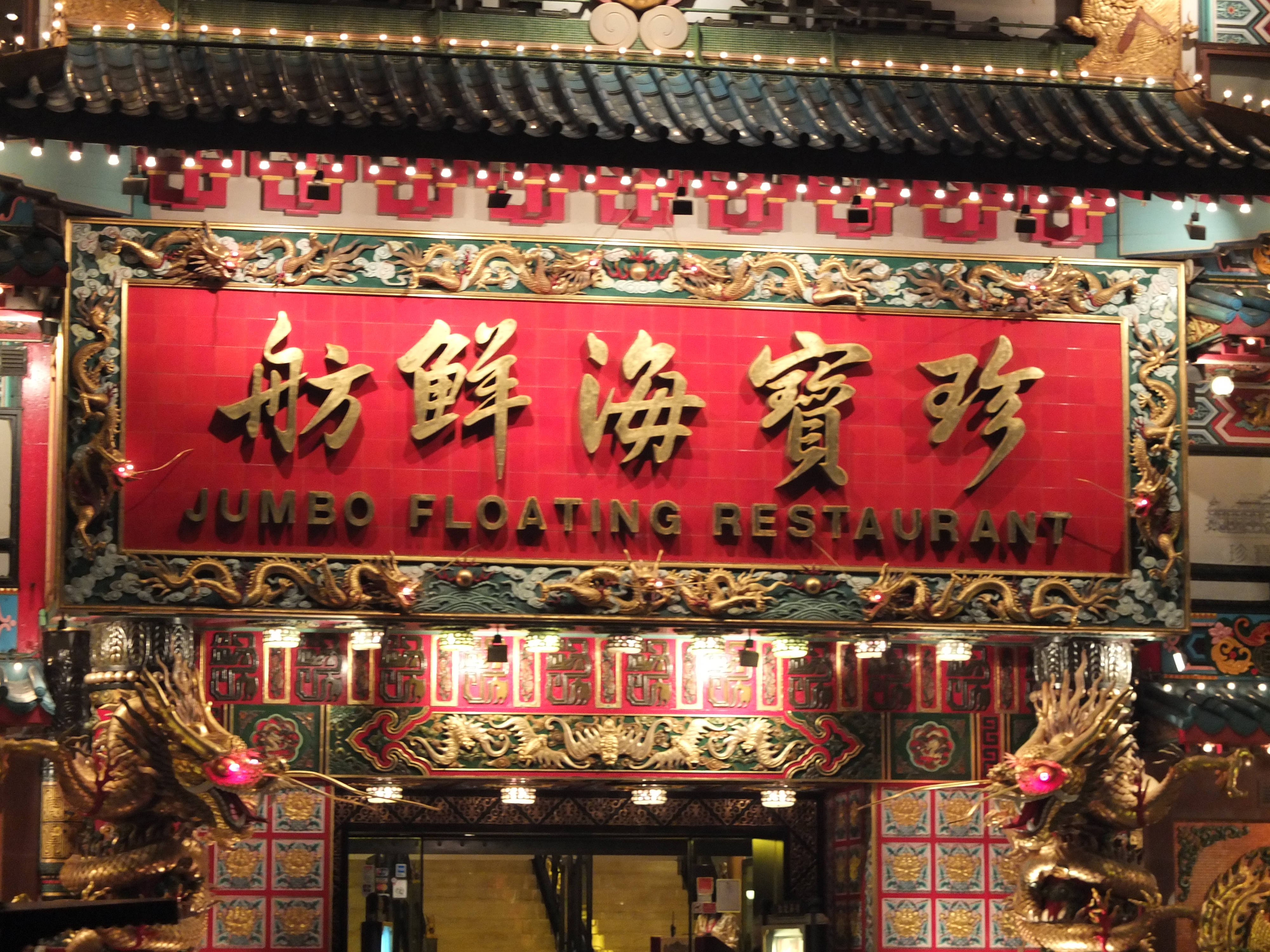
Mindful of the above I certainly have no intention of boring. Here instead are just a few images from our hectic but most enjoyable wedding trip…

Kia Ora

Serious kudos – and indeed many grateful thanks – to Air New Zealand for getting me safely to Hong Kong the other night – a task that proved somewhat more demanding than anyone might have expected.

I rather liked the service in their premium economy – at the expense of which I had swallowed hard before selecting, but can frankly no longer face the prospect of flying for 12 hours in a standard economy seat. Air Canada do this better than most because with them it is possible to book the exit row seats (with their considerably increased legroom) in advance. Most other airlines either don’t do this at all, or simply add one’s name to a lottery for the seats which are then allocated nearer flight time. Sorry – I need to know for sure when I book…

I was certainly impressed by the enormous measure of New Zealand Pinot Noir that the stewardess splashed into what can only be described as a tumbler – to accompany dinner. I was further stunned when she offered to top it up a minute or so later when I had scarcely got beyond sampling the bouquet. Unusually for me – I declined.

However, it was some short while after dinner that the Air New Zealand cabin staff really earned my undying gratitude. Feeling suddenly rather clammy and nauseous I thought I had better head for the washroom to be on the safe side. The washroom was occupied and as I waited outside I suddenly found myself on my hands and knees – with no idea how I had got there. The next thing I knew I was lying on my back in the galley, surrounded by cabin crew and having oxygen administered. I had blacked out in a fairly serious way!

When they got me back on my feet – having first asked for, and located, a doctor on board to take a look at me – they moved me up into business class where they had made up a bed for me. As a result I subsequently enjoyed seven hours good sleep and a first class breakfast! Though still rather fuzzy headed when we landed the next morning I mostly felt embarrassment and something of a fraud. I have not had such an attack before, but I gather that they are not that uncommon. I found another doctor in Hong Kong to give me the once over and it she could find nothing out of the ordinary. She suggest that I had probably experienced a vasovagal syncope!

Clearly this was one of those isolated incidents – probably brought on by tiredness (I had been up early and done a day’s work before rushing to the airport in the evening) and dehydration. The Air New Zealand staff were brilliant throughout and made me feel very much better about the whole episode. My thanks again to them.

Well – this is one way to get an upgrade, but I can’t say I recommend it…

Better start swimmin’

Then you better start swimmin’
Or you’ll sink like a stone
For the times they are a-changin’

Bob Dylan

It will not have escaped the intrepid reader’s notice that – contrary to my previously stated intent – these posts have not of late included much in the way of updates on impending retirement, emigration to BC and so forth. The reasons for this unnatural reticence arise from what Harold Macmillan – asked what was the greatest obstacle to political achievement – famously called “Events, dear boy, events”. To this point it has not been possible to post on the subject – though I will do so in the near future. Suffice to say that all of our plans now need to be revisited.

Tomorrow Kickass Canada Girl and I fly around the world in opposite directions, meeting in Hong Kong to attend the wedding of some dear friends. The wedding is at the weekend and we are taking the opportunity to grab a little much needed rest and relaxation. I will – no doubt – regale you with photos and posts at the earliest opportunity.

In the meantime here are some more images of autumn.


Poets of the Fall

Every so often I feel the urge to listen to some ‘new’ music.

One of the drawbacks of growing older – at least where listening to ‘popular’ music is concerned – is that it is all too easy to lose touch with recent trends, persisting instead with that which one already knows. The reasons for this are pretty obvious. Much new music is aimed at the young – both in terms of content and in the way it is marketed. This should come as no surprise of course, since the young comprise the main market for it, but the result can be that the rest of us – and our money – are left out in the cold.

We make up for it in many cases by buying new versions (or just new copies) of the music that we listened to in our own youth. Many of us believe in any case that the music scene has steadily gone downhill since whenever that was, and that what remains is but a pale shadow of those glory years. Much recent music seems artificial – driven by the wants of TV ‘talent’ shows – and the rest has steadily become more and more self-referential (pop indeed eating itself) as the same pool of material is repeatedly re-mined, re-sampled and re-used in ever more dilute proportions. It is worryingly difficult to distinguish much sign of the creativity and imagination that pervaded the music of my youth – though it is, of course, pretty difficult to see anything at all through these rose-tinted shades!

I am – naturally – making far too much of this. There is plenty of interesting music around, but with the decline of the once accepted methods of production and dissemination – record companies, record stores, radio playlists and so forth – and the rise of the InterWebNet as a tool for publishing, acquisition and the discovery of music, it is surely much less likely that any gems out there would these days be discovered by chance.

I used to listen to music on the radio a great deal. I no longer do so, as I find most of the UK music stations pretty intolerable. I fear I have reached the age when I prefer to listen to the spoken word – or at least I prefer to listen to the BBC’s radio 4 – which is much the same thing. Oddly I find music radio in Canada to be considerably more agreeable. There seems to be less ‘ghettoisation’ of music into apparently irreconcilably disconnected genres.

Still – as I said at the very top – I felt the need to discover something with which I was not yet familiar. I knew the broad type of music that I hoped to find and – armed with a couple of suitable examples from my existing catalog – I ventured into the digital world. Now – this is something that the InterWebNet is good at, though one has (quite rightly) to work pretty hard to get the desired results. What did we do in the days before we could ask the oracle questions such as “What else is a bit like this, that I might like”?

“Cut the crap”, you say “and just tell us what you found!” Now, now – don’t be impatient…

OK – ladies and gentlemen – I give to you – the ‘Poets of the Fall’.

This Finnish band (yes, really!) – who are pretty much unknown in the UK and Canada as far as I can tell – create a splendidly melodic blend of old and new. They seem to be big in Germany and India (!) where they tour extensively, but they don’t appear as yet to have played in the UK and they have certainly not made it to Canada.

I like them. They may not be your bag, but why not give them a listen? Here are some clips:

‘Late Goodbye’

‘Sleep

‘Heal my Wounds’

Enjoy!


Go west

The November edition of GQ magazine (British edition – which I purchased because it contains a number of Bond related features) details the winners of the GQ 2012 ‘Men of the Year’ awards. The Bond link is a tie-in with the (very) imminent release of the new Bond opus – ‘Skyfall’- which marks the 50th anniversary of the franchise. You can all rest safe in the knowledge that I will be returning to the subject of Bond (if not of Daniel Craig!) in the not too distant future. For now, though, I want to focus on one particular man of the year…

It is 23 years since ‘A Few Good Men’ premiered on Broadway and kick-started Aaron Sorkin’s writing career. Sorkin – who sold the film rights to the script before it had even opened – was  subsequently engaged to write the screenplay for the 1992 movie version, which earned him a Golden Globe nomination later the same year.

Sorkin’s career highlights have been rehearsed often enough that there is no need for me to repeat them here. It is a testament to his talent and longevity that adding the 2012 GQ ‘Men of the Year’ award for best writer to his trophy cabinet comes as no surprise, and indeed as something of a relief to those who hanker after the sort of high quality writing that – Stoppard and a few others excepted – seems sadly in short supply in this day and age.

For those unfamiliar with Sorkin’s oeuvre, however, I feel compelled to give just one example – from the first series of the multi-award winning ‘The West Wing’ – by way of an illustration and encouragement to all budding playwrights and screen writers.

As is the norm for ‘The West Wing’, in this episode – ‘The State Dinner’ – a number of plot threads evolve simultaneously. The main strands are as follows:

  • In the evening to come the White House is hosting a state dinner for the President of Indonesia – a regime with which the incumbent Democrat administration has a difficult relationship as a result of differences over human rights issues. This is further complicated by a personal mission on the part the administration’s Communications Director who is hoping to persuade one of the Indonesian President’s aides to help to arrange the release of a friend held as a dissident in that country.
  • There is a hostage stand-off in Idaho between the FBI and a group of white separatists over gun charges. There are women and children amongst those held captive.
  • A meeting has been arranged at the White House between the truckers’ union and the haulage bosses, in an attempt to settle an imminent and potentially damaging labour dispute.
  • A hurricane is bearing down on Georgia and is due to arrive before the day’s end with potentially devastating results.

As ever in Sorkin’s scripts the narrative development of these major issues of the day is seamlessly blended with a multitude of personal involvements, by which means the richness of each character is revealed and developed. The whole creates a multi-layered tapestry woven through with many detailed threads… much like life itself!

The underlying theme of the episode is that of the powerlessness of those in high office in the face of events. Martin Sheen’s President Bartlett eventually mounts a feisty intervention in the truckers’ dispute precisely because – as the Stockard Channing’s First Lady explains to one of the other dinner guests – he is powerless to influence the Idaho hostage negotiations and he cannot stop the hurricane!

It is in the nature of such drama series that – to achieve maximum emotional or philosophical effect – each episode will most likely culminate with one of the featured storylines proving to be the ‘doozy’. Part of Sorkin’s genius lies in his adding to the impact by keeping us guessing as to which it will be. In ‘The State Dinner’ each of the themes builds inexorably to a series of climaxes, each out-doing the one before.

Finally – having been sold a dummy on hearing that the hurricane has changed course and will no longer make landfall – it is revealed instead that the naval carrier group that has previously been diverted to avoid the storm – is now directly in its path and cannot escape. Surrounded by a silent tableau of horrified aides the President tries to make radio contact with the commanders of the group – the scene rendered all the more powerful because we only see the White House end of the connection.

The radios on the carriers have been knocked out by the storm. The only contact that can be made is with a small auxiliary supply vessel, which has already been badly damaged by the huge waves. The captain has been summoned to the radio room but does not appear – leaving the President on the line to the terrified youth who is the radio operator. Knowing the inevitable fate of those concerned the President promises to stay on the line as long as it is open…

Pure class!

Remake/Remodel

For English chaps of a certain age – those who were in their mid-teens at the turn of the decade from the 60s to the 70s – memories of those inevitable teenage romantic ‘crushes’ on the unobtainable will more than likely number amongst them some such pertaining to that most English of actresses – Jenny Agutter.

I was sixteen in 1970 when Lionel Jeffries’ adaption of E. Nesbit’s classic – ‘The Railway Children’ – premiered before Christmas and I and countless others fell immediately in love with this luminous young lady. The following year’s ‘Walkabout’ (actually filmed before ‘The Railway Children’) showed us Ms Agutter in an altogether different light and we were smitten afresh – though this time in an markedly more adult manner!

‘The Railway Children’ is one of those films that I am happy to watch time and time again, admiring not just the radiant Ms Agutter but also the beautiful evocation of Haworth, the Yorkshire village whose parsonage was home to the Bronte sisters. The film’s ending still packs the same emotion punch as ever and I – naturally – still dissolve in time-honoured fashion. The film was shown again last weekend on one of the myriad Freesat stations by which we are routinely teased with the illusory prospect of there being something worth watching on TV. I stopped – I sat – I watched – I blubbed!

It was not, however, my intention that this post should be merely a eulogy for the lady. As it happened I had thought that I would catch another showing of the film a couple of months before, only to find – once so engaged – that I was watching a wholly different movie. It seems that ‘The Railway Children’ was ‘remade’ in 2000. This new version also featured Ms Agutter, but this time playing the mother of the character that she played in the original.

What interested me about the remake was that though much of the script was almost exactly as before – not surprising given that a significant proportion had been extracted directly from the dialogue of the novel – this film was no-where near as good. Familiar scenes seemed to lack the sparkle – the detail – of the original, and even Ms Agutter had lost some of the quality that shone through in Jeffries’ version. I fell to wondering why they had gone to the trouble – and expense – of remaking a film for which a perfectly good rendition already existed.

This, naturally, set me thinking about remakes in general. I know why they are made, of course – for the money! – but it seems to me a great shame to produce an inferior remake of a much loved – even iconic – film rather than trying something fresh. How many remakes can you think of that could complete with – let alone better – the originals? Yes there are a few – but then again…

Please do feel free to nominate remakes of your choosing, either as complete turkeys or – perhaps rather more rare – the occasional hit. For what its worth I consider the remake of ‘The Thomas Crown Affair’ to at least be able to hold up its head in the presence of the McQueen/Dunaway version, but when it comes to ‘The Italian Job’ – I shudder! What were they thinking? The original is nothing if not a tongue in cheek examination of the death of deference in the swinging sixties. The remake is – well – nothing!

The restless urge of autumn

“…as the slow sea sucked at the shore and then withdrew, leaving the strip of seaweed bare and the shingle churned, the sea birds raced and ran upon the beaches. Then that same impulse to flight seized upon them too. Crying, whistling, calling, they skimmed the placid sea and left the shore. Make haste, make speed, hurry and begone; yet where, and to what purpose? The restless urge of autumn, unsatisfying, sad, had put a spell upon them and they must flock, and wheel, and cry; they must spill themselves of motion before winter came.”

― Daphne du Maurier, The Birds & Other Stories